DeepSeek is back in the headlines, and this time it's Washington
A US order now bars DeepSeek from federal civilian systems. Here is what happened, what the cost and safety claims really mean, and how to use it sensibly.
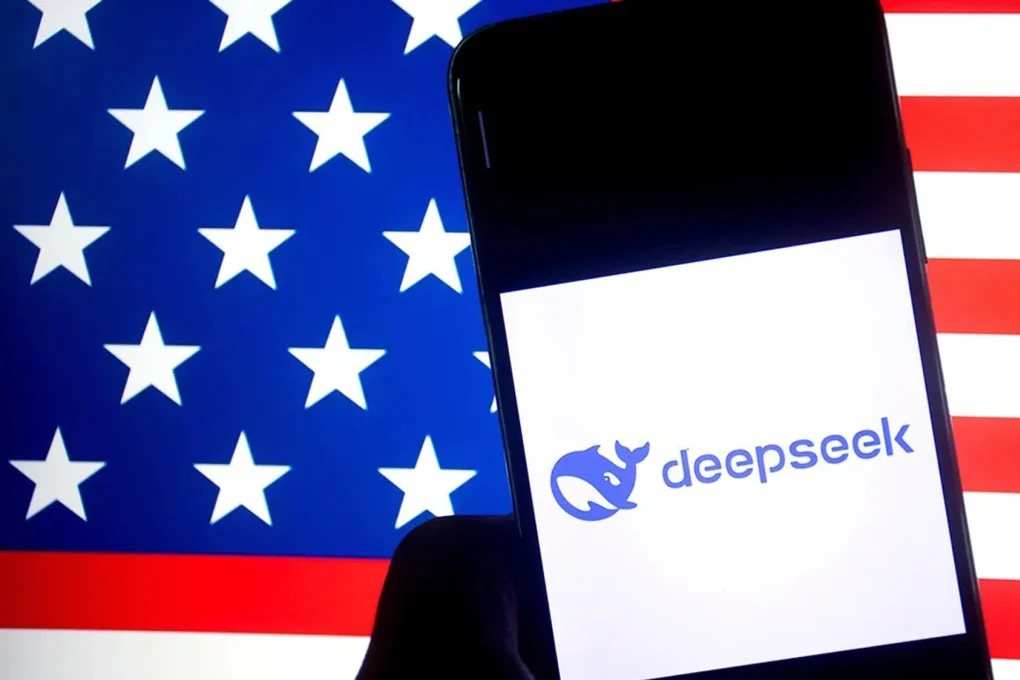
If you use an AI chatbot at work, you have probably wondered where your prompt actually goes. For US federal workers, that question just got an official answer about DeepSeek: not on our systems. A Department of Homeland Security order bars civilian agencies from buying DeepSeek services or keeping them in their IT systems. The story has shifted from a cheap, open model toward trust and who holds your data.
Agencies such as the EPA or FCC must remove existing DeepSeek products, and DeepSeek is shut out of federal contracts. The ban covers Treasury, State and Justice but not the Defense Department or the intelligence services, which DHS cannot direct. It builds on a December 2025 law that restricted DeepSeek in intelligence systems.
Why is everyone talking about it again?
Timing helps. The order came a couple of days after DeepSeek released V4.1-Flash-1017, an update the company called smarter, faster and more efficient. DeepSeek put out a long-awaited V4 earlier this year and a faster, lighter version in early October, and developer forums have been busy with it since.
Before that, things were quiet. On January 27, 2025, DeepSeek's app climbed past ChatGPT to the top of Apple's US App Store free downloads, and the shock rattled markets. Since then DeepSeek has shipped seven updates, and none moved markets the same way. Gartner's Haritha Khandabattu reads them as continuation rather than a new shockwave.
DHS says DeepSeek's servers sit in China, where the legal system gives the government wide access to private company infrastructure. It also says the models carry multiple threat vectors.
By the numbers
- 17%: Nvidia's one-day drop in the January 2025 sell-off, close to $600 billion of value.
- 60 days: window for agencies to request exceptions to the DHS order.
- 19: benchmarks in the US government's evaluation of DeepSeek models.
- 35%: how much less one US reference model costs on average for similar performance.
- Nearly 1,000%: how much downloads of DeepSeek models have grown on model-sharing sites since January 2025.
- Over 57 million: app downloads as of May 2025.
What does it do differently, and is it any good?
DeepSeek is a Chinese startup launched in 2023 and led by Liang Wenfeng, who cofounded the hedge fund High-Flyer. Its V3 is a Mixture-of-Experts model, which means only parts of the network work on each token, and R1 is built to reason step by step. The R1 paper in Nature argues that reasoning can be encouraged through reinforcement learning without human-labeled reasoning examples.
The weights are open, so anyone can grab a model and run it on hardware they own. The latest update is MIT-licensed with a 1 million token context window. A word of caution on the efficiency story: one blog author notes the design saves computing per token but not memory.
Is it as good as the big Western models? On some coding and agentic tests, the latest update comes out on top among five models. On harder reasoning it trails, and Opus 5 leads on Humanity's Last Exam without tools.
Those are self-reported numbers, so our read is that leadership claims stay provisional until independent testers weigh in. The US government's evaluation found the best American model ahead of DeepSeek's V3.1 on almost every benchmark, but it tested older models, so it says little about V4.x.
The $5.6 million that everyone quotes
You have probably seen the figure: a frontier AI model for the price of a nice house. It is real but narrow. The $5.576 million is a back-calculation from the GPU hours of V3's final training run at an assumed rental price. It leaves out earlier research and experiments.
It is not the price of building DeepSeek, and it is not comparable to other labs' total budgets. One research paper attaches the $5.6 million to R1, yet R1's training cost was never published. Liang began buying Nvidia chips in 2021, before US export limits, which also means the hardware behind the headline cost is larger than one run.
Who has said no, and what does China say?
The DHS order is the latest layer in a long stack, and we read it as part of a pattern rather than a one-off. The US acted across Defense, NASA, Energy, Congress and several states in 2025. Commerce Department bureaus told staff in March 2026 that DeepSeek was banned on government devices. Australia barred it from government devices in February 2025.
Europe moved too. Italy's Garante was the first Western authority to ban it, on January 30, 2025, and investigations followed in Ireland, Belgium, France, Germany and other European countries. South Korea took a different path, reaching cooperative compliance and a resumed service within ten weeks. For the rest of us, these bans mostly cover official devices, so personal use is a personal call, and the next section is about making it.
Beijing pushes back. Foreign Ministry spokesperson Mao Ning opposed overstretching national security and politicizing technology and trade. At home, DeepSeek models are used in hospitals, local governments, carmakers and state-owned firms. Compute is its weak spot, and analyst Alex Platt calls it a large bottleneck.
Is it safe to use? It depends on the door you use
The hosted app and API are the risky door. DeepSeek's own privacy policy disclosed that user data would be kept on servers in China. Security researchers at NowSecure found the iOS app sending registration and device data without encryption.
The self-hosted door avoids that, since open weights run on your own hardware. Our read is that weaknesses travel with the model, though. Cisco and the University of Pennsylvania found a 100% attack success rate on R1 in their jailbreak tests. Perplexity, for one, integrated DeepSeek and says it worked to remove pro-state bias, though details are limited.
Washington's own testing is blunt, and it comes with a policy frame. NIST's CAISI found DeepSeek's R1-0528 answered 94% of overtly malicious requests under a common jailbreak, against 8% for US reference models. Commerce Secretary Howard Lutnick called relying on foreign AI dangerous. A bias study used GPT-4o as the grader, so treat it as a rough guide, but it did find the strongest bias in Simplified Chinese and almost none in English.
Where this is heading
Our take: the January 2025 shock was about efficiency and open release, and the story now is trust. Capability is cheap to copy, while data jurisdiction is not.
Scenario one: restrictions spread to more states and allies if distillation accusations become formal and the planned Shenzhen summit brings no thaw. The US has accused DeepSeek and five other Chinese firms of distilling American models. Scenario two: DeepSeek stays a cheap open option for developers as long as its MIT-licensed releases stay near the frontier. Scenario three: chips decide the pace, and if domestic hardware falls short the gap to Western labs widens.
So the next time you paste something into a chatbot at work, keep sensitive data off the hosted app, and check independent benchmarks for V4.x before believing any leaderboard claim. Whichever scenario wins out, that habit will serve you well.
Sources 16TechCrunch, CNBC, Engadget and 13 more sources
- TechCrunch (Oct 20, 2026). US orders federal agencies to remove China’s DeepSeek AI from their systems. Kate Park
- CNBC (Oct 20, 2026). U.S. bans DeepSeek from government agency systems amid AI rift with China
- Engadget (Oct 19, 2026). Homeland Security bans DeepSeek use in federal civilian agencies - Engadget. Jackson Chen
- The Guardian (Oct 20, 2026). US bans use of China’s DeepSeek AI tools by government agencies. Guardian staff reporter
- blog.pangeanic.com (Feb 2, 2025). DeepSeek was not trained on $5,57M nor it copied OpenAI. Manuel Herranz
- CNBC (Jan 7, 2026). DeepSeek blew up markets a year ago. Why hasn't it done so since?
- NIST (Sep 30, 2025). CAISI Evaluation of DeepSeek AI Models Finds Shortcomings and Risks. Jennifer Huergo
- Ai and Ethics (2026). DeepSeek for healthcare: do no harm? - PMC. James Anibal; Steven Bedrick; Hang Nguyen; Jasmine Gunkel; Hannah Huth; Tram Le; Samantha Salvi Cruz; Lindsey Hazen; Bradford J Wood. doi:10.1007/s43681-025-00842-1
- Fortune (Jan 27, 2025). Meet DeepSeek founder Liang Wenfeng, a hedge fund manager. Jason Ma
- Nature (2025). DeepSeek-R1 incentivizes reasoning in LLMs through reinforcement learning. Daya Guo et al.. doi:10.1038/s41586-025-09422-z
- MIT Technology Review (Jan 20, 2026). What's next for AI in 2026
- MindStudio (Oct 17, 2026). DeepSeek V4.1-Flash-1017: What's New in the Benchmark Update
- Axis Intelligence (Mar 6, 2026). Is DeepSeek Safe 2026? Security Concerns & Honest Assessment - Axis Intelligence. Axis Intelligence Team
- Aitechtonic (Jan 1, 2026). DeepSeek AI Banned Countries 2026: Complete List & Reasons - Aitechtonic. Saandip Kumar Jha
- MIAI (Jan 28, 2026). DeepSeek One Year Later: Regulatory Storm, Global Surge - MIAI. Theodore Christakis and Pankaj Raj
- arXiv (Jun 2, 2025). Analysis of LLM Bias (Chinese Propaganda & Anti-US Sentiment) in DeepSeek-R1 vs. ChatGPT o3-mini-high. PeiHsuan Huang, ZihWei Lin, Simon Imbot, WenCheng Fu, Ethan Tu
Last updated 22 Oct 2026. This article draws on reporting and data from these sources; links in the text point to the most important ones.
Tools for this
ChatGPT
AI chat assistant that answers questions, writes, creates images, runs deep research and helps with code.
Mentioned in this post

Perplexity
AI answer engine that responds to questions with sourced answers and can take on longer projects through Computer.
Mentioned in this post

DeepSeek
AI research company offering a chat assistant, a desktop harness and a token-billed API for its language models.
Mentioned in this post

Simplified
Marketing platform where AI agents plan, create, route for approval and publish campaigns across social channels.
Mentioned in this post
Comments
No comments yet. Be the first to say what you think of this post.