

Image prompt Branding & UI Customizable
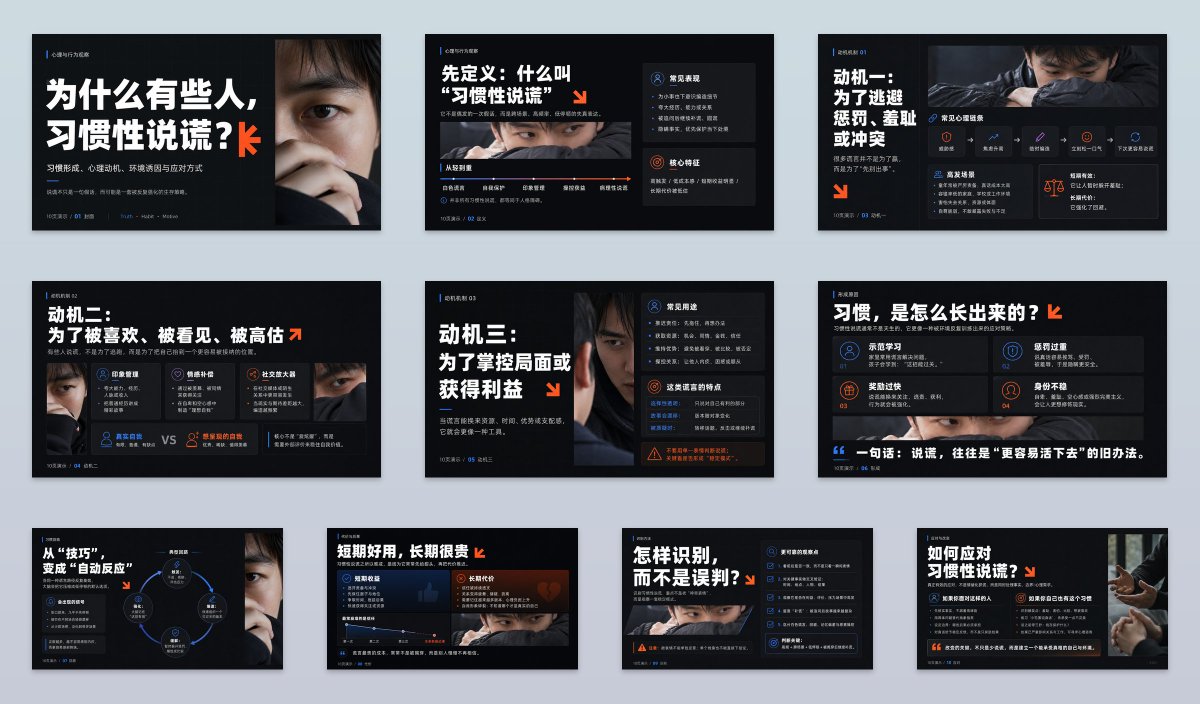
Dark Modern Presentation Slide System Design
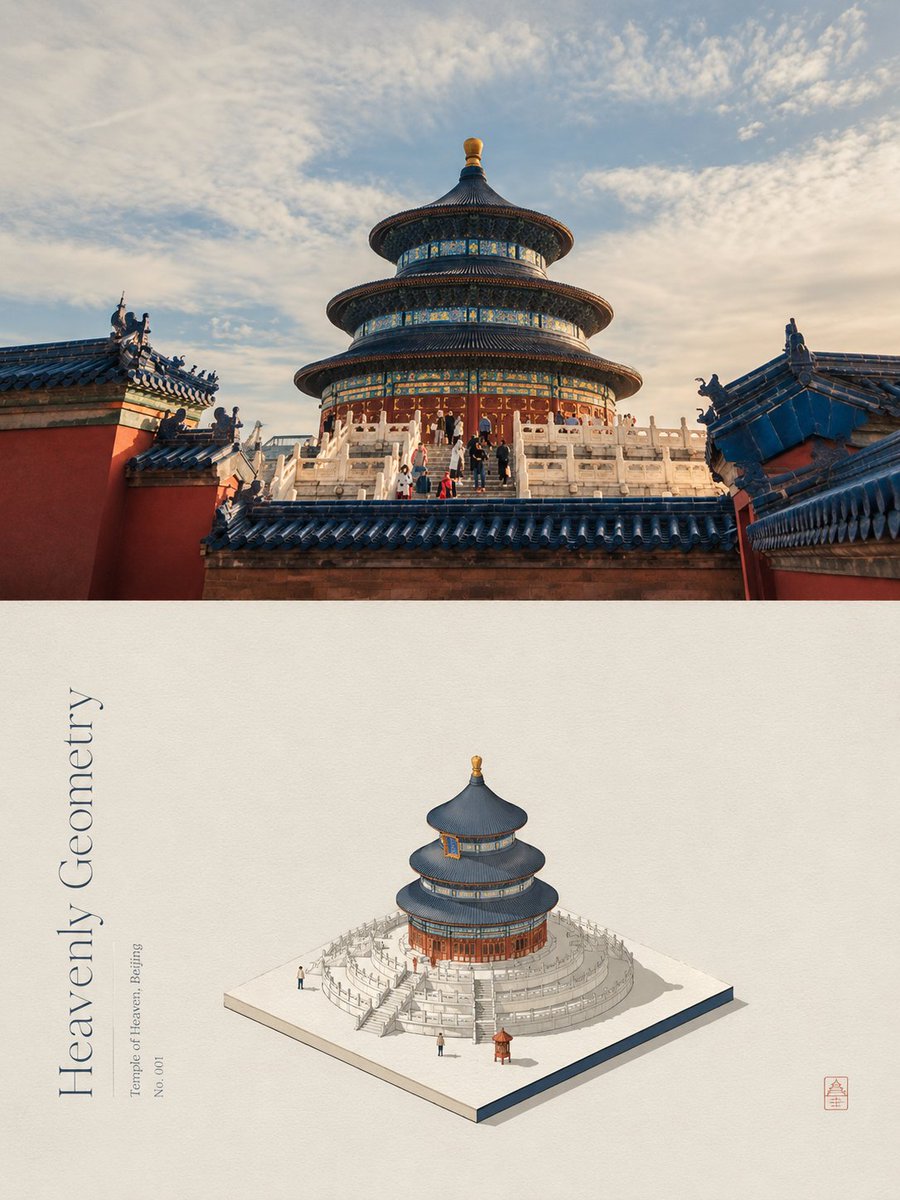
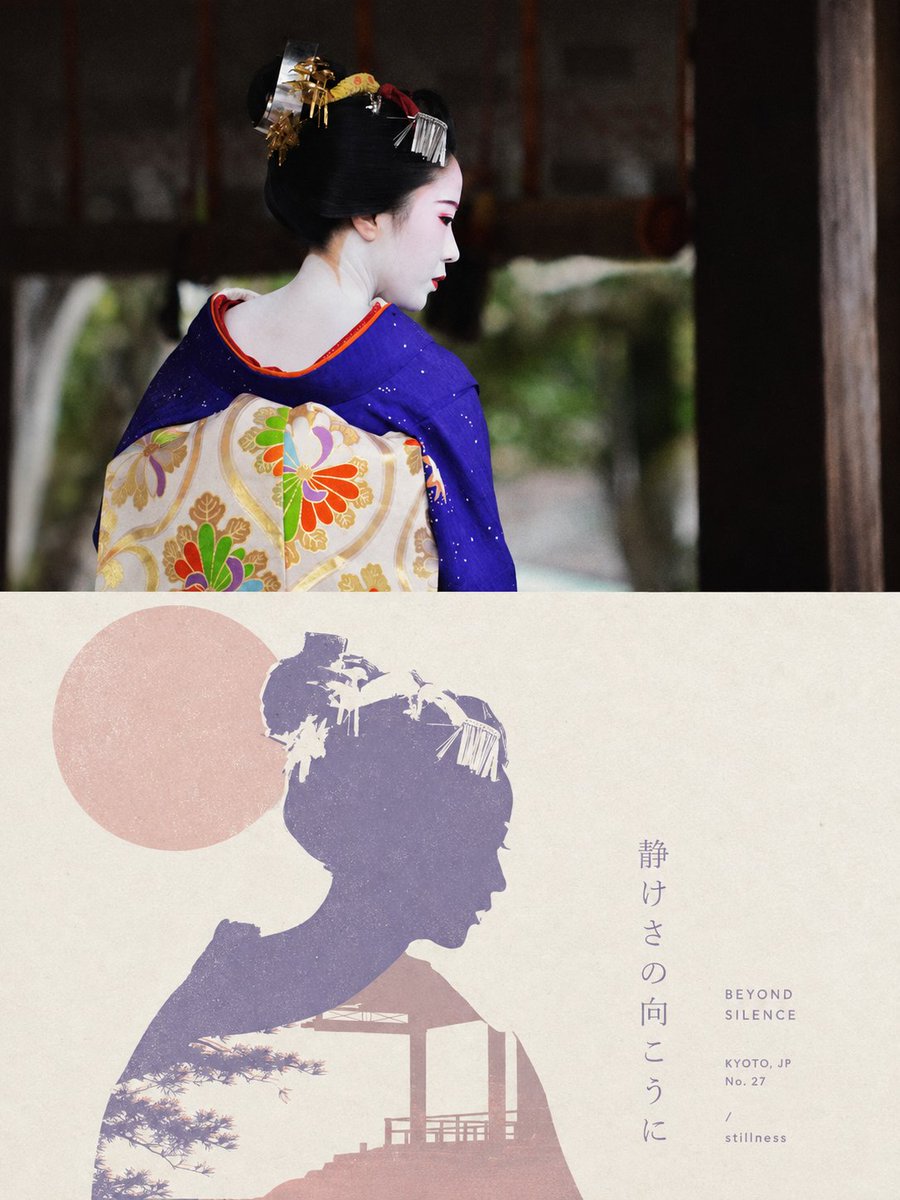
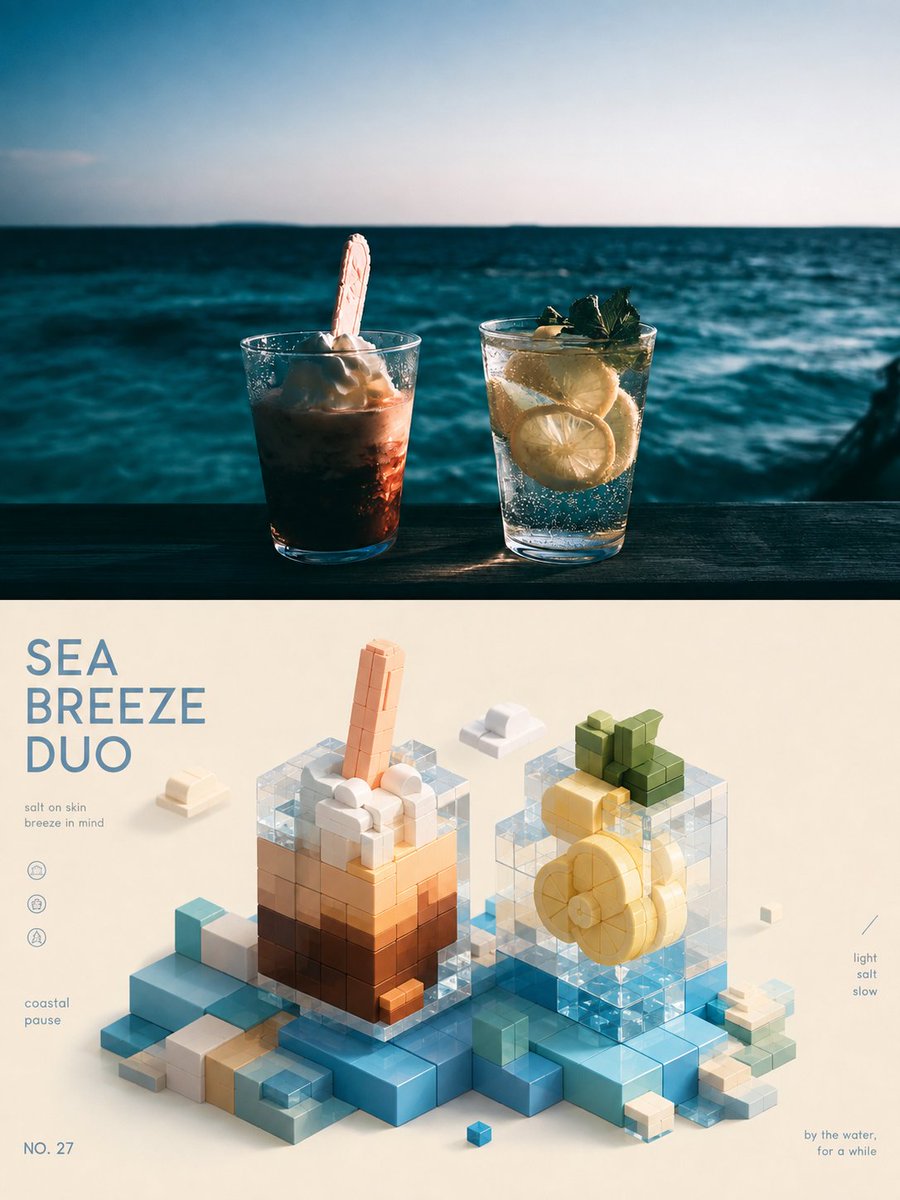
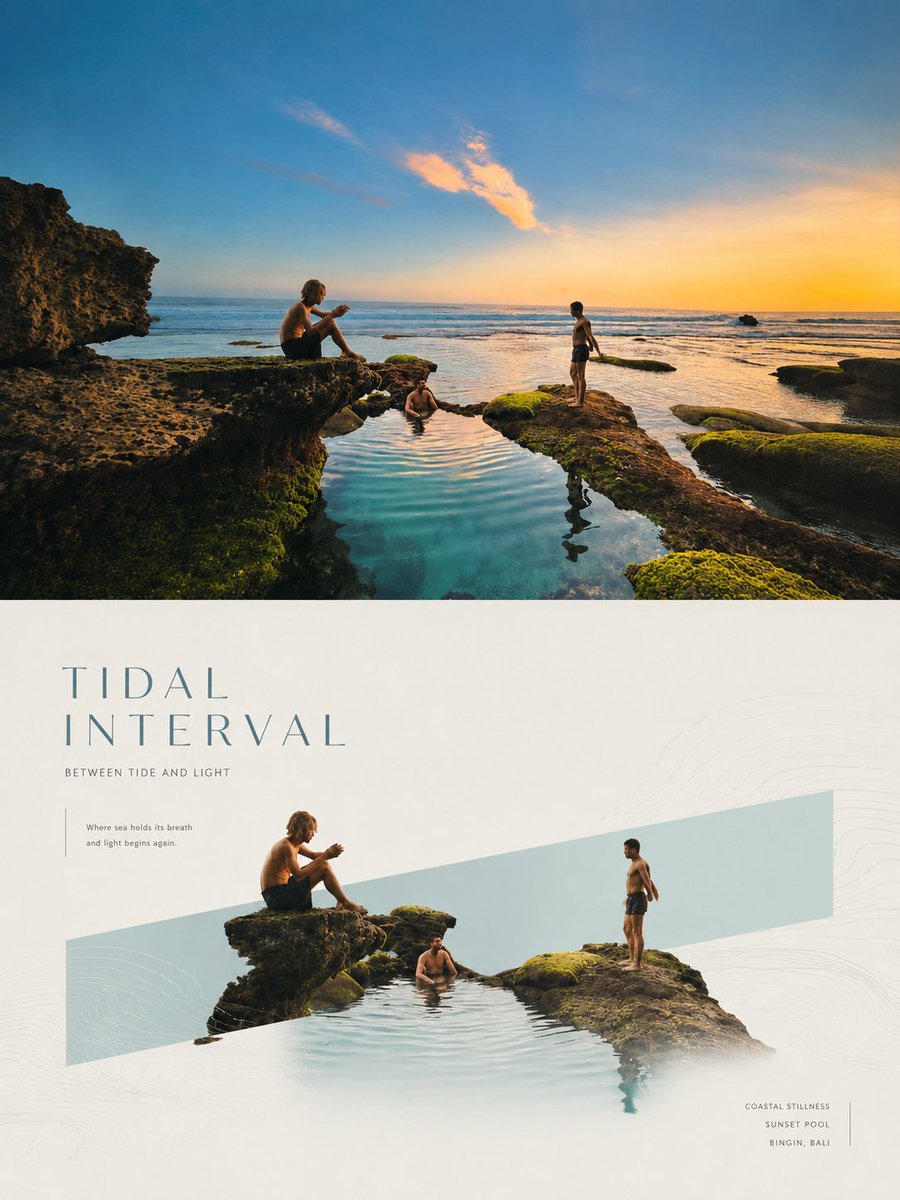
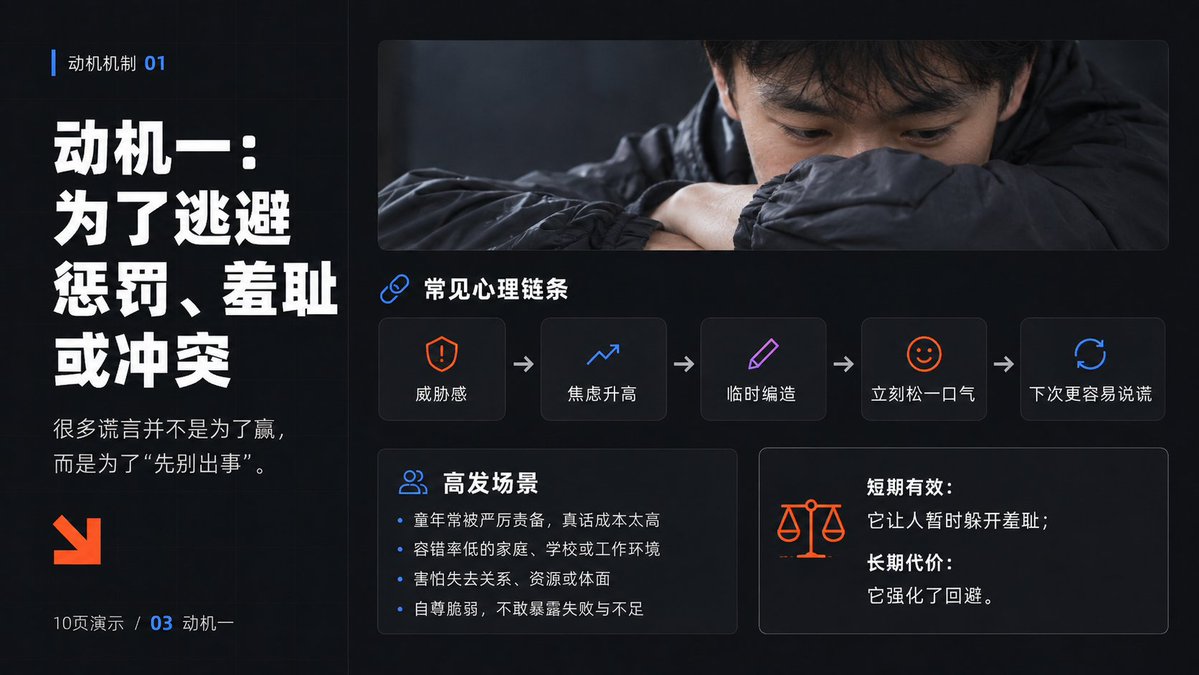
A ten-slide deck built on a dark, high-contrast field with bold titles and rectangular photo crops. Each page shifts its grid and image placement, so the series reads as one system while no two slides look alike.

- Model
- GPT Image 2
- Type
- 4 images
- Aspect ratio
- 16:9
- Shared
- 2 Aug 2026
- Likes on X
- 54
Deck topicSlide count
Image prompt
3,095 charactersBuild a modern PPT system where a dark high-contrast field, bold titles and rectangular photographic slices work together: use Internationalist typographic theory as the axis, stabilizing information with a modular grid, uniform margins and baseline rhythm; use the functional asymmetry of the New Typography to create column crossings, offsets and scale jumps; use the Gestalt laws of proximity and common region to cluster title, caption, data and image into clear modules; use Itten's light-dark and area contrast so small high-purity symbols form an instant focus within a large low-chroma background. Draw on Josef Müller-Brockmann's mathematical grid and objective hierarchy to coordinate the whole series, absorb Jan Tschichold's dynamic breathing space and unequal blocks to guide the eye, apply Paul Rand's conceptual geometric symbols for light identification, and use Alexey Brodovitch's bold cropping and image-text dialogue to vary page density—dividing roles without replicating individual works. The palette uses four replaceable roles: a dark low-lightness low-chroma background at 65%–80%, a high-lightness information color at 15%–25%, a theme photo keeping mid-to-high lightness and medium chroma at 15%–35%, and high-purity warm/cool-split accent colors totaling no more than 8%; accents sit only beside title endpoints, key numbers and directional nodes, strengthened by simultaneous contrast, and any theme or brand color must be mapped once per role while keeping area, lightness order, chroma difference, warm-cool tension and shadow legibility unchanged. Composition uses a flexible 4–8 column modular grid, with the title read first, the focal image second, caption and data last; the cover allows an oversized title spanning columns, while content pages rotate among left-right splits, top-bottom staggered layers and large whitespace, with rectangular images dynamically balancing unequal visual mass against text zones, letting only one symbol cross the column line as a controlled break. The background is an even matte plane; the cover overlays an ultra-fine low-contrast grid while content pages stay pure; photography uses natural diffuse light, real tones, close cropping and hard-edged rectangular masks with no decorative filters; radial toothed shapes, sharp-angle crossings and folded linear forms are made as outline-free flat vectors with sharp edges, locally pressed to the edge or half-bleed, carrying chapter, direction and pause beats. Title and body use the same rounded geometric sans-serif family with consistent skeleton: title ultra-bold, tight tracking and leading, broken into short lines; body at regular weight, small size, loose leading; Chinese and Western text aligned by visual face, counter density and baseline correction rather than nominal size, and title symbols only meet endpoints or negative forms without eroding legibility. The overall feel is vivid, direct, young, sharp, clear and trustworthy. Topic: Why do some people habitually lie? Rich in knowledge points Each page varied in layout to avoid repetition 10 pages in total
How to use it
It was shared as a GPT Image 2 prompt, and it describes a full layout system rather than a single picture, so it works best when you ask for one slide at a time. Keep the dark background, the ultra-bold title and the four-role palette, since those carry the look; swap the topic and the slide count to fit your own material. Use the result as a moodboard for an internal deck or a portfolio piece on modular grids.
Shared publicly on X on 2 Aug 2026. All credit for this prompt and its result goes to its creator. Is this yours? Ask for an update or removal.