Cork: A Free 1972 Plywood Scow Rowboat Plan for Three
A frameless 9 ft double-ended scow from 1972, built from skin-stressed plywood and made purely for rowing.
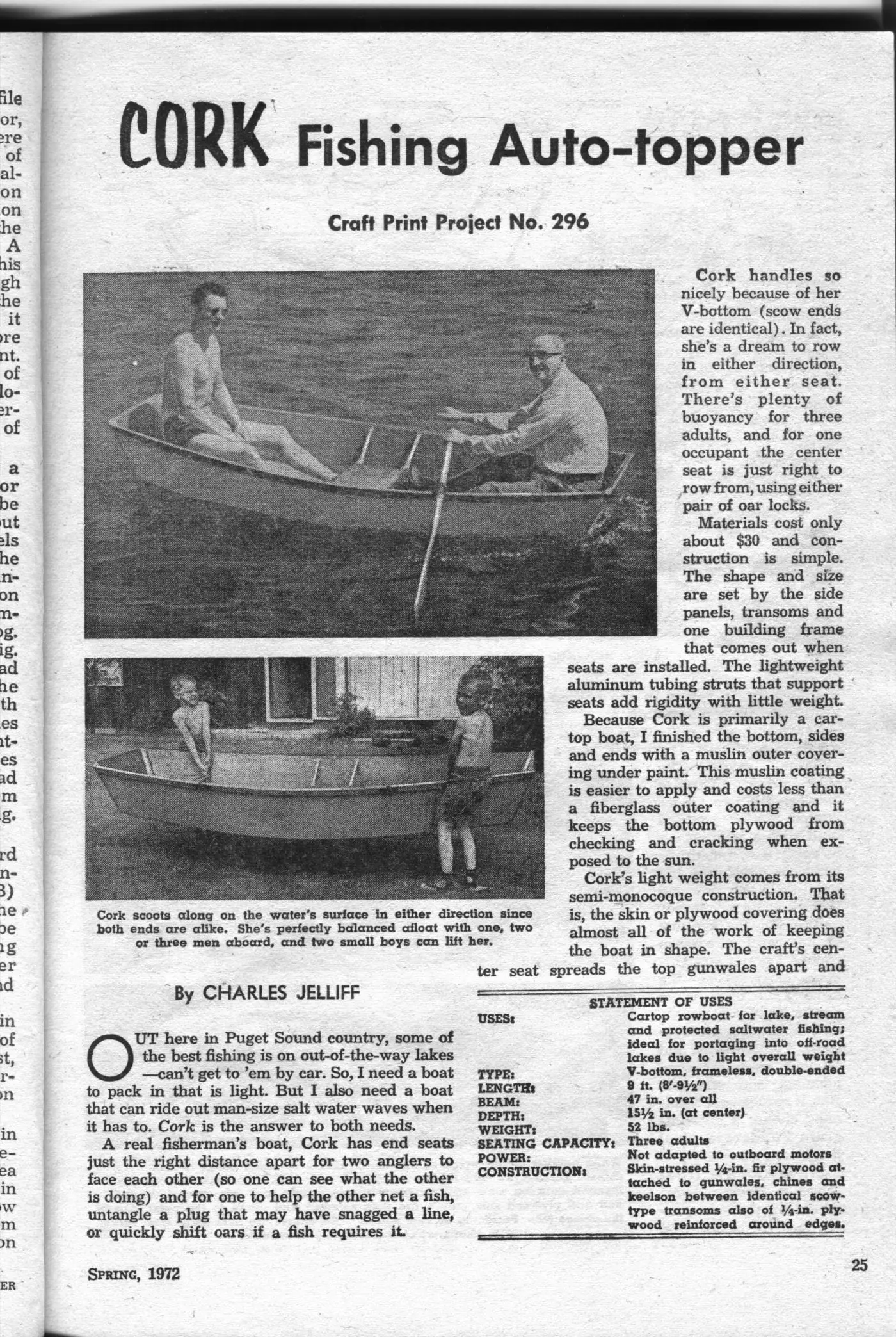
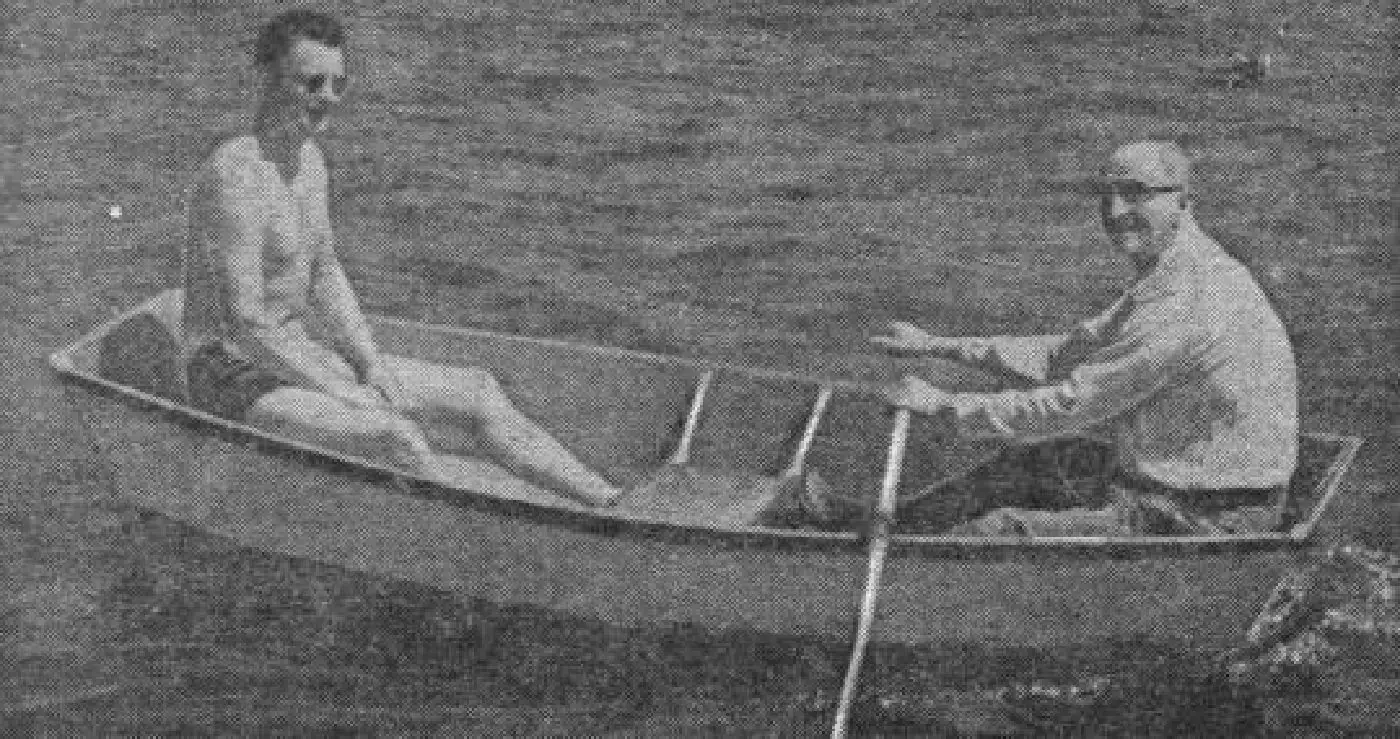
Cork floats on clever geometry rather than heavy timber. This 1972 rowboat is a double-ended scow with a shallow V-bottom, about 9 ft (2.74 m) long and 47 in (1.19 m) wide, and it holds three adults. There are no internal frames at all: the 1/4 in fir plywood skin carries the loads itself. It is a neat project for anyone who enjoys a design that does more with less, and a pleasant little boat for rowing along a quiet shoreline.
Cork at a glance
| Detail | Cork |
|---|---|
| Type | Rowboat |
| Length | 9 ft (8 ft 9 1/2 in) (2.74 m) |
| Beam | 47 in (1.19 m) |
| Capacity | 3 adults |
| Construction | Skin-stressed 1/4 in. fir plywood; frameless V-bottom double-ended scow |
| Power | Oars (not for outboards) |
| Designer | Charles Jelliff |
| First published | Spring 1972, p. 25 |
| Craft Print | No. 296 |
| Plan sheets | 8 |
Light by design
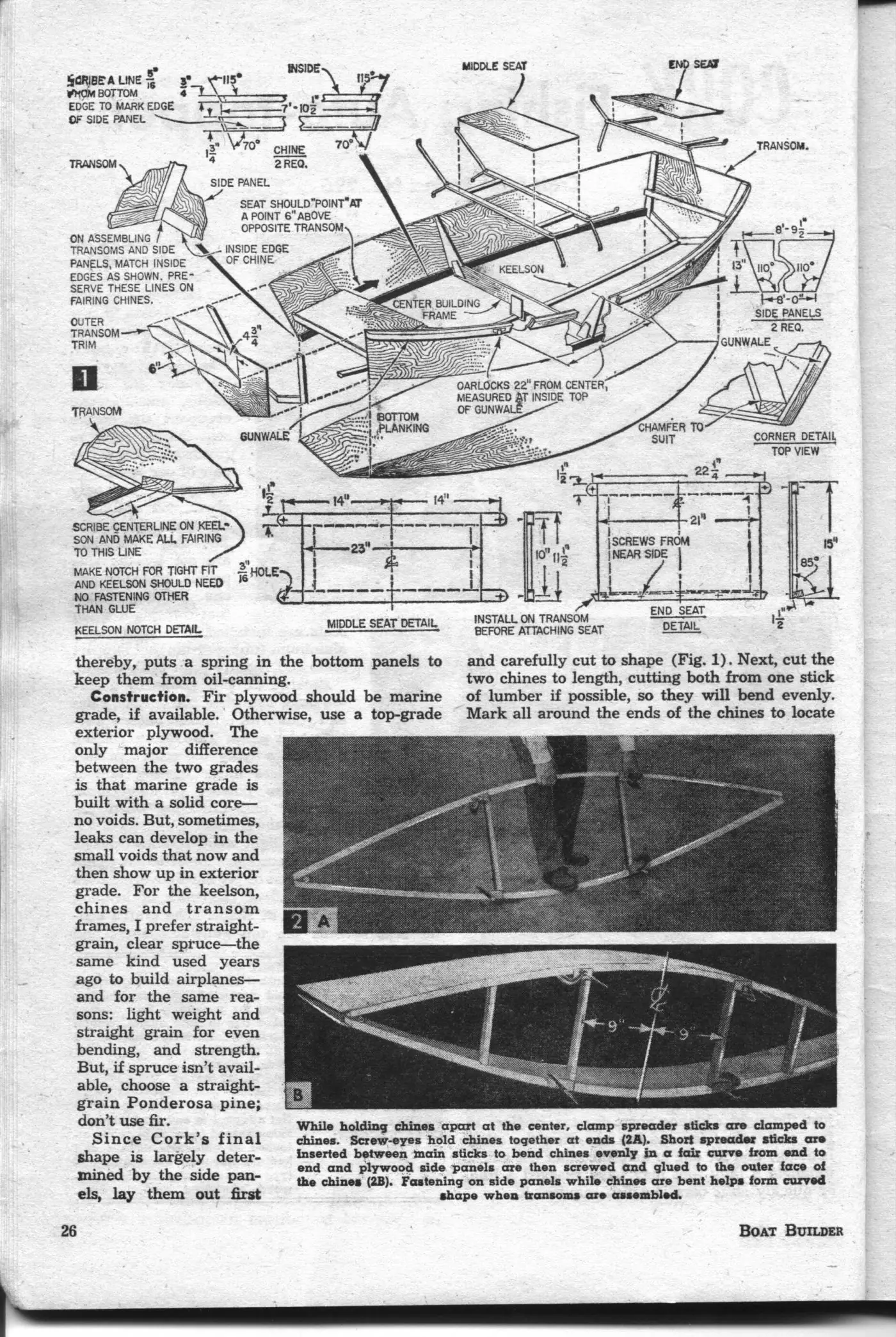
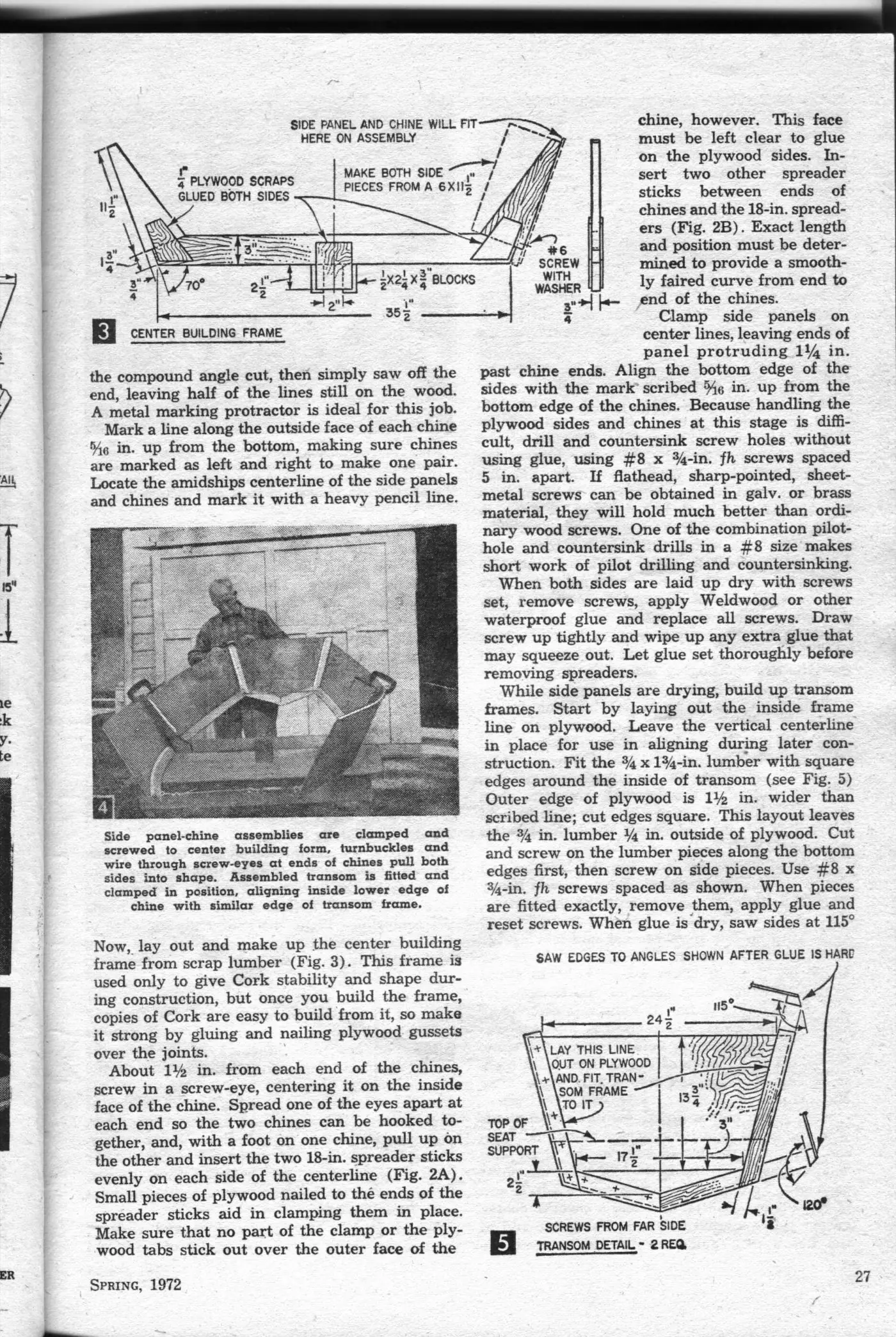
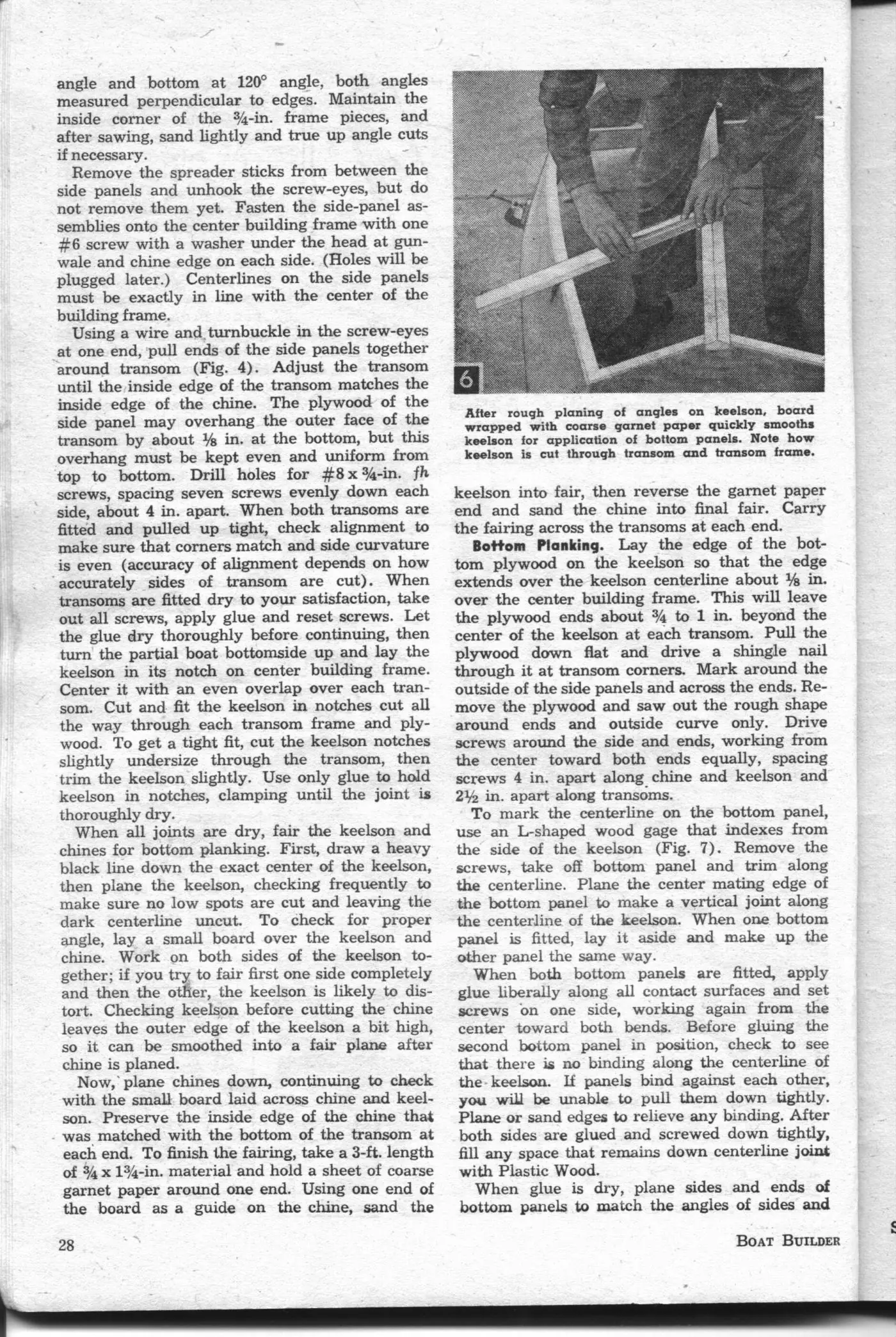
Skin-stressed construction means the panels are bent and joined so that their own tension stiffens the hull. Without frames, the interior stays open and uncluttered, and the finished boat stays light enough for two people to carry to the water. Fewer parts also means fewer cuts, less glue and a shorter path from the first sheet of plywood to launch day.
The plan is clear about its purpose: oars only, not outboards. That focus lets the shape stay slim and efficient for rowing, and it keeps the project affordable since there is no transom reinforcement or motor mount to worry about. The double-ended shape lets it glide along quietly, which is exactly what you want when rowing past reeds or watching wildlife.
The original plan sheets
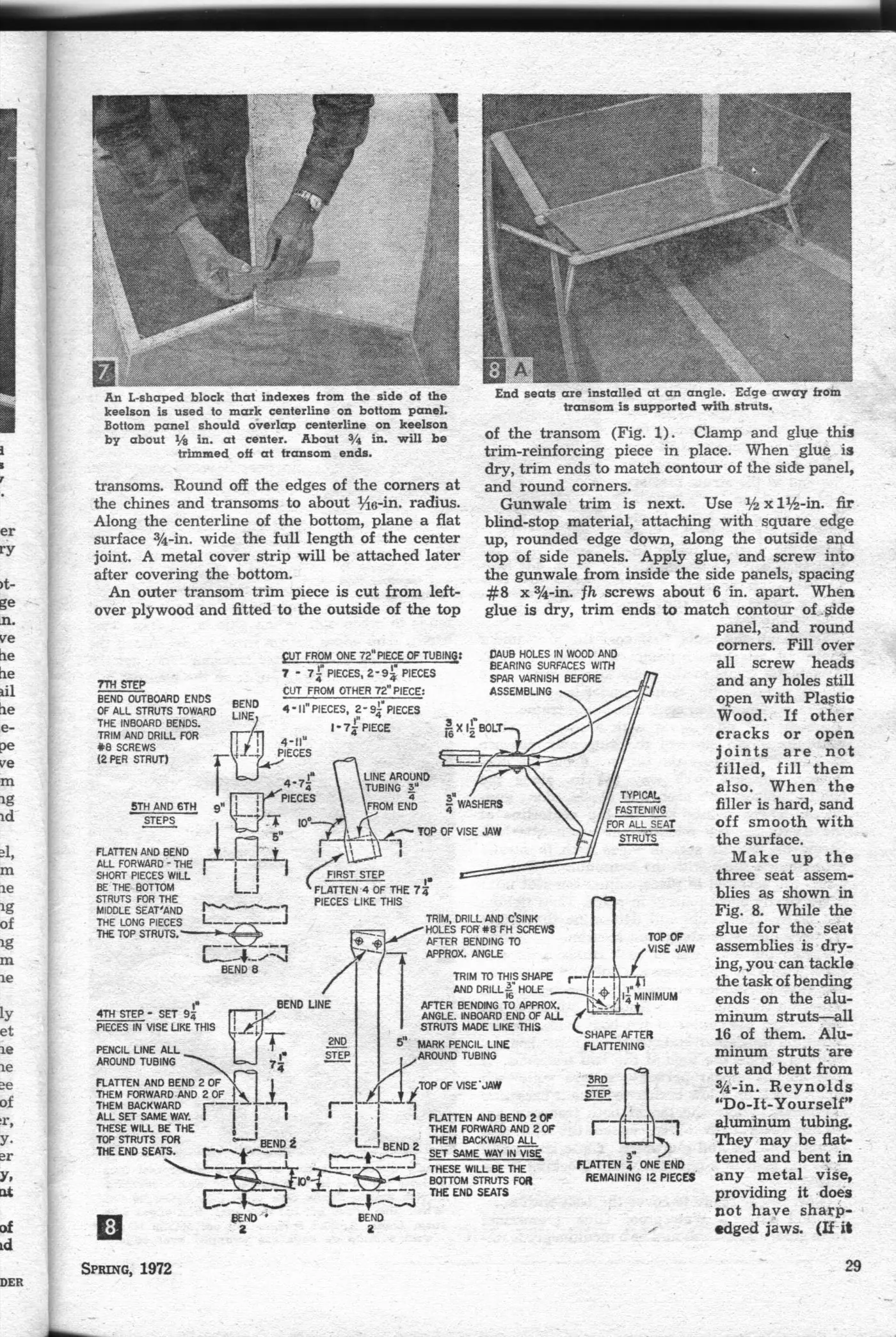
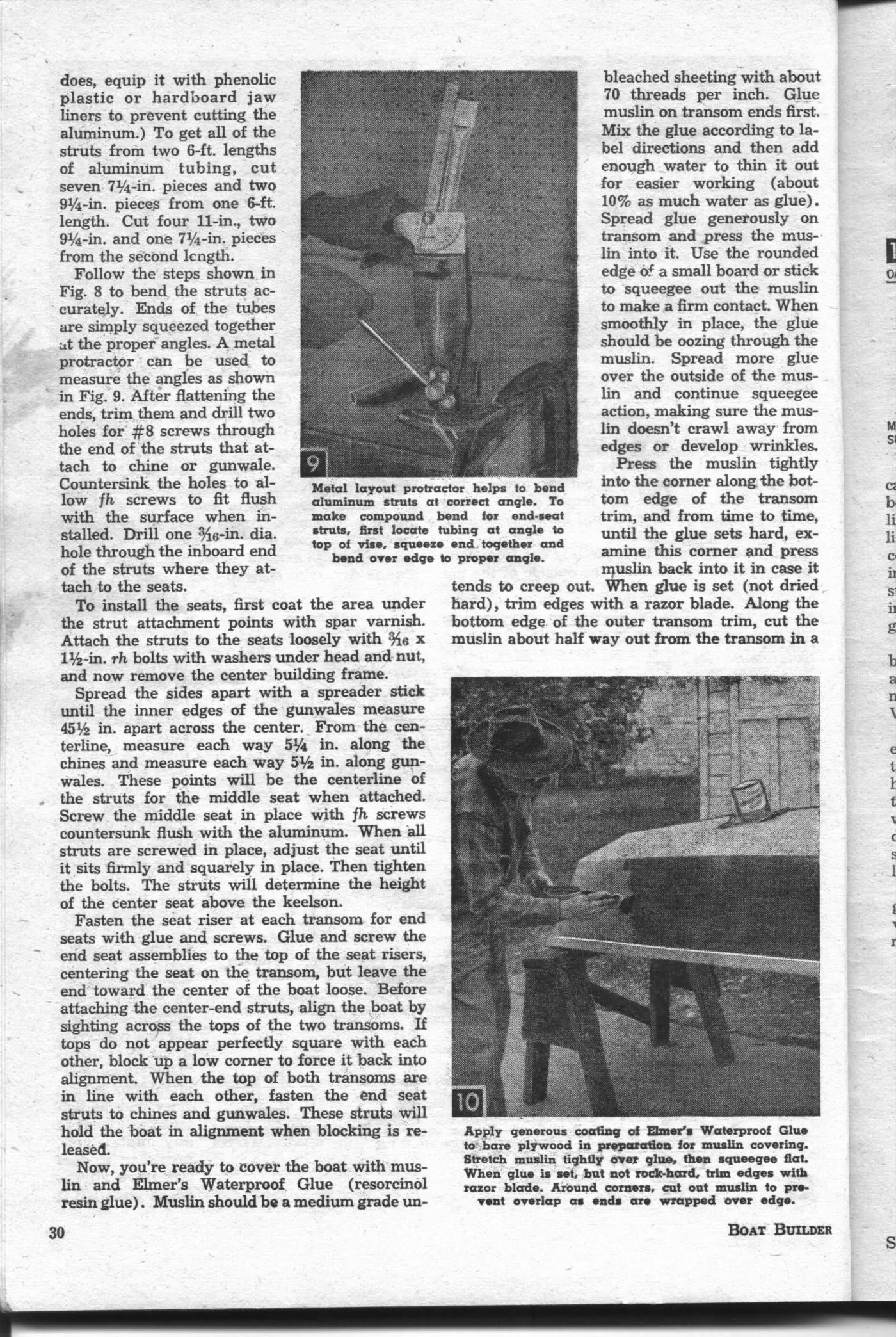
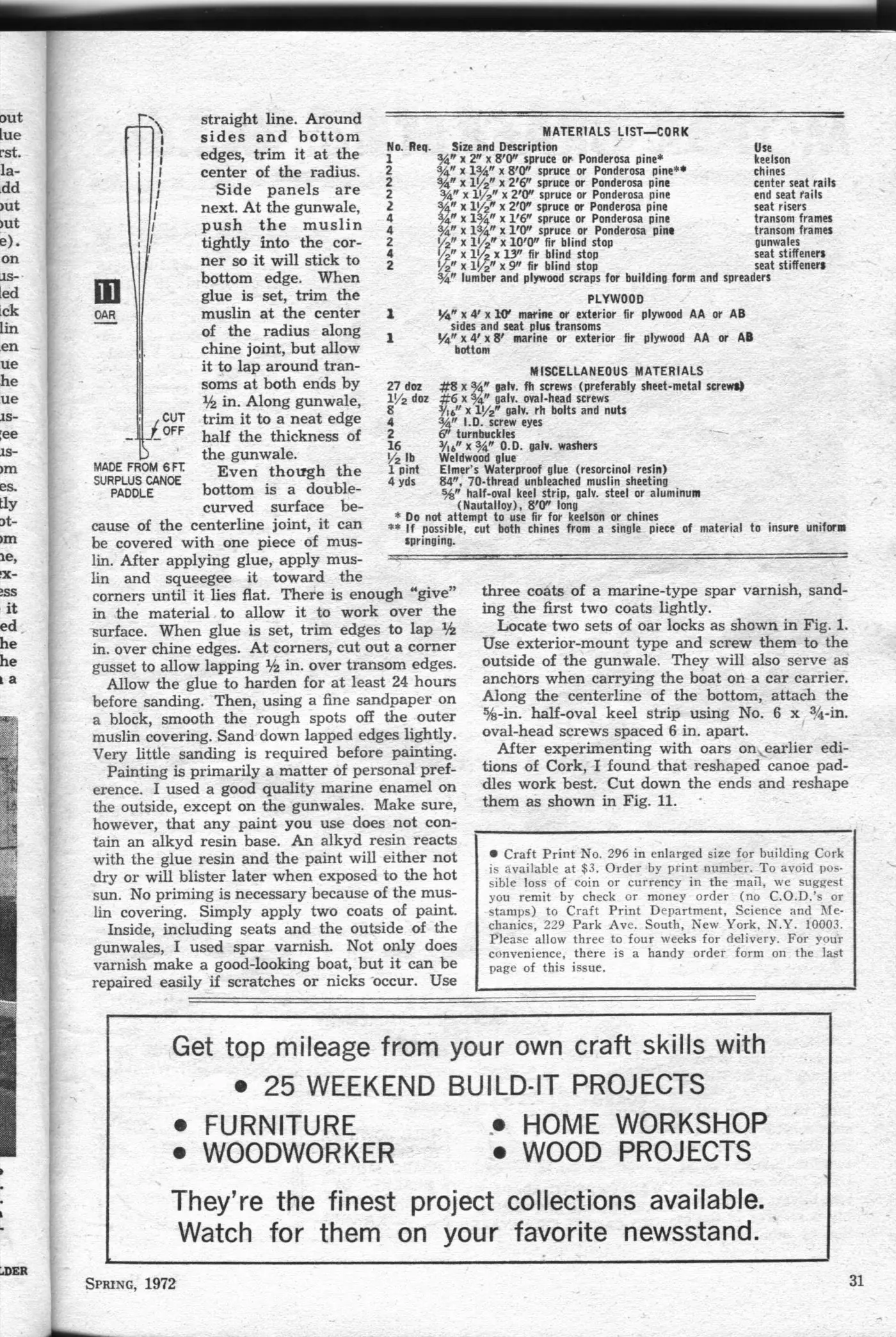
These are the 8 original sheets from 1972, scanned from the magazine. For building, use the full-size PDF in the download section below.
Who designed it
Charles Jelliff designed Cork, published in the Spring 1972 issue on page 25 as Craft Print 296. It belongs to the later run of the Craft Print series and shows how far a few sheets of thin plywood can go when the skin itself does the structural work.
Before you build
- Respect the no-outboard note on the plan; the frameless hull is not built to take a motor's thrust on the stern.
- Mark the plywood bending sequence carefully before gluing, because a stressed skin only takes its shape if the panels go together in the right order.
- Choose oarlock positions with the seat height in mind so your hands clear your knees on every stroke.
Download the plan
Cork's full 1972 plan comes as one file holding all eight sheets, sized for printing or for reading on a workshop tablet.
Download the complete plan (PDF, 8 sheets, 8 MB)
Tools for this


Comments
No comments yet. Be the first to say what you think of this post.