

Image prompt Branding & UI Customizable
Perspective Typography Poster With Spatial Letterforms
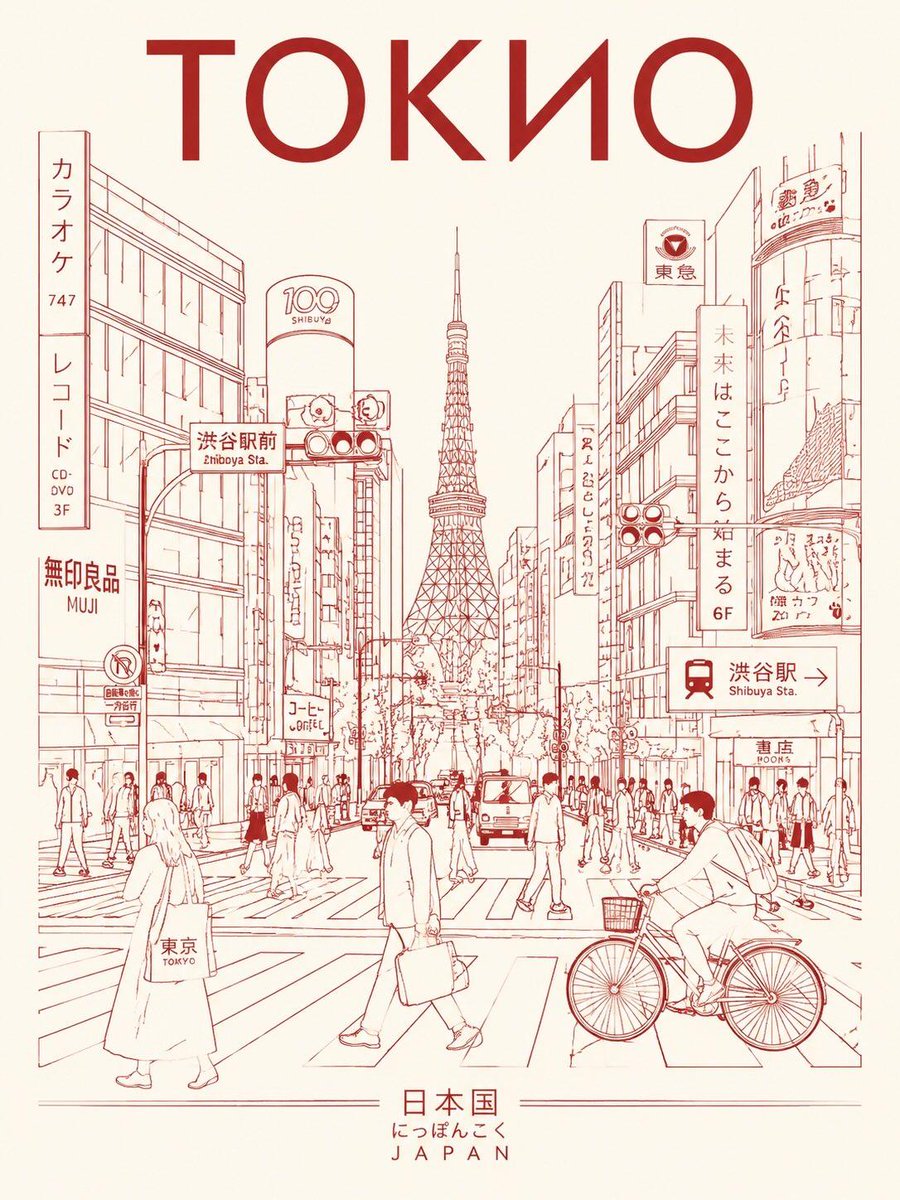
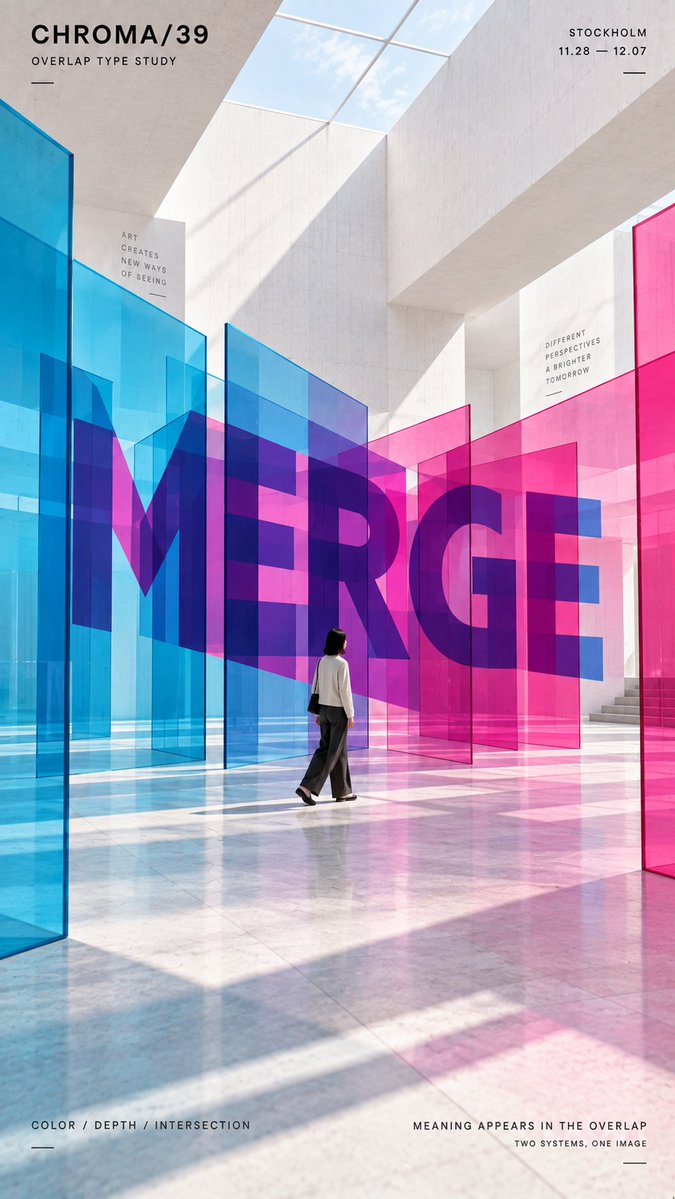
A vertical poster where an oversized word is built from real planes, ribbons or woven bands, so it only reads cleanly from one exact viewpoint. Move off that spot and the letters loosen into visible structure.

- Model
- GPT Image 2
- Type
- 4 images
- Aspect ratio
- 9:16
- Shared
- 11 Sep 2026
- Likes on X
- 117
Your wordBrand / exhibition / campaignSmall human figure / none
Image prompt
2,013 charactersTITLE: [your word] PROJECT: [brand / exhibition / campaign] SPATIAL SYSTEM: [overlap / continuous ribbon / layered sections / interlacing / other] MATERIAL: [transparent panels / flexible ribbon / suspended planes / woven bands / other] SUBJECT: [small human figure / none] MAIN COLORS: [2–3 colors] FORMAT: 9:16 vertical poster Create a contemporary perspective typography poster where oversized type is physically constructed through spatial surfaces rather than printed as ordinary flat text. The main word should occupy roughly 35–55% of the composition. Break its structure across multiple planes, depths or continuous surfaces so the typography becomes readable only from the intended viewpoint. For chromatic overlap, split the letterforms across two translucent color systems and let their intersections reveal the word. For a continuous ribbon, use one uninterrupted surface that twists through different depths and visually reconnects into the typography. For layered sections, divide the word into separate horizontal planes that align into a complete title from one precise viewing height. For interlacing, use real over-and-under relationships between continuous bands so the visible foreground segments collectively form the letters. Keep all perspective, depth, occlusion, material behavior and surface continuity physically believable. From other viewpoints, the typography should partially break apart and reveal the actual spatial construction. Use bold geometric sans-serif letterforms, a restrained architectural environment and a controlled palette with strong graphic contrast. If a person is included, keep them small and use them mainly as a scale reference, with realistic foreground and background occlusion. Add only minimal editorial information such as project name, location, date and one short thematic line. Overall style: perspective typography, spatial graphic design, contemporary installation art, architectural photography, clean hierarchy and strong visual impact.
How to use it
Replace the bracketed fields with your own word, project name and palette, and keep the spatial system line since it drives the construction. It was shared as a GPT Image 2 prompt, so the layout instructions carry most of the look. Use the result as a campaign or exhibition poster, and keep the editorial text minimal so the word stays dominant.
Shared publicly on X on 11 Sep 2026. All credit for this prompt and its result goes to its creator. Is this yours? Ask for an update or removal.