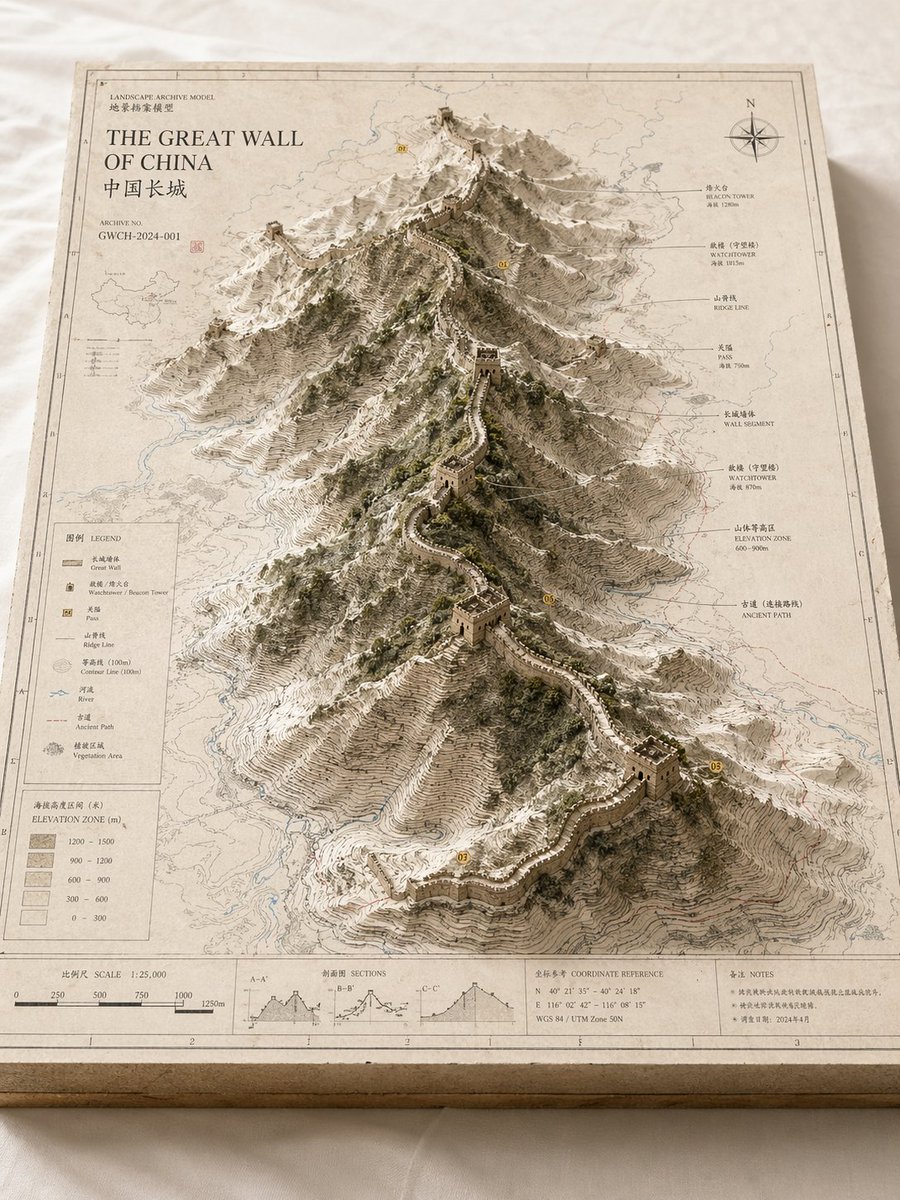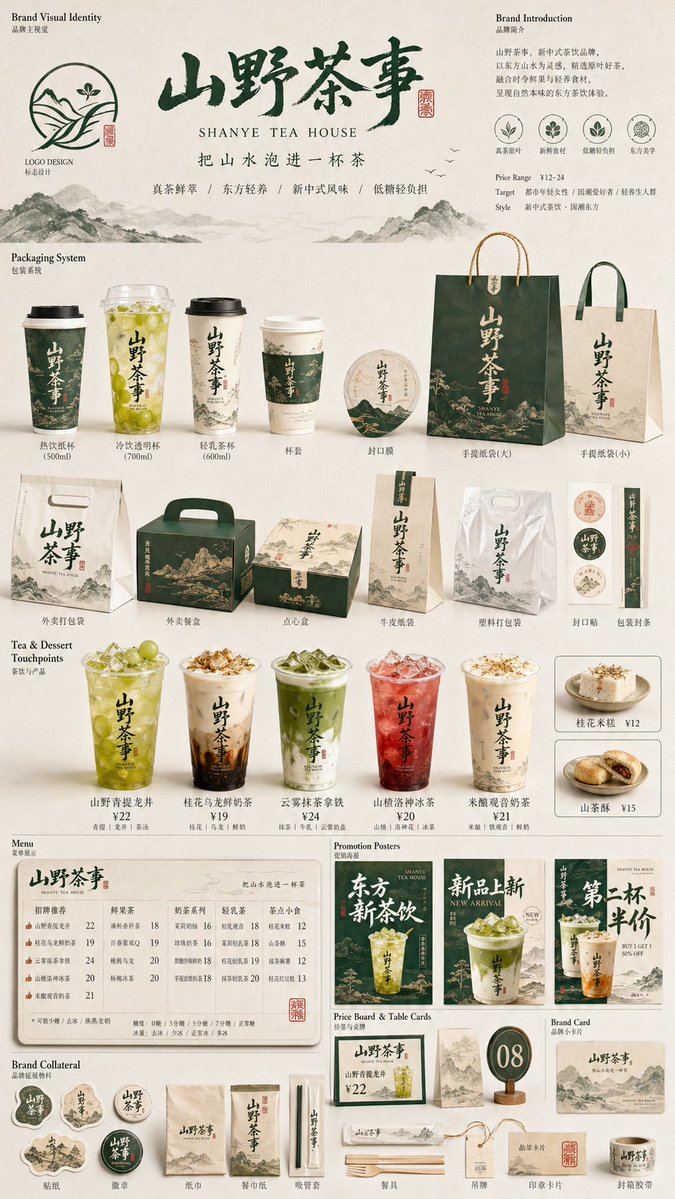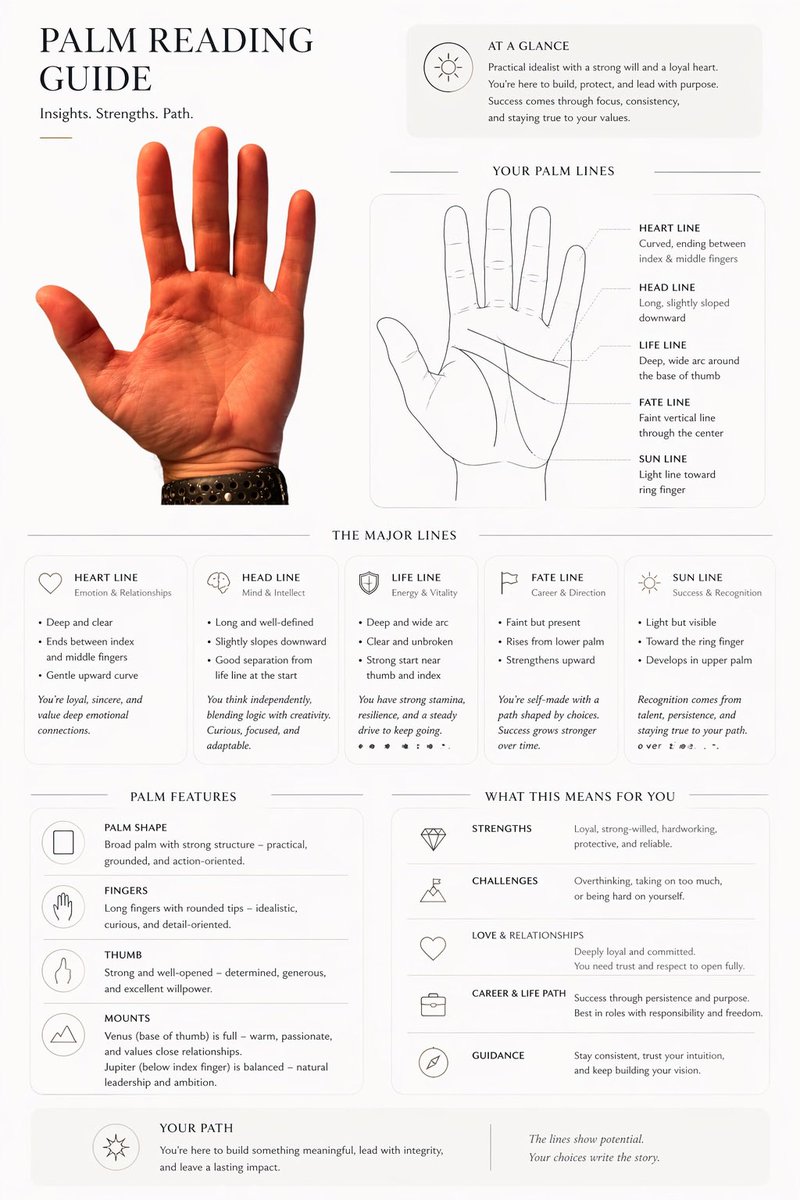
Image prompt Branding & UI Customizable
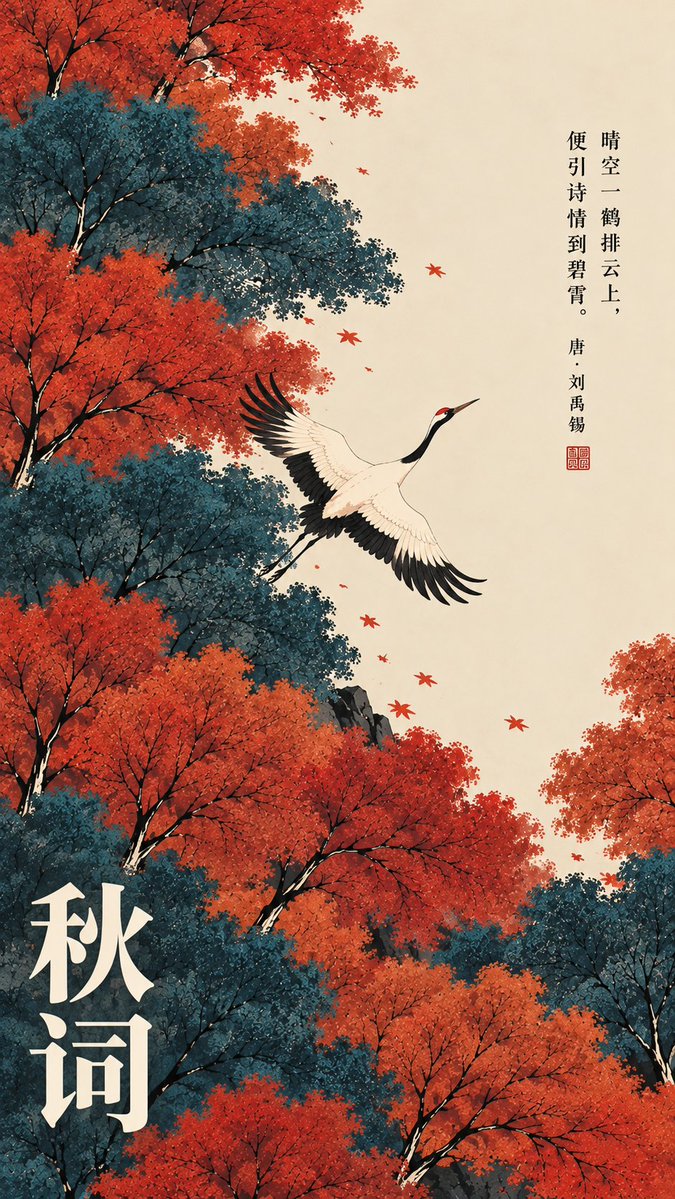
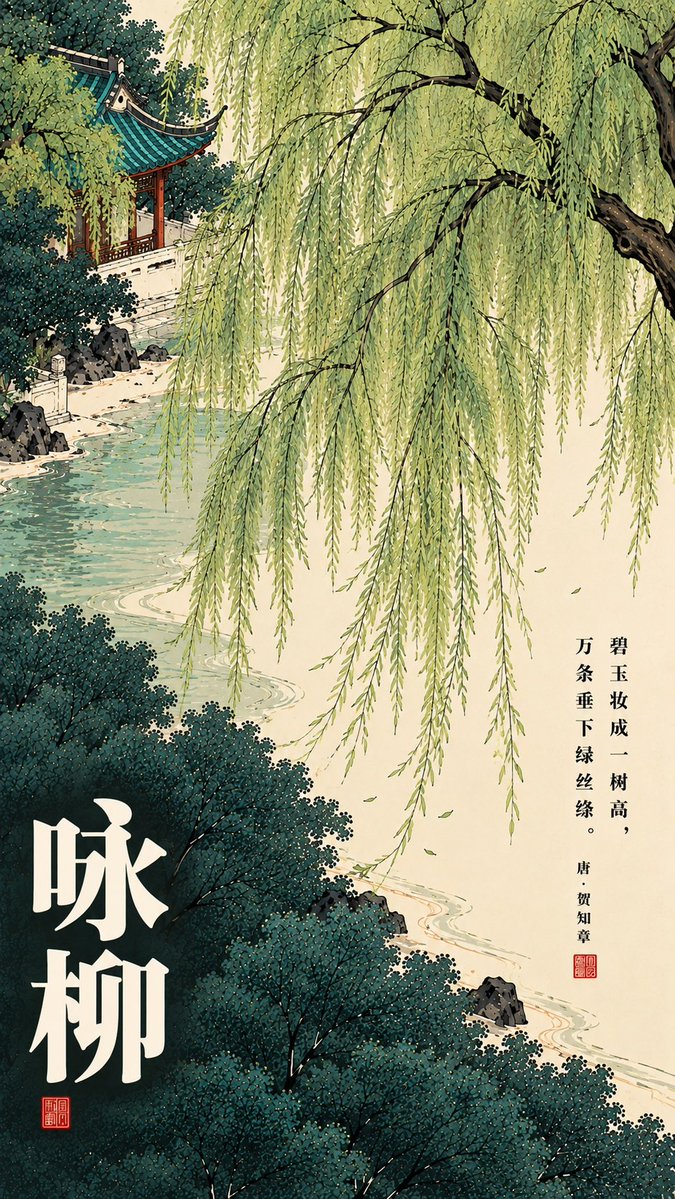
Chinese Poem Poster with Cranes and Willows
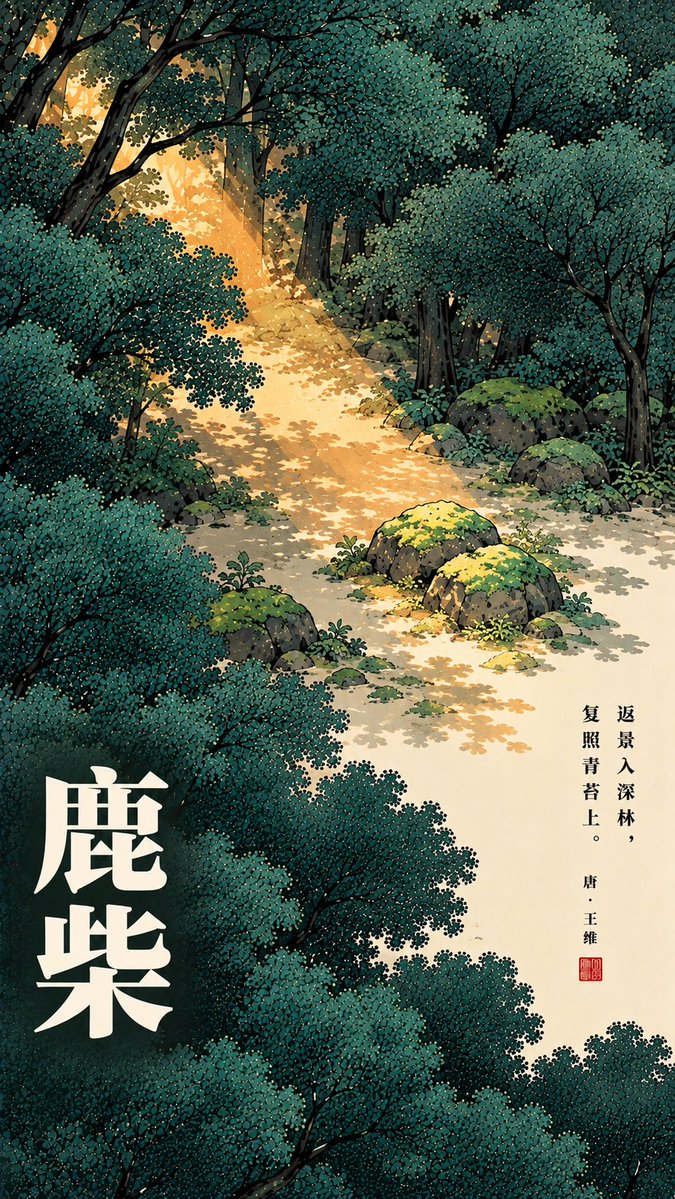
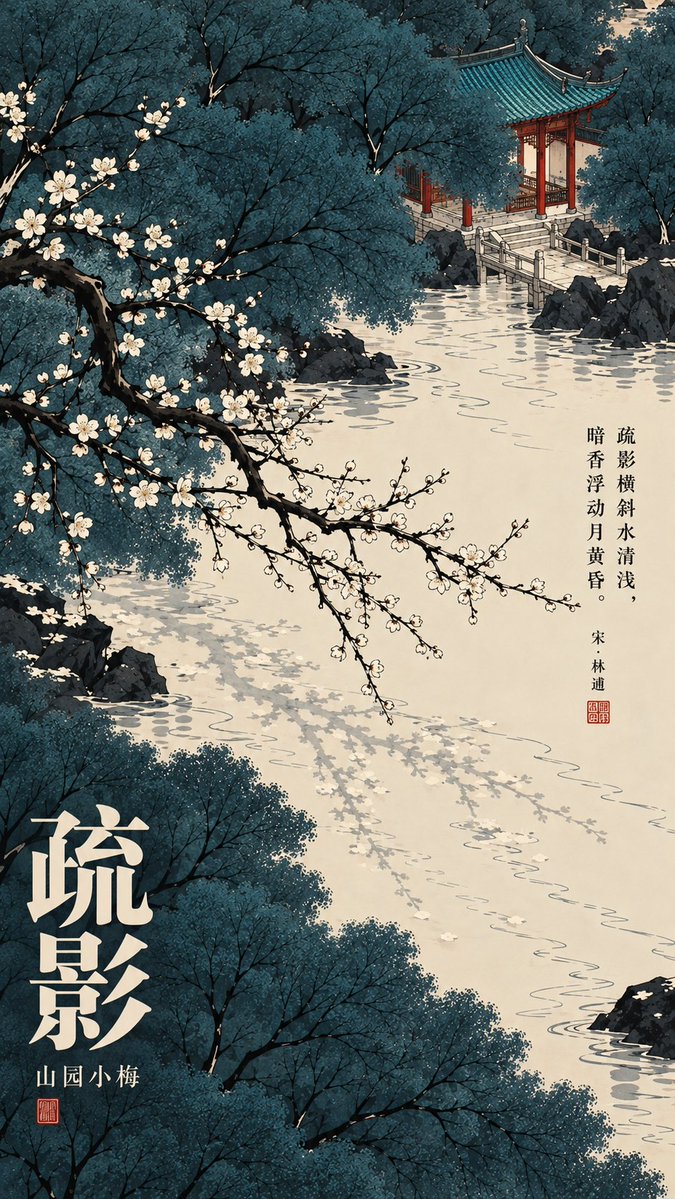
A vertical poster built from flat mineral blue and green fields, fine ink-black branches, and rising crane shapes set against generous warm ivory space. The gongbi-style linework stays calm from a distance and reveals delicate detail up close.

- Model
- GPT Image 2
- Type
- 4 images
- Aspect ratio
- 9:16
- Shared
- 13 Oct 2026
- Likes on X
- 27
Image prompt
4,208 characters【Classical Chinese Poem】{Enter the poem title, author, and original text} 【Main Poster Title】{Extract 2–4 representative Chinese characters} 【Core Imagery】{For example, flying cranes, weeping willows, sunset light in a forest, or sparse shadows of plum branches} 【Visual Movement】{For example, diagonal ascent, cascading curves, interwoven light and shadow, or overlapping branches and shadows} 【Scene】{Enter it manually or have the AI extract it from the poem} 【Primary Color Palette】{Choose 2–3 harmonious traditional Eastern colors} 【Aspect Ratio】9:16 Based on the classical Chinese poem, create a new Chinese-style fine-line colored art poster with textbook-quality illustration. Transform the natural scenery, dynamic relationships, and atmosphere of light and shadow in the poem into a complete and elegant Eastern visual artwork. 【Style and Texture】 Combine modern Eastern decorative illustration with traditional meticulous gongbi linework. Render the tree canopies as complete blocks of color shaped like soft, fluffy clouds, with delicate powdery stippling around their edges. Weave slender, continuous, naturally branching ink-black limbs through their interiors. Flying birds, weeping willows, plum branches, and other primary subjects should retain realistic and coherent forms. Use complete areas of flat color and a small number of refined, elongated lines to describe their structure. If architecture appears, depict orderly blue-green roof tiles, elegant upturned eaves, and simple walls. Keep the overall colors rich, even, matte, and clean, with a subtle paper texture. 【Composition and Visual Movement】 Use a high-angle view, Eastern scattered-point perspective, and modern flat composition, adjusting the viewpoint flexibly according to the poem’s meaning. Emphasize the directions, curves, and spatial relationships found in the poem, such as a white crane spreading its wings and rising upward, willow branches falling with the wind, sunset light entering a dense forest diagonally, or slanting plum branches echoing their sparse reflections in the water. Create a clear visual focus through large color fields, diagonal guidance, natural curves, and generous areas of warm ivory negative space. Movement should feel natural and fluid, the main subject should stand out, and supporting scenery should remain simplified. Avoid crowded elements and complex backgrounds. 【Eastern Color, Light, and Shadow】 Use traditional Eastern colors such as mineral blue, mineral green, dark indigo, cinnabar red, ochre gold, and warm ivory white. Use one dominant color to establish visual weight and another contrasting color to emphasize the core imagery. Highlight warm–cool relationships, tonal hierarchy, and complete large color fields while preserving clean negative space. Depict sunlight, tree shadows, and reflections in water using restrained flat coloring and a small number of fine lines. Avoid photographic volumetric lighting, complex reflections, intense gradients, and heavy shadows. 【Chinese Poster Typography】 Integrate a large warm-ivory Chinese title into the lower portion of the image or a dark area along one side, using a bold, upright, and elegant Eastern artistic typeface. In suitable negative spaces, add refined small-scale vertical lines from the original poem, the correct dynasty and author attribution, and one or two cinnabar-red seals. Keep the text clear and rhythmically spaced, coordinating it naturally with the movement of the image. 【Final Quality】 Maintain a clear visual hierarchy of bold major shapes, fluid long lines, complete color areas, finely rendered local details, and open background space. Avoid realistic photography, 3D, anime, thick impasto oil painting, heavy ink-wash effects, dense individual leaves, complicated feathers, chaotic textures, excessive grain, and artificial aging. The final result should be a new Chinese-style classical poetry art poster with a unified visual language, a dynamic composition, sophisticated colors, and a distinct poetic atmosphere. It should have strong visual recognition from a distance while revealing delicate gongbi lines and refined Eastern decorative beauty when viewed up close.
How to use it
The prompt is a template, so it works best with a real poem and title filled into the bracketed fields, and a short scene and palette you choose. It was shared as a GPT Image 2 prompt. Keep the sections on flat color, negative space, and restrained lighting, since they carry the look, and swap the core imagery for a different subject like plum branches or a mountain path.
Shared publicly on X on 13 Oct 2026. All credit for this prompt and its result goes to its creator. Is this yours? Ask for an update or removal.