Image prompt Branding & UI Customizable
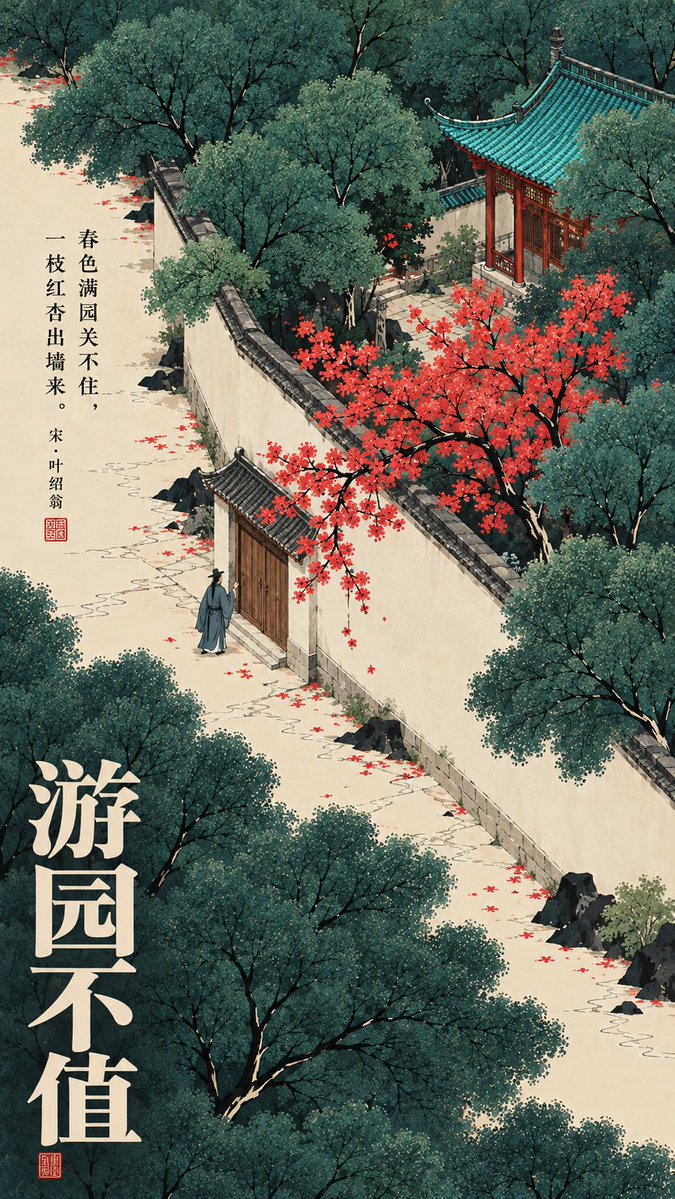
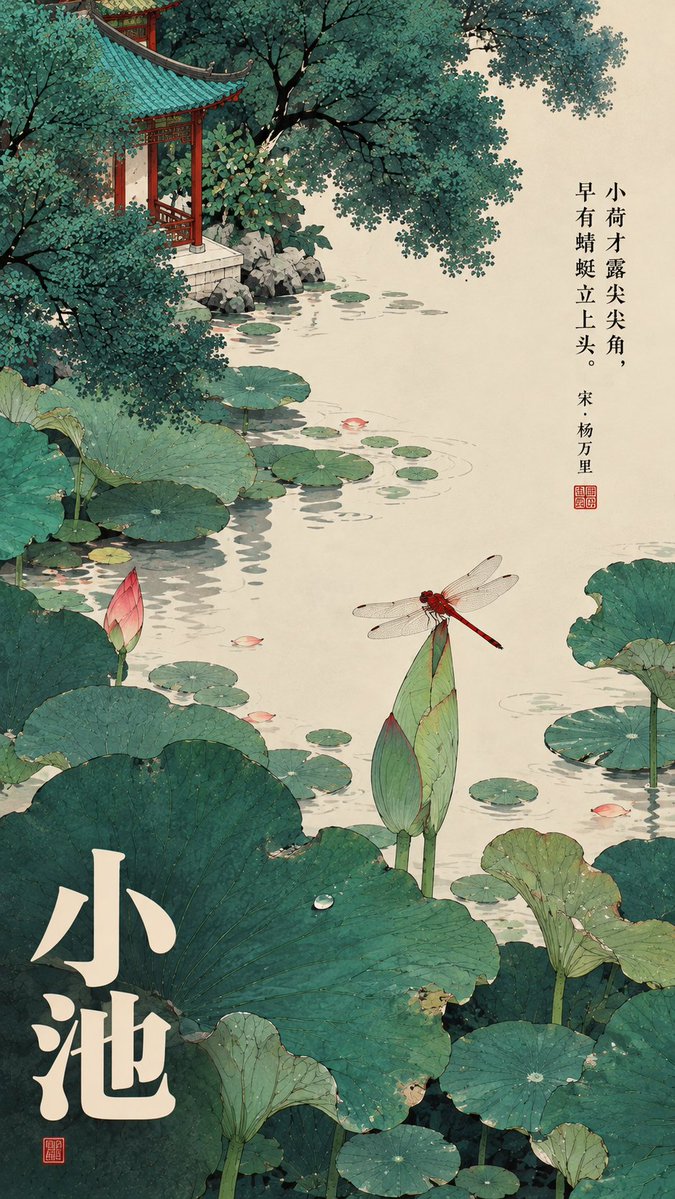
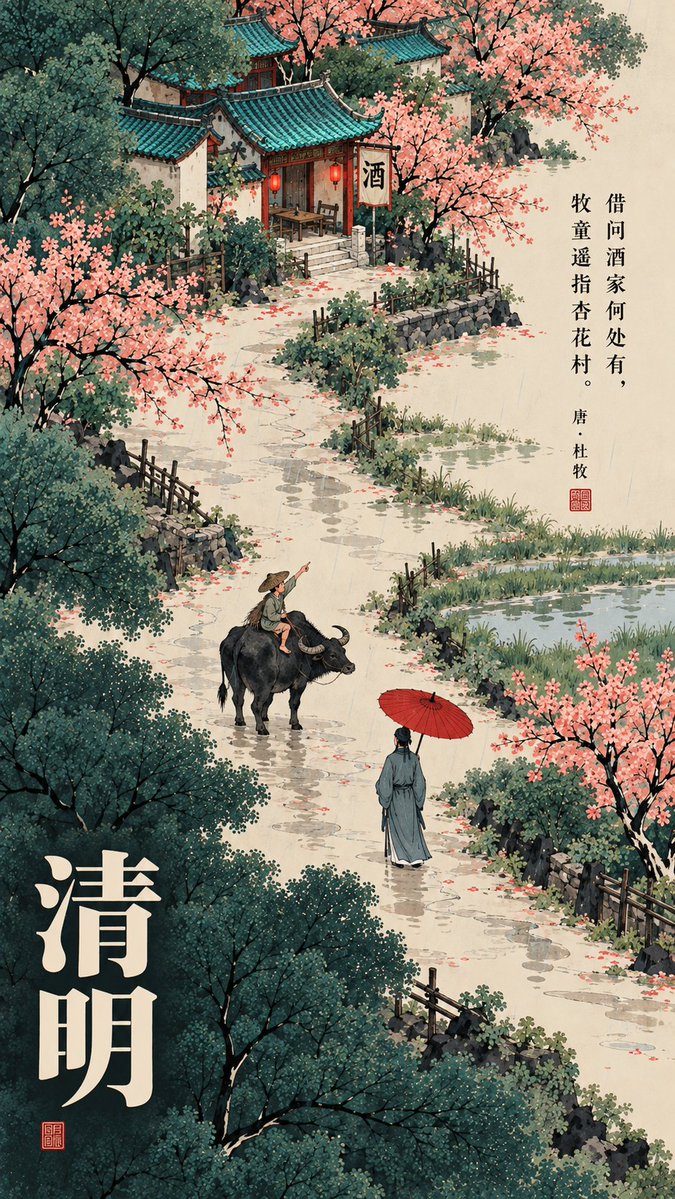
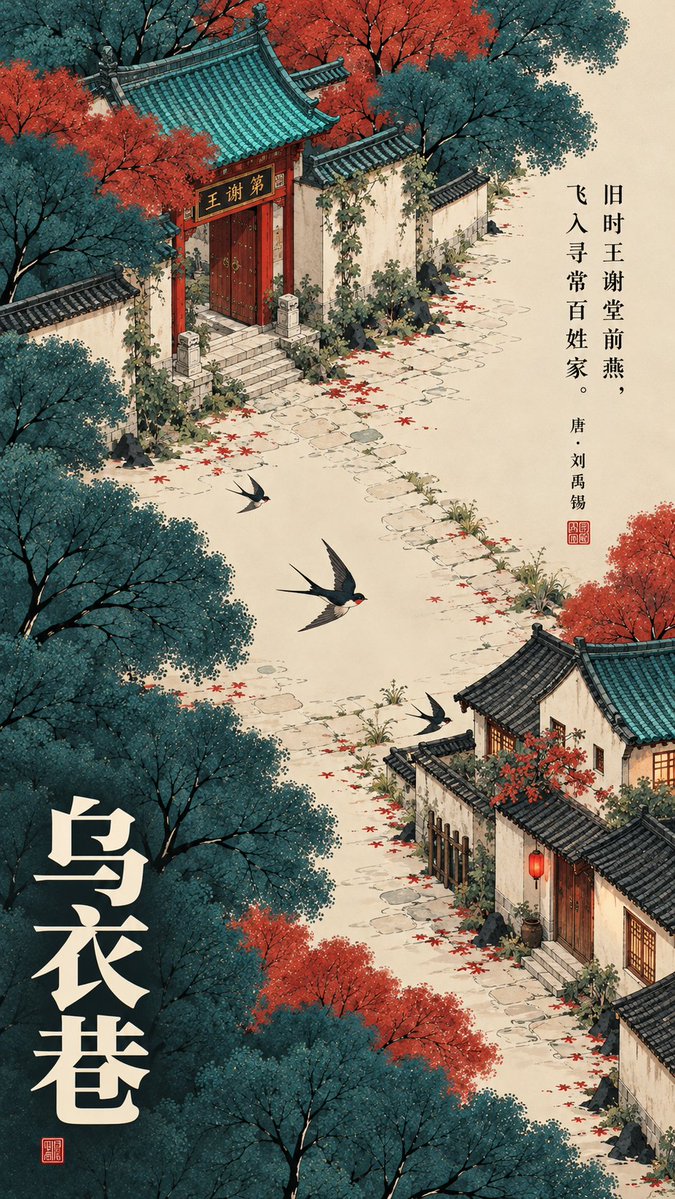
Chinese Poem Poster in Gongbi Style
A vertical poster that turns a classical Chinese poem into a flat, overhead scene of cloud-shaped trees, blue-green roofs and open beige space. Fine ink branches and red seals give it the feel of a textbook illustration.

- Model
- GPT Image 2
- Type
- 4 images
- Aspect ratio
- 9:16
- Shared
- 11 Oct 2026
- Likes on X
- 469
Fill in or extract with aiFill in with traditional eastern colors
Image prompt
2,322 characters【Classical Chinese Poem】{title, author, original text} 【Core Scene】{fill in or extract with AI} 【Key Poetic Imagery】{fill in or extract with AI} 【Visual Relationships】{for example: a red apricot branch extending over a wall, a dragonfly perched on a lotus, a shepherd boy pointing the way} 【Primary Color Palette】{fill in with traditional Eastern colors} 【Aspect Ratio】9:16 Create a contemporary Chinese-style decorative illustration poster based on the classical Chinese poem, using delicate linework and color. Transform the scenery, actions, and emotions in the poem into an Eastern scene with a clear visual narrative. Use a high-angle overhead view, Eastern scattered-point perspective, and modern flat composition. Render the tree canopies as soft, fluffy, cloud-shaped color masses, with a delicate powder-speckled texture along their edges and slender, continuous ink-black branches woven through their interiors. Depict the architecture with meticulous gongbi linework, blue-green roof tiles, warm-white walls, and vermilion wooden structures. Use consistent, finely detailed linework and flat coloring for people, animals, and plants. Their movements should appear natural, their structures accurate, and the spatial relationships between the main subjects clearly defined. Represent the ground and water with large areas of warm beige-white negative space, supplemented by a small amount of ink-toned shadow and simple fine lines. Adapt the composition flexibly to the poem, emphasize its central imagery, and maintain a clear hierarchy with an orderly balance of dense and open areas. Use traditional Eastern colors such as mineral blue, mineral green, dark indigo, cinnabar, ochre red, and ivory white. The coloring should be rich and even, clean and matte, while retaining a subtle paper texture. Add a large warm-white Chinese title, small vertically arranged lines from the original poem, the author’s signature, and a few red seals to form a complete Eastern cultural art poster. Avoid realistic photography, 3D, anime, heavy ink-wash painting, thick oil-paint impasto, complex backgrounds, excessive grain, and artificial aging. The final image should achieve the refined quality of a textbook-grade illustration, combining Eastern aesthetics, poetic negative space, and a vivid visual narrative.
How to use it
Replace the bracketed fields with your own poem title, author and original lines, and name the key imagery you want shown, such as a specific flower, animal or figure. Keep the palette list, the overhead view and the negative-space instruction, since these carry the Eastern look. It was shared as a GPT Image 2 prompt, and the 9:16 ratio suits phone wallpapers and story posts.
Shared publicly on X on 11 Oct 2026. All credit for this prompt and its result goes to its creator. Is this yours? Ask for an update or removal.