Image prompt Posters & Typography Customizable
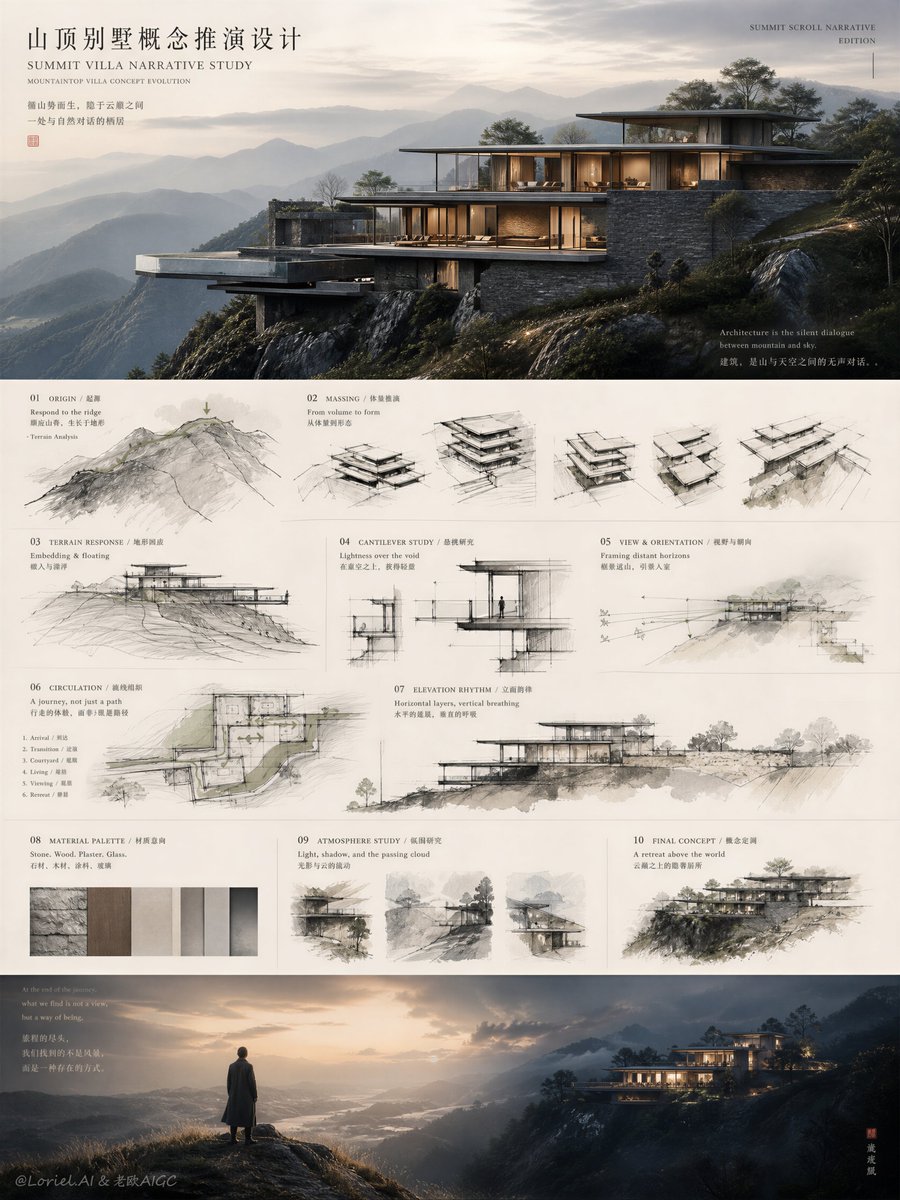
Mountaintop Villa Concept Board in Scroll Layout
A vertical architectural presentation board with a cinematic final villa render at the top, pale watercolor and ink concept studies in the middle, and a misty dusk scene closing the sequence. The result reads like a design exhibition panel.

- Model
- GPT Image 2
- Type
- Image
- Aspect ratio
- 3:4
- Shared
- 16 Jul 2026
- Likes on X
- 13
Title textSubtitle textEdition name
Image prompt
5,864 charactersCreate a premium architectural narrative presentation board for a mountaintop villa concept evolution, “Summit Scroll Narrative” edition, designed as a modern architectural scroll-like composition rather than a rigid conventional grid. The board must still preserve a clear three-part hierarchy, but the visual reading rhythm should feel like an elegant unfolding story: a dominant final design hero image at the top, a flowing sequence of conceptual hand-drawn studies and pale watercolor ideation in the middle, and a poetic atmospheric imagery zone at the bottom that acts as the emotional conclusion of the project. Top hero image: A breathtaking final rendering of a contemporary mountaintop villa dramatically positioned along a ridge or cliff edge, fully resolved and architecturally believable. The villa should feel gravity-defying yet serene: long cantilevered slabs, thin roof planes, floor-to-ceiling glazing, stone retaining walls, warm interior light, floating terraces, and panoramic views across misty mountain layers. The hero image must be cinematic, realistic, and highly premium, showing the final design as the culmination of the entire conceptual journey. The architecture should dominate visually but remain elegant and quiet rather than aggressive. Middle narrative sequence: Below the hero image, arrange a sequence of smaller concept panels as if the design is being gradually unrolled in front of the viewer. These panels should not feel like a stiff box grid; instead, they should feel rhythmically paced, with varied widths, slight shifts in alignment, and carefully controlled breathing space, like a contemporary design scroll. Show black-and-white hand-drawn massing studies, line-perspective sketches, section fragments, terrain response diagrams, detached cantilever tests, circulation ideas, elevation rhythm studies, and pale watercolor concept overlays. The studies should feel highly refined and deliberate, like the notebook pages of a world-class architect. The linework must be crisp, elegant, and premium, with restrained pale washes in warm gray, light stone beige, muted moss, smoke green, and faint ink-black diffusion. These are concept explorations, not formal polished renderings. Bottom emotional imagery zone: At the bottom, place one wider poetic atmosphere image or a pair of linked mood fragments that express the soul of the project. This zone should feel less analytical and more meditative: perhaps a solitary figure on a mountain edge, the villa glowing in the distance at dusk, wind moving through grasses, mist filling the valley, and a sense of retreat, silence, altitude, and emotional architecture. This section should feel like the final breath of the board, the place where the concept becomes mythic and human. Overall composition logic: The full board should read vertically but also feel like a soft visual journey from vision to ideation to spirit. Avoid making every module identical. Let the composition resemble a curated architectural exhibition panel or a contemporary scroll of design thinking. Use strong hierarchy, elegant alignment, generous negative space, and visual pacing so that the board feels highly designed and editorial rather than merely technical. Architectural identity: The villa language should merge modern luxury retreat architecture with mountain sensitivity: concrete slabs, charcoal stone, pale plaster, smoked wood, warm oak interiors, slim black steel frames, open terraces, terrain-integrated platforms, and quiet landscape insertions. The design should feel exclusive, buildable, contemplative, and world-class. Typography and layout: Use a Chinese main title such as “山顶别墅概念推演设计” paired with an English subtitle such as “SUMMIT VILLA NARRATIVE STUDY” or “MOUNTAINTOP VILLA CONCEPT EVOLUTION”. Typography should be integrated like a premium architectural exhibition board, not a commercial poster. Add refined English annotation lines, numbered concept notes, section labels, terrain comments, and a few short editorial architectural phrases. The title area should feel elegant and intentional, while the smaller text should help guide the narrative flow through the scroll-like sequence. Keep all fonts thin, precise, spacious, and beautiful. No crude bold type, no messy infographic density. Color palette: Use a premium restrained palette: charcoal black, graphite gray, ivory paper, soft stone beige, muted forest green, pale mist gray, warm amber interior light, and subtle ink-wash accents. The final hero image should be richer and more realistic, while the concept panels remain mostly monochrome with delicate pale watercolor touches. The bottom mood zone should feel atmospheric and cinematic but still harmonize with the rest of the board. Lighting and rendering: The hero image must have refined cinematic architectural lighting and realistic mountain atmosphere. The concept sketches should feel crisp, clean, paper-based, and intelligently hand-rendered. The bottom mood imagery should feel poetic, spacious, and gently luminous. The whole board must look like a premium architectural publication spread fused with a design competition presentation sheet. Mood: elevated, visionary, poetic, architectural, narrative, premium, serene, intelligent, editorial, contemplative. Rendering style: hyper-realistic final architectural visualization combined with refined black-and-white hand-drawn concept studies, pale watercolor architectural ideation, premium editorial scroll-like board composition, museum-grade presentation design, 8k, sharp but elegant. Negative prompt: cheap infographic board, childish sketches, messy watercolor, rigid repetitive grid, cartoon house, cluttered layout, oversaturated colors, generic villa render, ugly bold fonts, low-detail terrain, chaotic notes, sci-fi architecture, random disconnected concept panels
How to use it
It was shared as a GPT Image 2 prompt, and the 3:4 portrait format is what gives the scroll-like flow. Keep the three-zone structure and the restrained palette of stone, ivory and moss, since those carry the editorial feel. To make it yours, swap the Chinese title and English subtitle for your own project name, or change the villa's setting and materials while keeping the cantilever and glazing language.
Shared publicly on X on 16 Jul 2026. All credit for this prompt and its result goes to its creator. Is this yours? Ask for an update or removal.