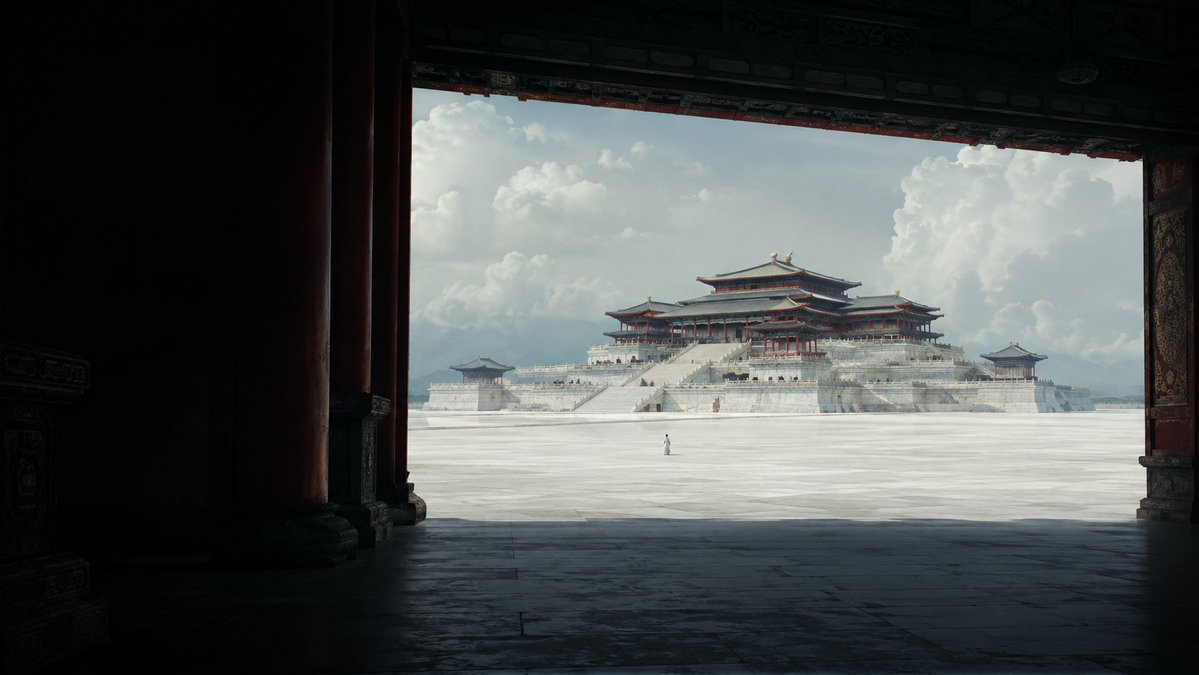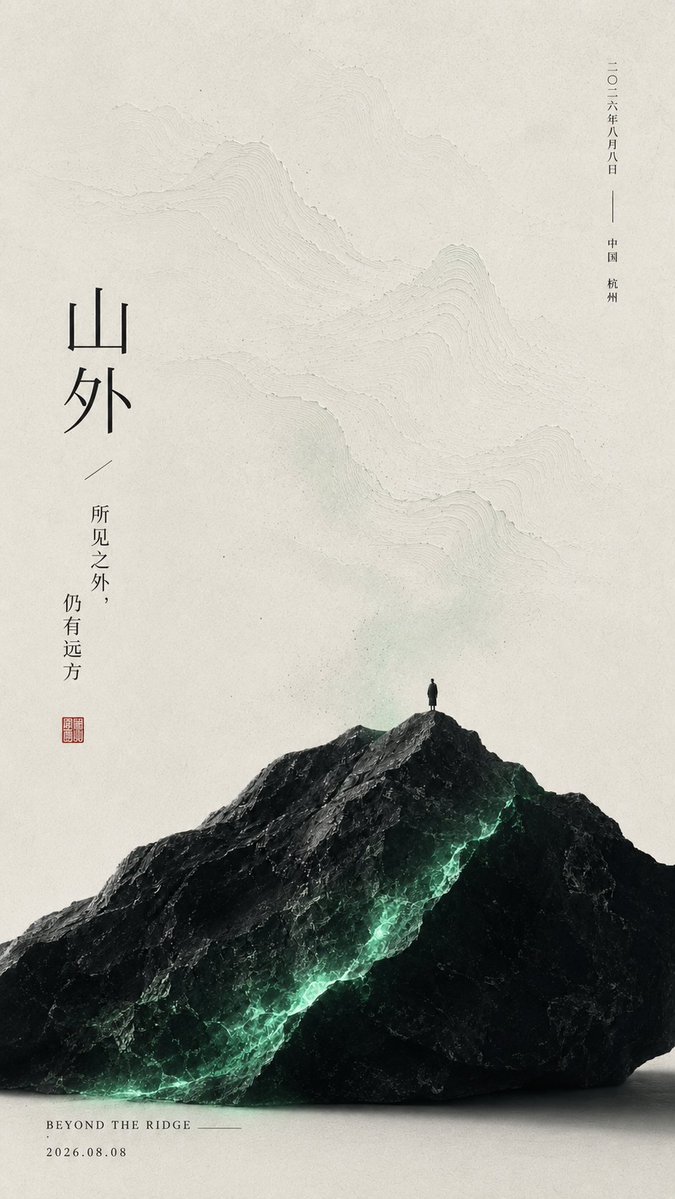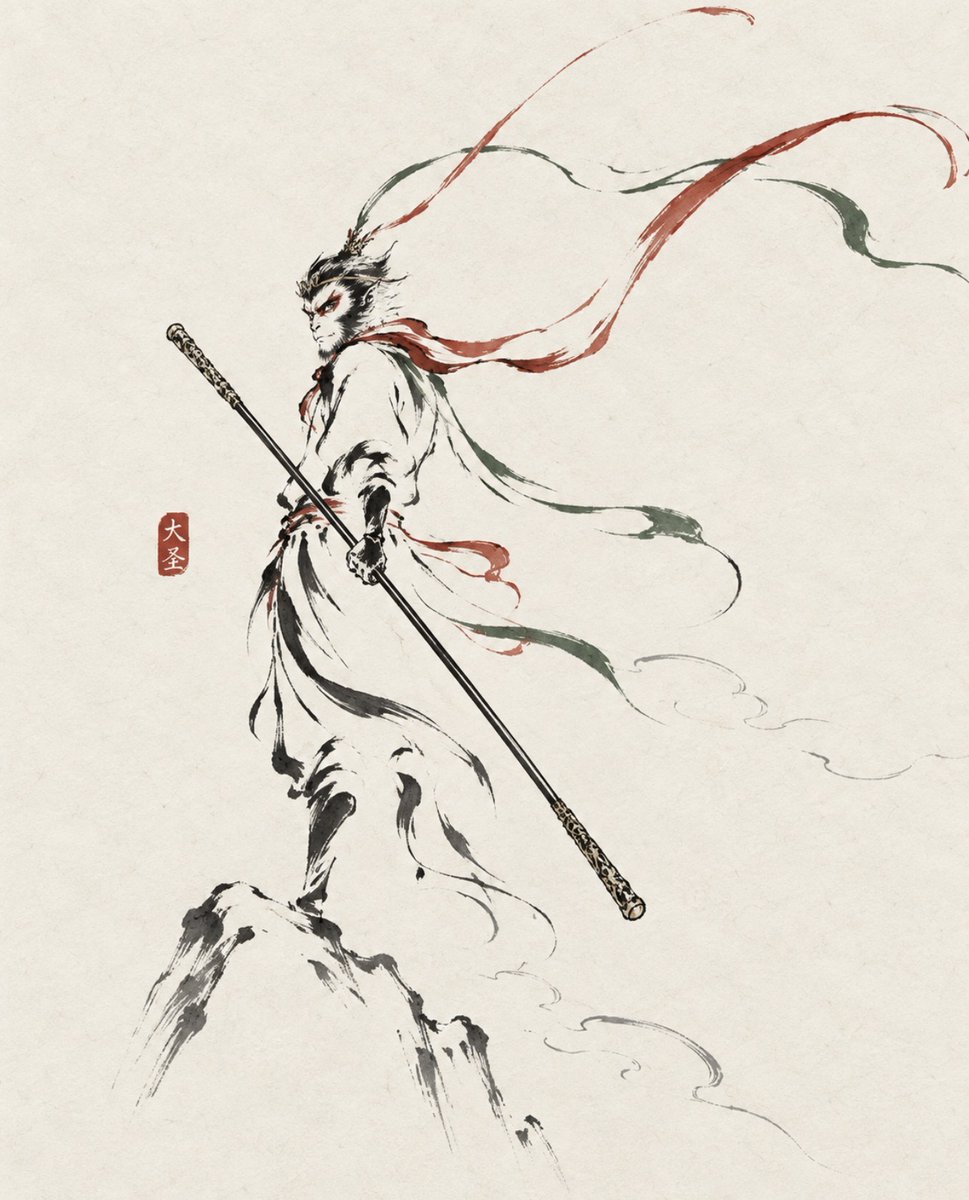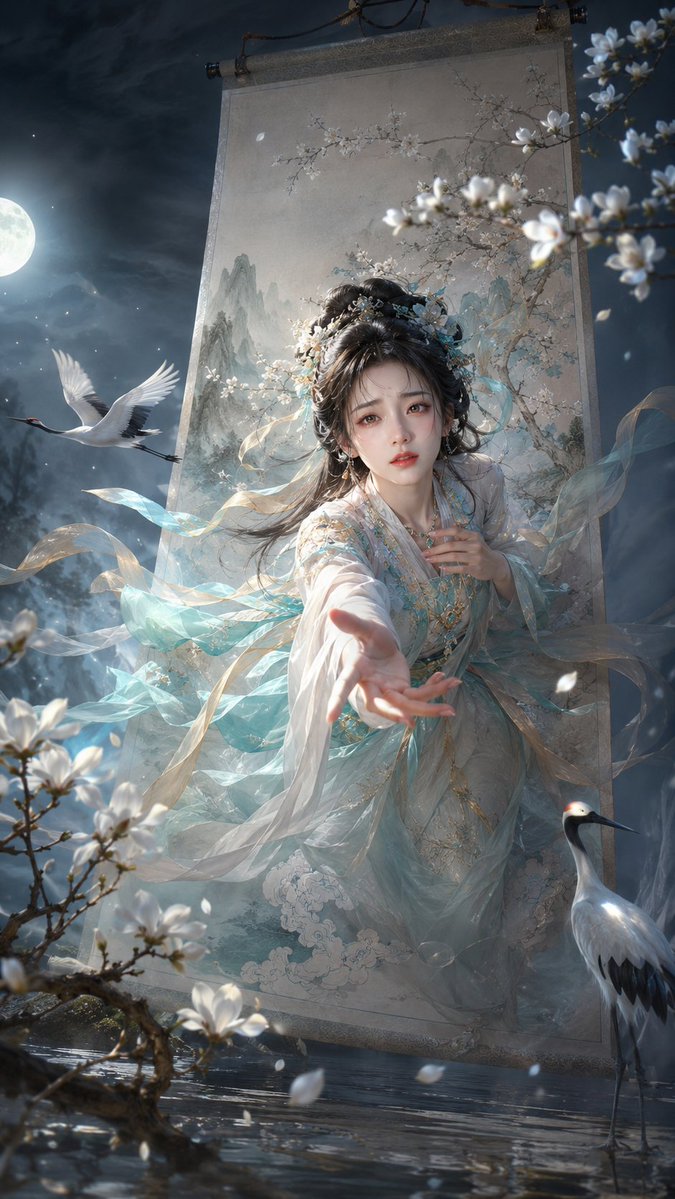
Prompt d'image Affiches et typographie Personnalisables
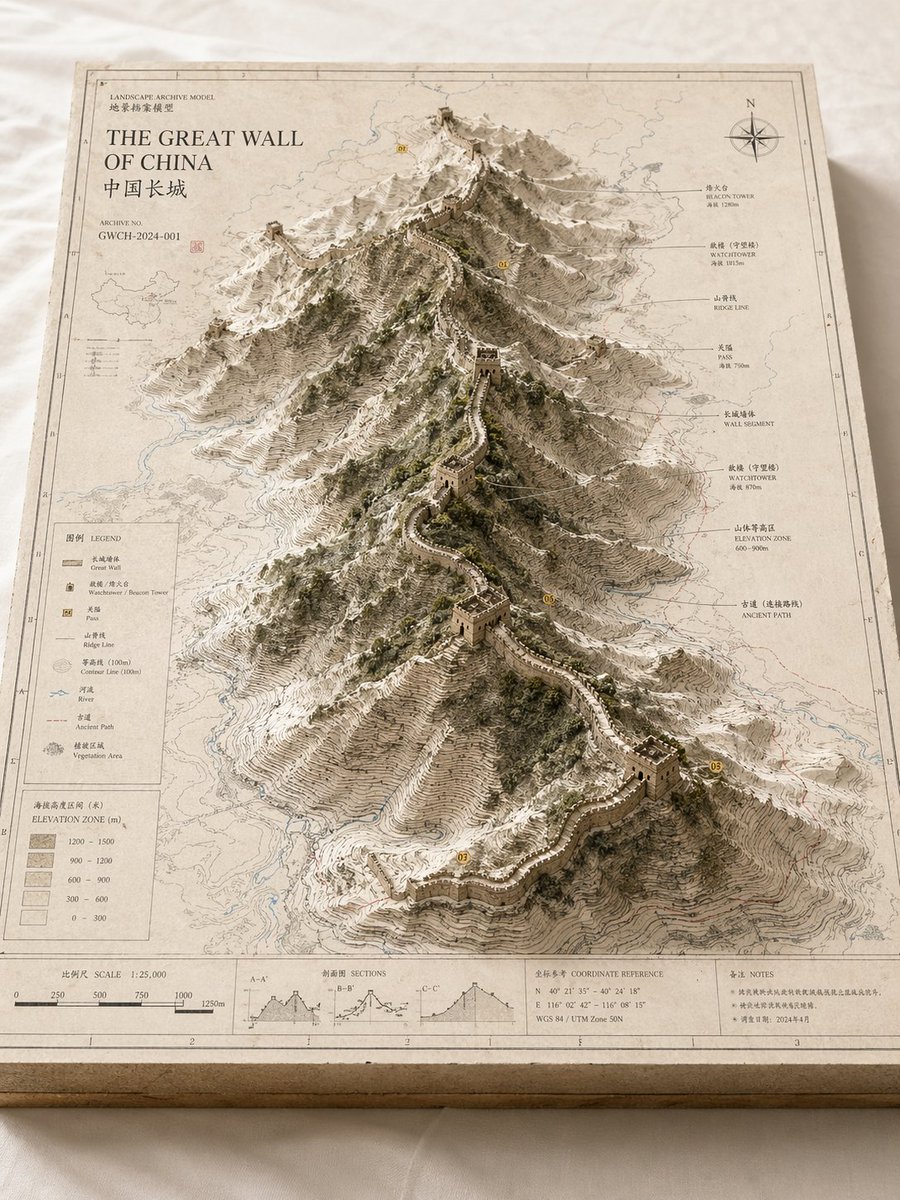
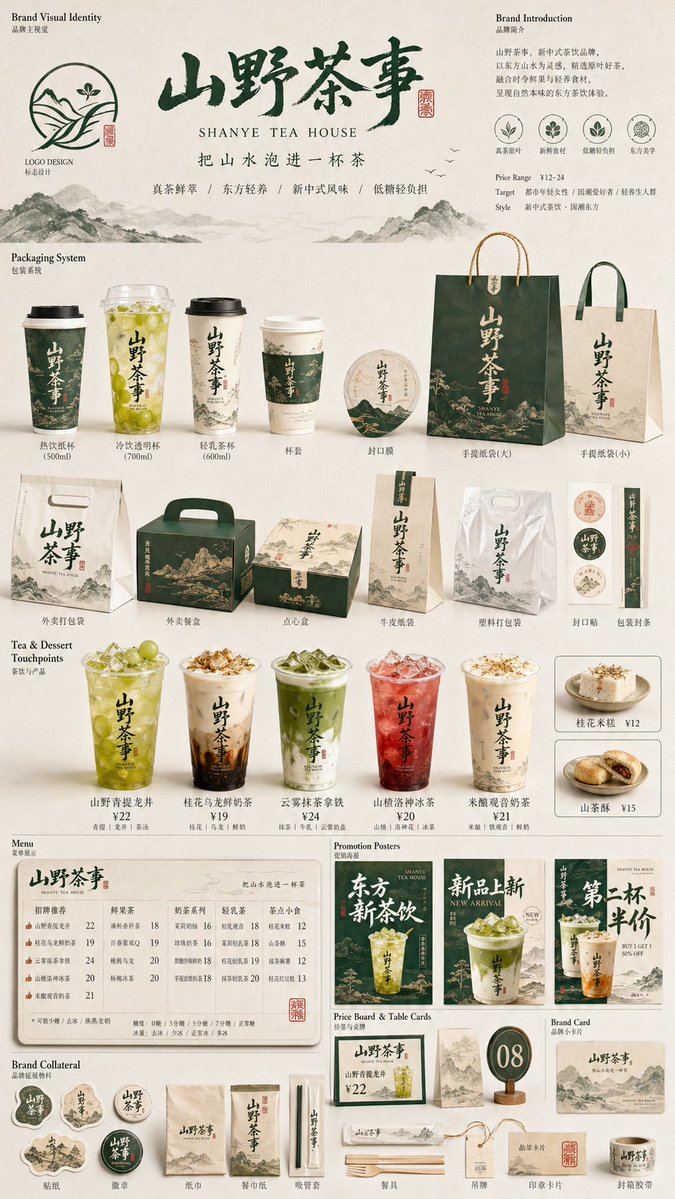
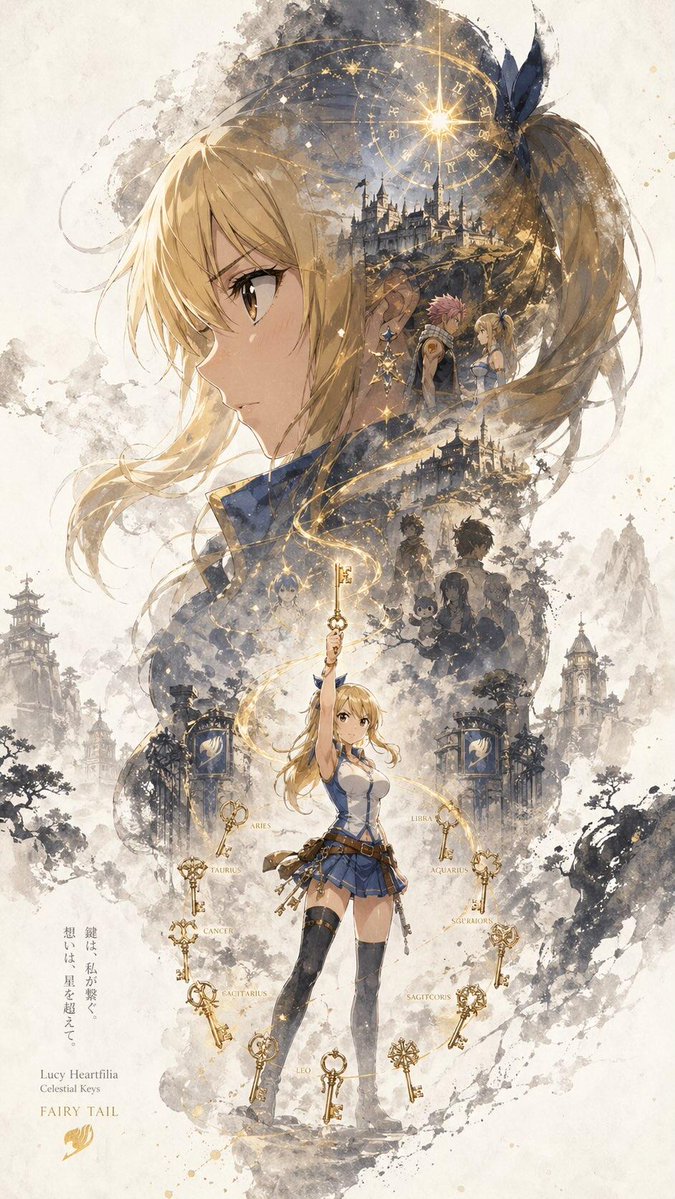
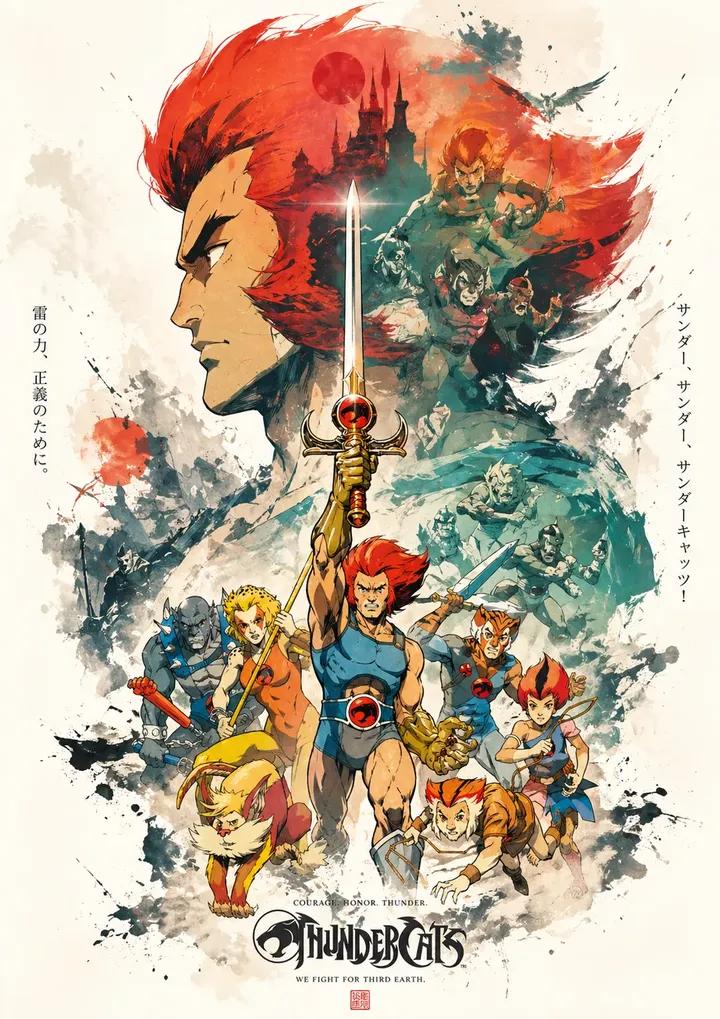
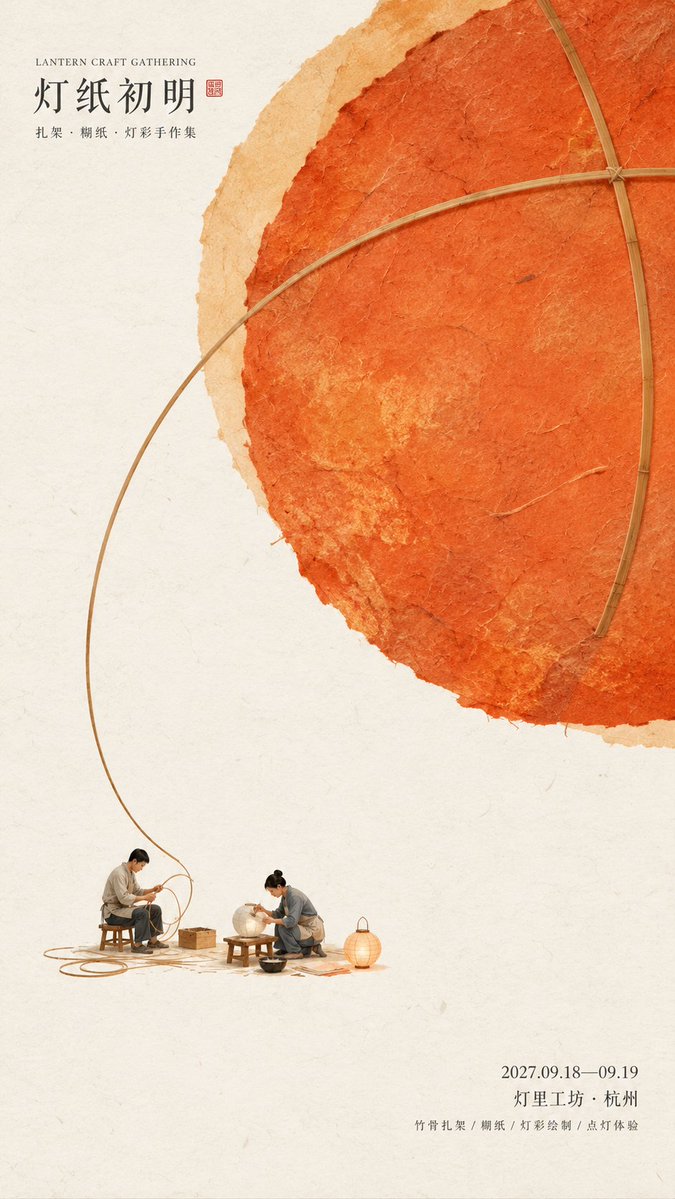
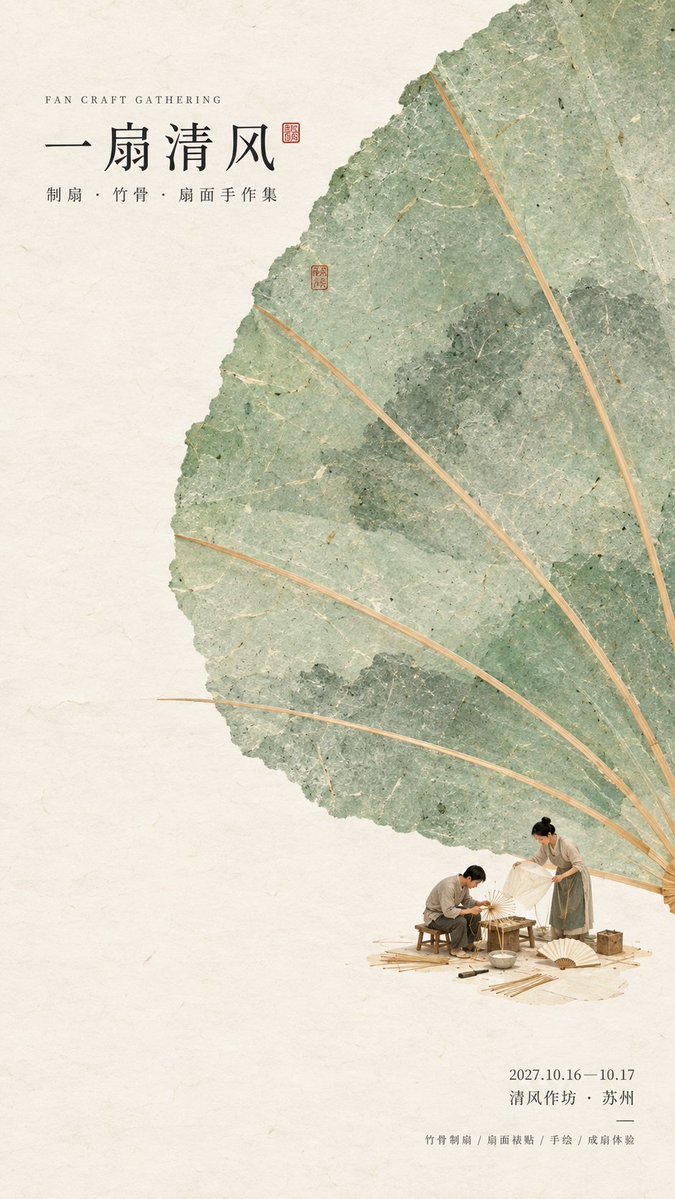
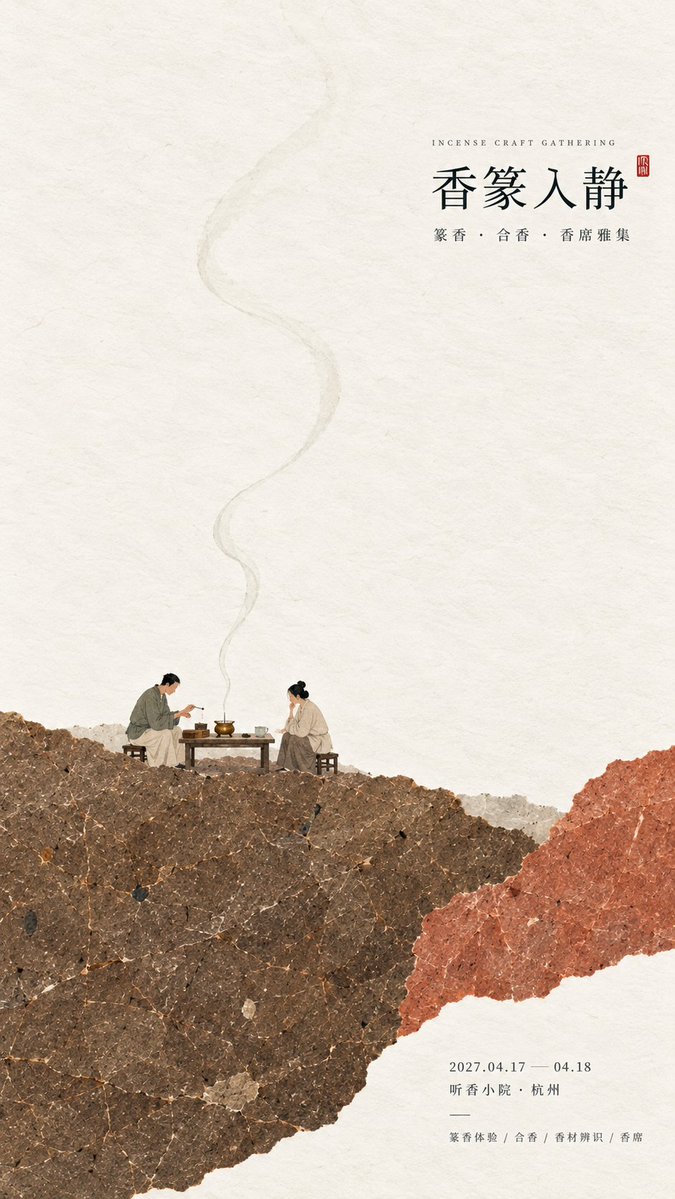
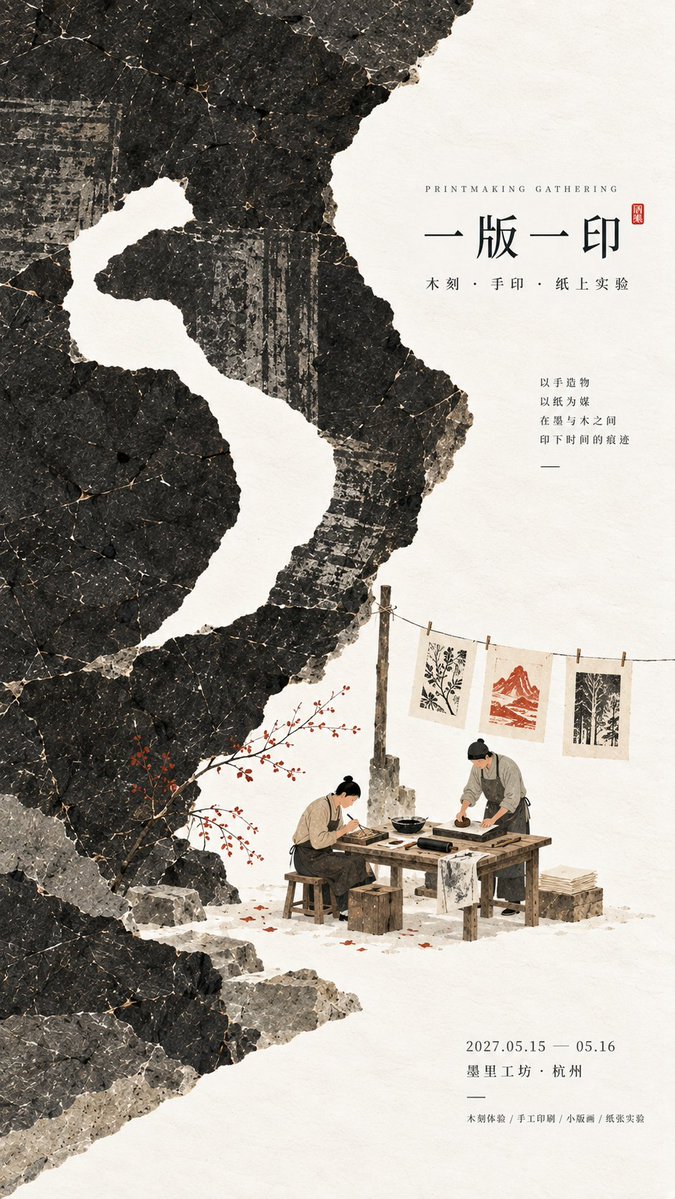
Affiche d'événement culturel oriental en texture de papier fait main
Une affiche verticale composée de grands aplats de couleur mate sur papier, dont le grain de fibres et de pâte est visible de près. De minuscules personnages réalisant un véritable travail artisanal se glissent entre les aplats : la forme forte se lit en premier, et la petite histoire récompense un regard plus attentif.

- Modèle
- GPT Image 2
- Type
- 4 images
- Format d'image
- 9:16
- Partagé
- 16 sept. 2026
- J'aime sur X
- 213
À compléter
Prompt d'image
4,148 caractères【Theme / Event name】{fill in, e.g.: lantern craft / fan-making gathering / incense culture / woodblock printing} 【Main title】{fill in} 【Core main form】{fill in one single strongest large form, e.g.: giant paper circle / fanned-out fan / agarwood color block / heavy ink-black panel} 【Main color palette】{fill in 2–4 colors, e.g.: warm orange + apricot yellow + warm white / celadon green + warm white + cinnabar accents / agarwood brown + cream / ink black + warm white + vermilion} 【Micro scene】{fill in one real small cultural scene, e.g.: pasting paper lanterns / mounting fans / blending seal incense / block printing} 【Cultural elements】{a few essential objects, e.g.: bamboo ribs, thin paper, incense burner, printing block, carving knife, fan frame, paper lantern} 【Event info】{date / place / type, optional} 【Aspect ratio】9:16 vertical Design a cultural event poster with modern oriental editorial aesthetics, using "paper fiber + large color fields + micro scene" as the core visual language, and emphasize a refined, quiet, restrained handmade-paper texture. First establish one single strongest main form, with the 【Core main form】 carrying the first visual impact, such as a giant circle, fan shape, low horizontal platform, or heavy black panel, so that from afar the viewer is first drawn to one clear large form rather than many fragmented elements. Use the 【Main color palette】 to build 2–4 large paper color blocks of clearly different areas, forming front/back, overlapping, or slight structural relationships, but without piling them too full. All color blocks must have real handmade-paper, watercolor pulp, or mineral pigment texture, with visible natural long and short fibers, pulp grain, natural density variation, slight press marks, and irregular torn edges, overall staying matte, clean, and intact, without dirt, yellow stains, strong grain, or cheap retro filters. Colors low-saturation but full in density: clear recognizability from afar, material detail up close. Between the large color fields, add a 【Micro scene】 that is very small in scale but complete in content. Figures and props occupy about 3%–5% of the image; figures must be doing something real, such as tying lanterns, pasting paper, making fans, laying paper, blending incense, lighting incense, carving a block, inking, or pressing, rather than standing and posing. Tell a quiet, clear small story through action, tools, and spatial relationships. The 【Cultural elements】 keep only the few truly necessary items, letting objects serve the narrative, without product display or piling on traditional decorations. You may add a tiny amount of accent color, such as cinnabar red, warm yellow lamplight, or a small seal, but usually keeping the area within 1%–3% and with a real relationship to the content, such as a wax seal, stamp, lamplight, or a finished small work, rather than arbitrary decoration. The overall visual should be "a strong large form from afar, and only up close do you discover the figures, objects, and paper-fiber details," combining aesthetic completeness with a miniature narrative sense. The layout uses the language of modern oriental cultural institutions, exhibition events, or editorial design. The main title 【Main title】 uses a refined Chinese Song/Ming serif or a modern typeface with a publishing feel, kept at medium-small size so the text does not overpower the large color fields. Auxiliary English, date, place, and descriptive info use smaller sizes, forming a clear hierarchy and keeping appropriate white space. All text must carry real meaning, without meaningless placeholder words like RANDOM, DESIGN, ART, STUDIO. The overall style should embody the combination of paper collage, watercolor texture, miniature handcraft scenes, and oriental editorial layout, with a refined, calm, restrained, and breathable temperament. Avoid a book-cover look, traditional antique illustration, huge titles, full-screen ancient architecture, element pile-up, PPT-style layout, commercial-ad feel, dirty paper, 3D CGI, glass material, plastic feel, neon colors, logos, watermarks, numbering, and starburst decorations.
Comment l'utiliser
Ce prompt repose sur du texte. Commencez donc par remplir les champs entre crochets : le thème de l'événement, le titre, une forme principale, deux à quatre couleurs de palette, une micro-scène et une courte liste d'objets culturels. Conservez les instructions sur la fibre du papier, la finition mate et l'échelle de 3 à 5 pour cent des personnages, car ces détails portent le rendu. Il a été partagé comme prompt pour GPT Image 2, et le résultat convient à un flyer de festival, une carte d'exposition ou une page éditoriale imprimée.
Dans les collectionsPrompts pour affiches d'événements et de concerts
Partagé publiquement sur X le 16 sept. 2026. Tout le mérite de ce prompt et de son résultat revient à son créateur. Ce prompt est le vôtre ? Demandez une mise à jour ou un retrait.