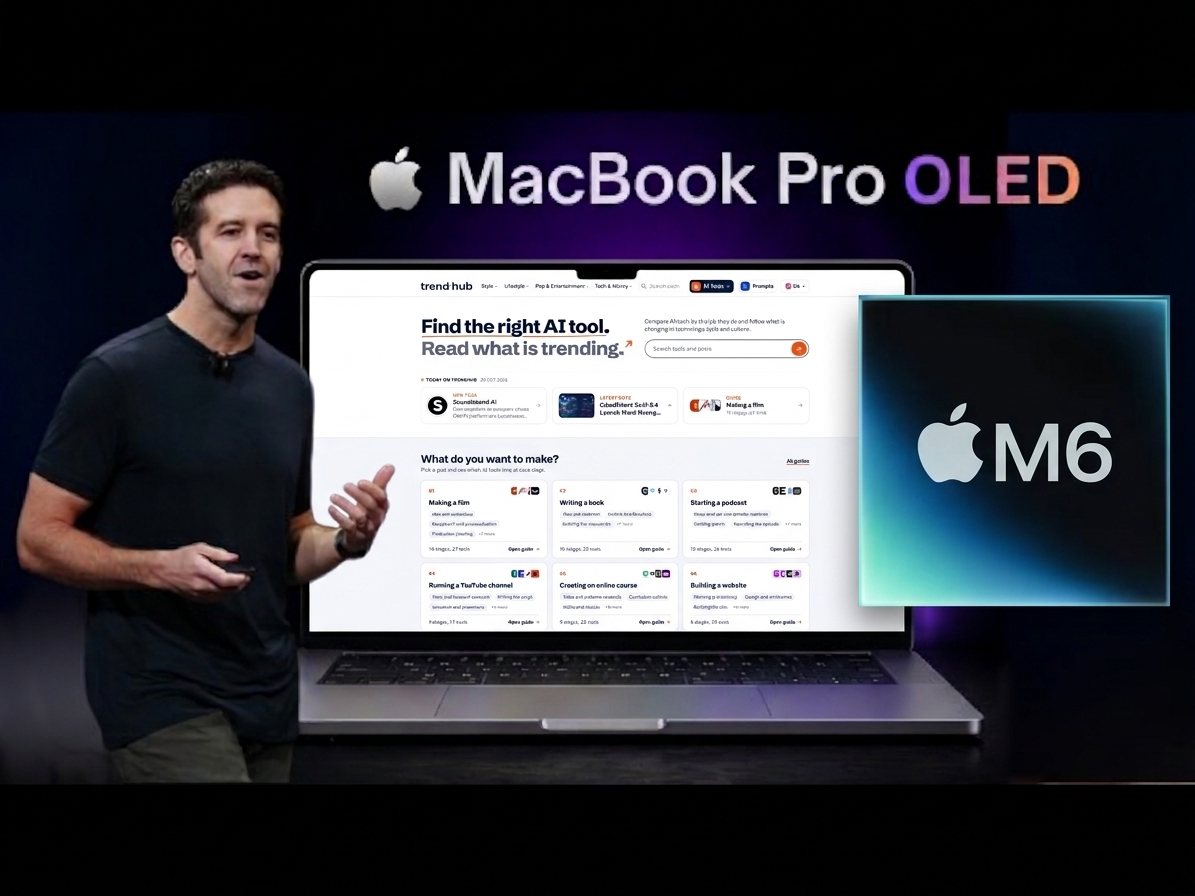
Apple Finally Added Touch to the MacBook Pro. Now What?
Apple announced its first touchscreen MacBook Pro on October 28. Here is what touch changes, who it suits, what it costs and what to watch before you buy.
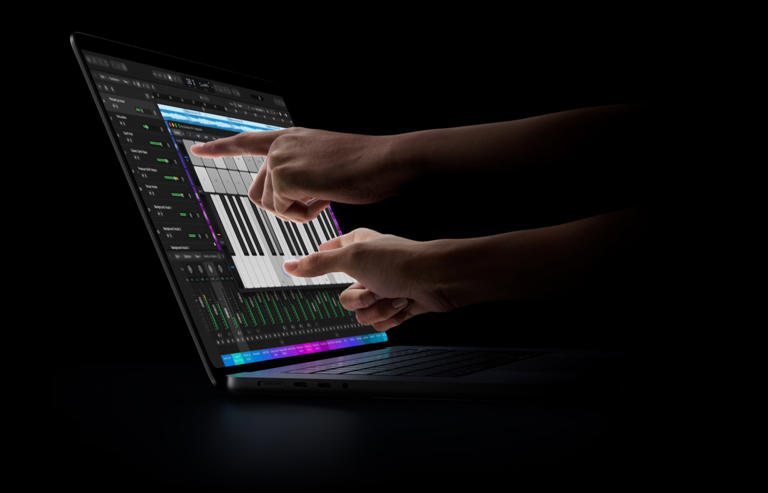
You have done it on a laptop: reached out to scroll a page, tapped the screen, and felt your finger meet glass that did nothing. On October 28, 2026, Apple announced a MacBook Pro where that tap finally works, in 14-inch and 16-inch sizes. It was shown at the "Pro and tell" event, and it is the first touch input on a Mac. Touch is a defensible bet because it sits on top of the trackpad instead of replacing it, though we are holding a final verdict until real reviews land.
This is no longer a rumor. A Chinese leaker known as Instant Digital called the touchscreen MacBook "100% confirmed" in a Weibo post, citing supply-chain sources, and Apple's announcement bore that out. Our claim is simple: touch is a defensible bet because it sits on top of the trackpad instead of replacing it, though we are holding a final verdict until real reviews land. One detail is disputed: TechCrunch says pre-orders open October 30, 2026, while Apple's newsroom and The Verge say they opened October 28, 2026. Everyone agrees on availability: November 6, 2026.
Why did Apple say no for so long?
Back in 2010, Steve Jobs said touch surfaces don't want to be vertical, since reaching up to a screen wears out your arm. Two years later, Tim Cook compared merging a tablet system with a laptop system to converging a toaster with a fridge.
The stance held for years. In 2021, John Ternus described the Mac as totally optimized for indirect input, with no compelling reason for Apple to change course. Ternus is now CEO, and this is among the first products launched under him.
Apple did flirt with touch without a touchscreen, through the Touch Bar, and later dropped it. Rumors of a real touch Mac go back to January 2023, when Bloomberg's Mark Gurman first tied it to an OLED MacBook Pro. The date slipped, but the direction held.
Apple is also late rather than first: Windows laptops have offered mainstream touchscreens for well over a decade.
What you actually get
This is not a laptop-tablet hybrid. The machines run macOS, not iPadOS or iOS, and the screen neither folds nor detaches. Every tap is converted into a click, so any clickable button can be touched and many existing apps work right away. Touch is entirely optional, and you can keep using the trackpad and keyboard.
The touch sensor is built into the display panel instead of layered on top, which Apple says means no added latency. A redesigned hinge keeps the screen steady when you tap.
The panel is the first OLED in a MacBook, where pixels light individually for deeper blacks. Sustained full-screen brightness tops out at 1,000 nits. For you, that means richer contrast in movies and photos, and highlights that pop.
By the numbers
- $2,899: starting price of the 14-inch touch model, with M5 Pro, 24GB RAM and 1TB storage
- $3,399: starting price of the 16-inch touch model
- $400: the touch premium over the non-touch version of each size
- $14,549: the fully loaded 16-inch, with the ceiling up $4,400 from the previous model
- 24 hours: rated battery life
- 9.5%: Apple's global computer market share in Q3 2026, per IDC preliminary estimates
Who will use it, and who will roll their eyes
In our assessment, the people who gain most are those who annotate, sketch, review documents, scroll, or run Sidecar-style setups with an iPad. A CNBC reviewer expects touch to shine for scrolling websites or documents while lying down.
Now the strongest objection, that touch on a laptop is a gimmick. A 9to5Mac commenter says laptop touchscreens are not a great experience, and Engadget's Nathan Ingraham doubted Apple Pencil could work given the hinge angle. The CNBC reviewer adds that touch won't change how most people use laptops. Our answer: that holds for writers, coders and spreadsheet users, where the keyboard and trackpad stay faster, but not for annotating and reviewing.
Budget buyers can relax. Chances that touch reaches the MacBook Air or entry models soon look low.
Glare, hinges and apps: the catch
Glossy OLED plus fingerprints is a real trade-off. Apple answers with an antireflective coating, a fingerprint-resistant coating, and a nano-texture option at $150.
CNBC tested both sizes briefly at the event and saw no fingerprint marks during touch use. Its reviewer felt the hinge is largely the same as on earlier MacBook Pros. Nobody has tested glare, long-term hinge stability or touch latency yet, so we will wait for the first real tests.
Software is the other gap. Mac controls were built for trackpads, so they are small and closely spaced. Apple names Notion, Canva, Zoom, Microsoft Office, Adobe Lightroom, DaVinci Resolve and Blender among the apps adding dedicated touch support later this year. On launch day, Xcode 27.3 beta, documentation and design resources were still marked "Coming soon", with developer labs set for November 18 and 19, 2026.
Is the price the real story?
The non-touch models remain on sale, so touch is an extra $400 on a price that Apple had already raised earlier this year. Apple blamed rising memory and storage costs.
The touch premium is modest by Apple's own habits, as Bloomberg's Mark Gurman noted of the iPhone X in 2017 and the iPad Pro in 2024. The real sticker shock comes from the options: add pricey storage and memory and the 14-inch climbs far higher. So if you want touch, budget for the configuration, not just the premium.
Prices are unlikely to come back down soon: IDC expects consumer PC prices not to return to year-earlier levels, because memory makers are shifting capacity toward AI servers. Apple's global computer market share rose to 9.5% in Q3 2026 in a shrinking PC market, so Apple does not need touch to sell volume. That makes touch at this price a bet on the high end, not a mass-market play.
What comes next, and what to do while you wait
Two rumors compete on cheaper models, and neither is firm. Gurman's reporting points to a base M7 version next spring, with M7 Pro and Max expected late 2027. Memeburn, citing an Apple roadmap, instead says a cheaper M7 MacBook Pro without OLED arrives in mid-2027. Both are low-confidence, so treat the timing as open.
Our take: Apple was right to add touch. Jobs' objection was about arm fatigue from reaching up to a screen, and now that depends on how often you actually reach for it. The quiet "touch-friendly" framing and thin macOS changes read as a hedge: ship the hardware, learn, refine later. The risk is that early buyers pay a premium for unfinished software.
Our forecast is a niche flagship beside the non-touch line, with the older mini-LED models slowly phased out. Omdia says those panels stay in production through 2028, so the exit will be gradual. Poor reviews or weak app support would stall it.
Our verdict is on hold until independent reviews of glare, latency and the hinge arrive. Until then, check whether your own apps have touch versions, and whether a base M7 model arrives next spring with or without touch.
Fonti 18Apple Newsroom, MacRumors, The Verge e altre 15 fonti
- Apple Newsroom (Oct 28, 2026). Apple unveils groundbreaking MacBook Pro with PROLED XDR Display
- MacRumors (Oct 28, 2026). Apple Announces OLED MacBook Pro With Touch Display - MacRumors. Juli Clover
- The Verge (Oct 28, 2026). Watch Apple’s reveal video for the touchscreen MacBook Pro. Stevie Bonifield
- MacRumors (Jun 11, 2026). Touchscreen MacBook '100% Confirmed,' Says Reputable Leaker - MacRumors. Tim Hardwick
- APPDOOK (Oct 26, 2026). Touchscreen MacBook Pro to cost significantly more - APPDOOK. Pinkesh Gajera
- MacRumors Forums (Jun 11, 2026). Touchscreen MacBook '100% Confirmed,' Says Reputable Leaker
- BGR (Oct 28, 2026). Apple's Next-Gen MacBook Pro Is Here With An OLED Touchscreen And A Fan-Favorite Feature Returning - BGR. Connor Jewiss
- TechCrunch (Oct 28, 2026). Apple’s touchscreen MacBook Pro pushes laptop pricing to a new extreme. Lauren Forristal
- BGR (Jun 13, 2026). Why Do Macs Not Have Touch Screens? - BGR. Asad Kashif
- Tech Times (Oct 9, 2026). Apple's Touchscreen MacBook Is Finally Near: Expected Features, Chips, and Launch Window. Jose Enrico
- CNBC (Oct 29, 2026). Hands-on with Apple's first touchscreen laptop: Touch is totally optional
- Tech My Money (Oct 29, 2026). MacBook Pro with PROLED XDR Display Brings Touch to Mac. Michael John-Anyaehie
- Engadget (Oct 28, 2026). Apple Pro and Tell event: Live updates as we wait to see a MacBook Pro with a touch screen - Engadget. Cherlynn Low
- DynaSage (Oct 10, 2026). Mac Shipments Fall, But Apple Still Gains Ground in Shrinking Market. Utsanjan Maity
- 9to5Mac (Oct 18, 2026). Apple's first touchscreen MacBook could debut on November 6: Here's what to expect - 9to5Mac. Michael Burkhardt
- 9to5Mac (Oct 28, 2026). Apple releases touchscreen Mac developer videos, with live sessions coming in November - 9to5Mac. Marcus Mendes
- Memeburn (Jul 30, 2026). 6 MacBook Pro OLED Display Upgrades and Why They'll Cost You - Memeburn. Vincee Cole
- 9to5Mac (Oct 25, 2026). Touchscreen OLED MacBook Pro launches this week, here's how the lineup will look - 9to5Mac. Michael Burkhardt
Ultimo aggiornamento: 29 ott 2026. Questo articolo si basa su notizie e dati di queste fonti; i link nel testo portano alle più importanti.
Strumenti per questo

Canva
Suite di design nel browser per post social, presentazioni, video e stampa, con strumenti di IA integrati.
Citato in questo articolo

Pencil
Piattaforma di marketing basata su IA che riunisce modelli per immagini, video e testo in un unico workspace per creare e lanciare creatività pubblicitarie.
Citato in questo articolo
Commenti
Ancora nessun commento. Scrivi per primo che cosa ne pensi di questo articolo.