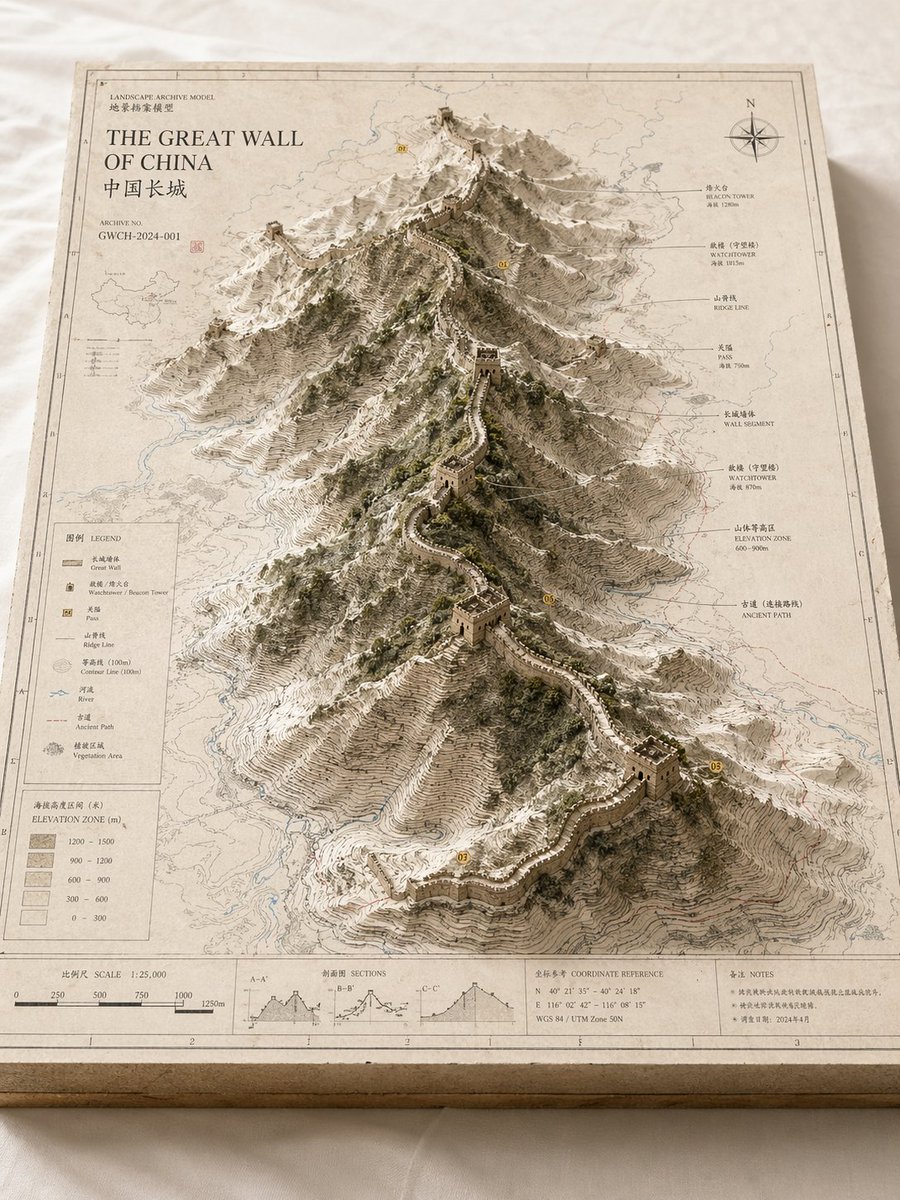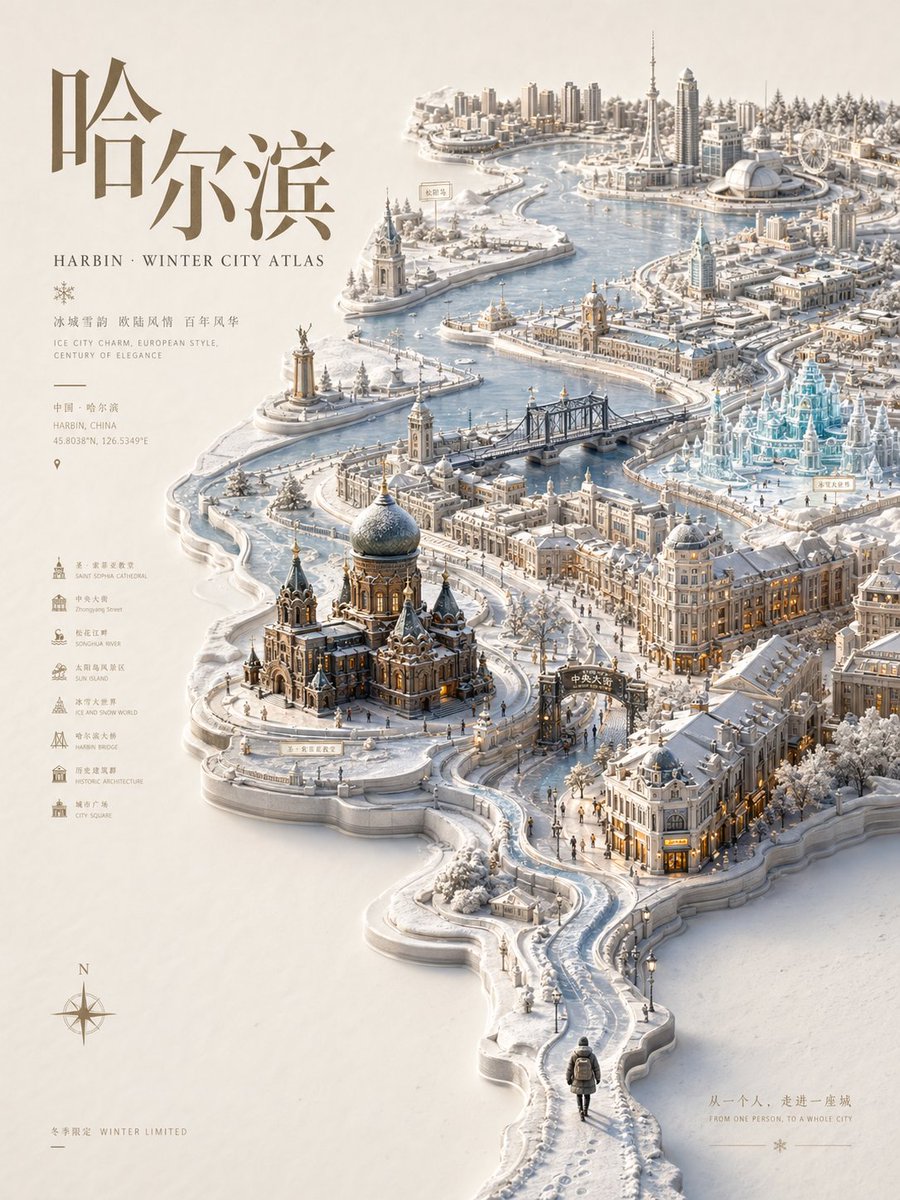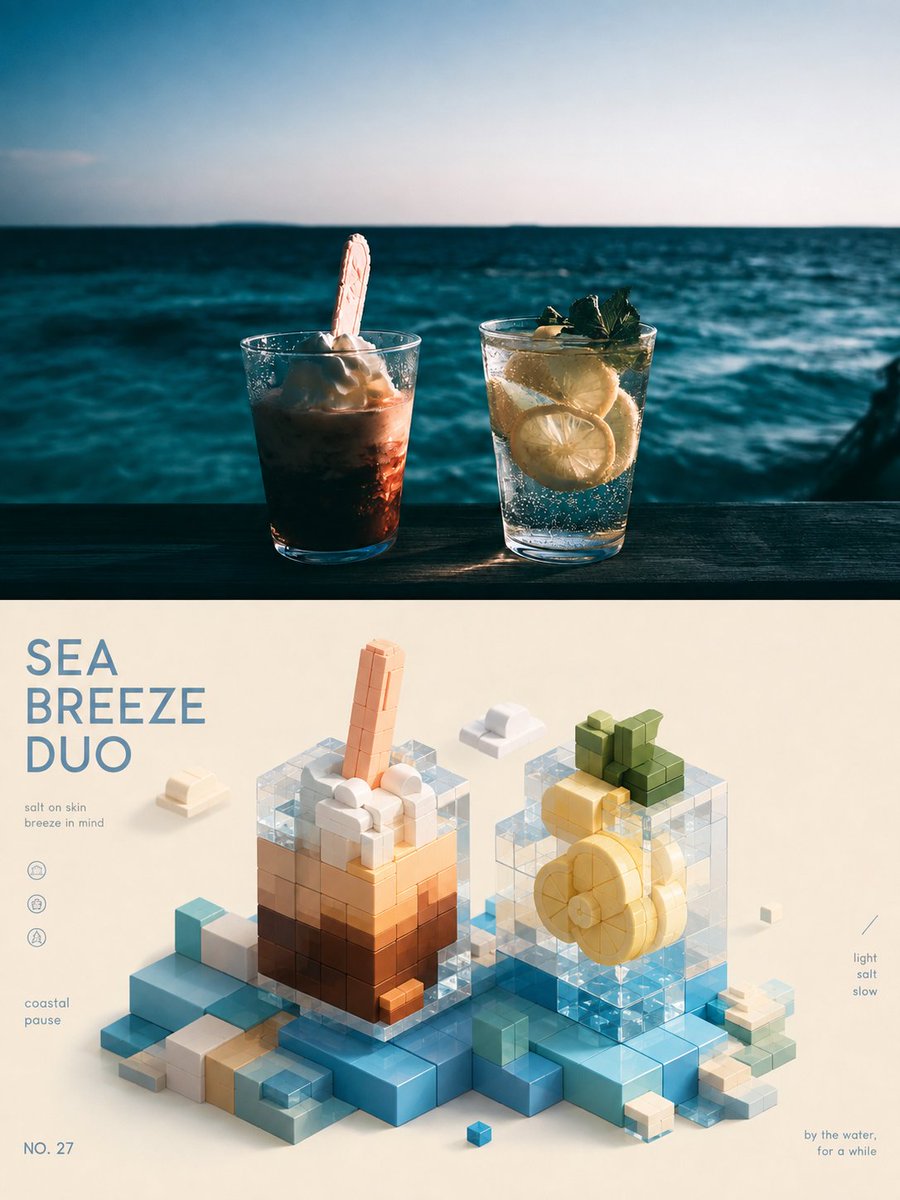


Prompt per immagini Poster e tipografia Personalizzabili
Dalla planimetria urbana al poster di paesaggio urbano realistico
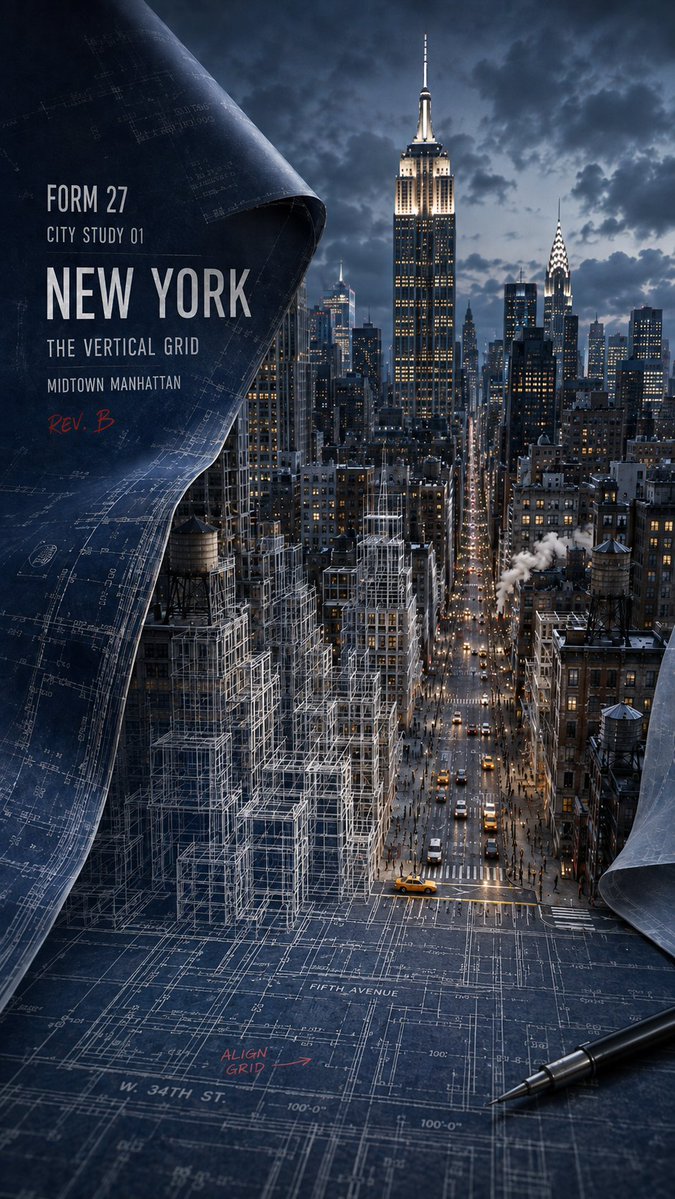
Un poster architettonico verticale in cui una planimetria su carta blu navy, con linee tecniche, si solleva da una pianta 2D piatta a modelli wireframe bianchi e infine a una città realistica sullo sfondo. Il passaggio dal disegno alle strade vere è il punto centrale.

- Modello
- GPT Image 2
- Tipo
- 4 immagini
- Proporzioni
- 9:16
- Condiviso
- 3 ago 2026
- Mi piace su X
- 41
Punto di riferimento principalePunto di riferimento secondarioColore d'accentoNumeroLettera
Prompt per immagini
1,442 caratteriCreate a 9:16 architectural city-study poster for [CITY], showing the transformation from urban blueprint to real city. Keep a naturally curled section of dark-blue design paper on the left side, with visible paper texture, folds, and technical drawing lines. The foreground should remain a flat 2D city plan. In the middle, roads, buildings, trees, railways, or shorelines rise into white wireframe structures. In the background, they gradually become a fully realistic cityscape. Build the composition around the city’s real urban structure: [GRID STREETS / LAYERED RAILWAYS / RIVERFRONT SHORES / RADIAL BOULEVARDS]. Use [PRIMARY LANDMARK] as the main visual anchor, and [SECONDARY LANDMARK] smaller in the distance. Let one key element — such as a street, train, river, or boulevard — clearly cross the boundary between blueprint, wireframe, and reality. Use deep navy and graphite blue as the base, with realistic architectural materials, restrained warm lights, and a small amount of [ACCENT COLOR]. Add realistic city details like vehicles, pedestrians, and local urban features. Overlay clean editorial text in the composition: FORM 27 CITY STUDY [NUMBER] [CITY] [SUBTITLE] REV. [LETTER] Photorealistic miniature architectural style, strong depth, believable geography, and a clear 2D-to-3D transition. Avoid rigid poster boards, random landmark collage, excessive neon, cluttered tools, unreadable text, and abrupt transitions.
Come usarlo
Inizia sostituendo il nome della tua città, la struttura urbana (strade a griglia, linee ferroviarie sovrapposte, lungofiume o viali radiali) e i due punti di riferimento, uno principale e uno più piccolo sullo sfondo. Mantieni la carta blu scuro arricciata, la pianta piatta in primo piano e la parte intermedia wireframe graduale, perché sono loro a portare la transizione da 2D a 3D. È stato condiviso come prompt per GPT Image 2 e funziona bene come stampa 9:16 o sfondo per il telefono.
Condiviso pubblicamente su X il 3 ago 2026. Tutto il merito di questo prompt e del suo risultato va al creatore. È tuo? Chiedi un aggiornamento o la rimozione.