Prompt d'image Affiches et typographie Personnalisables
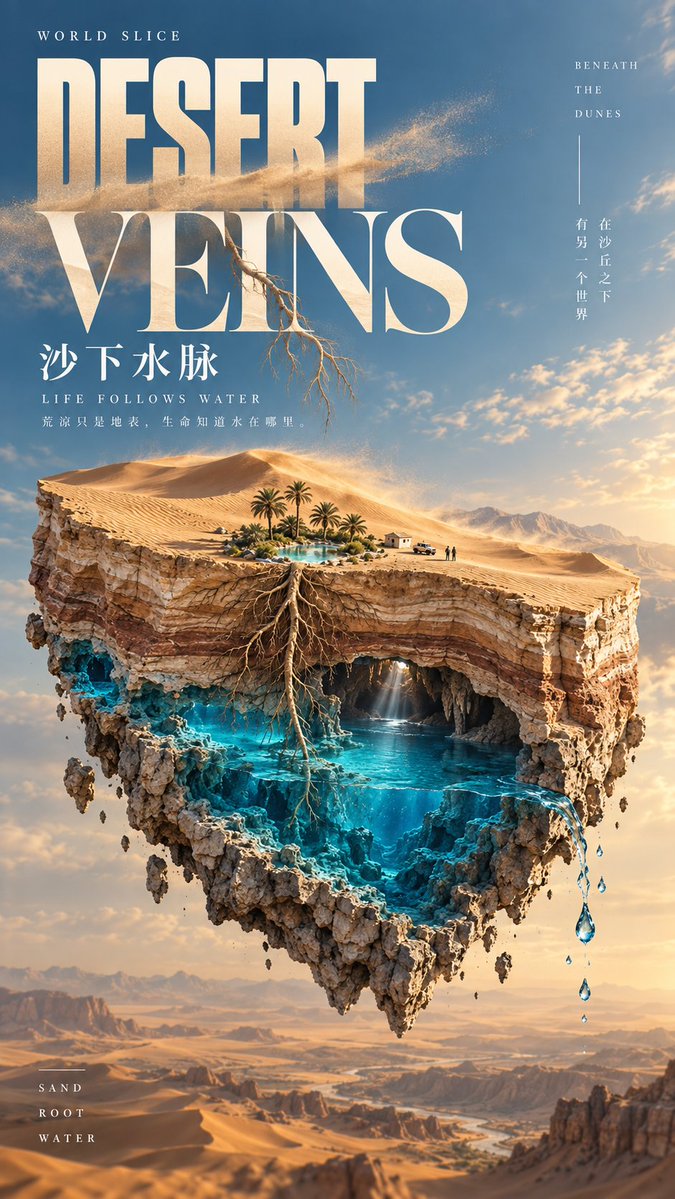
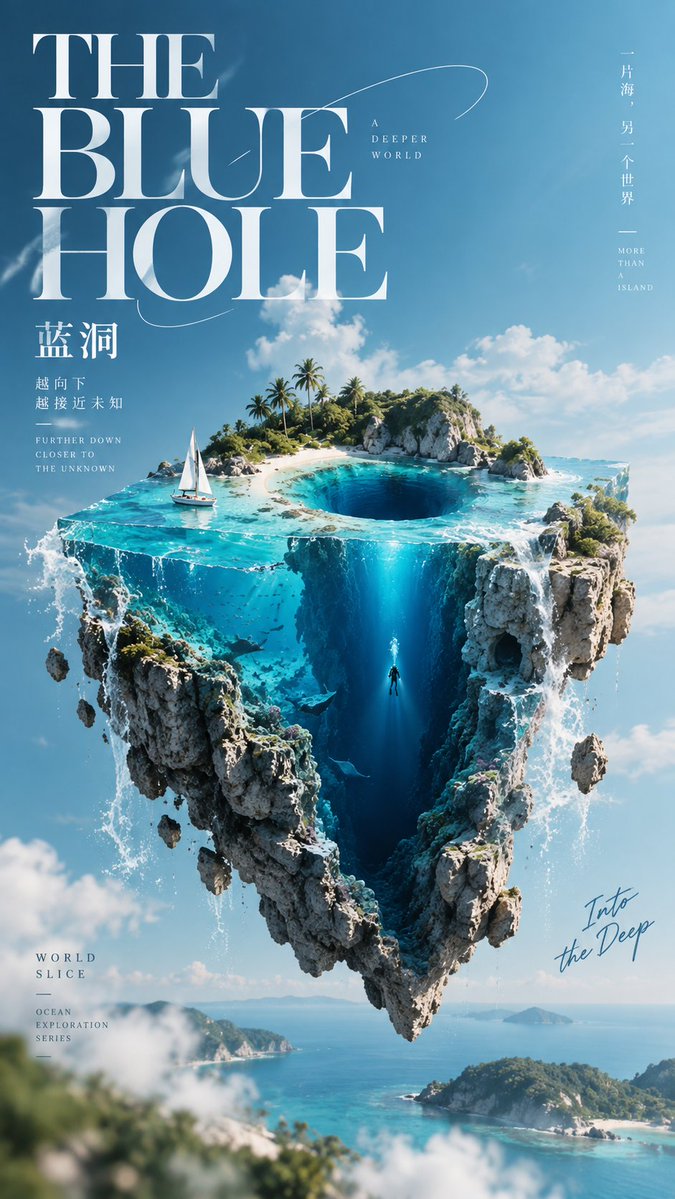
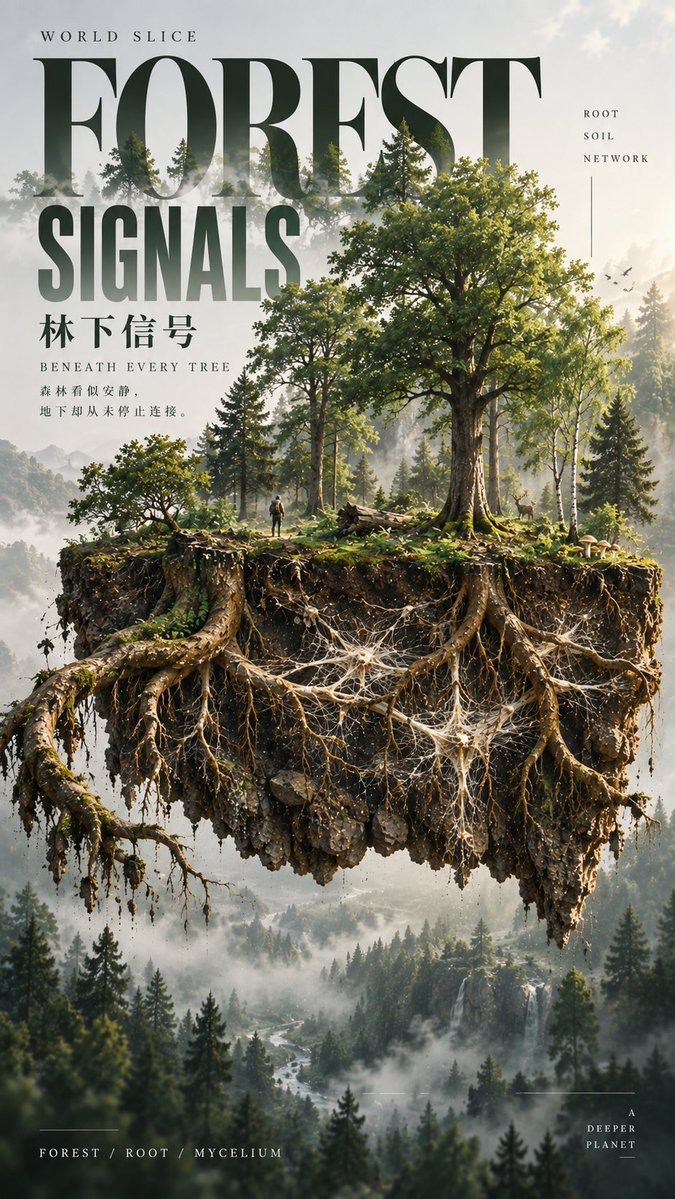
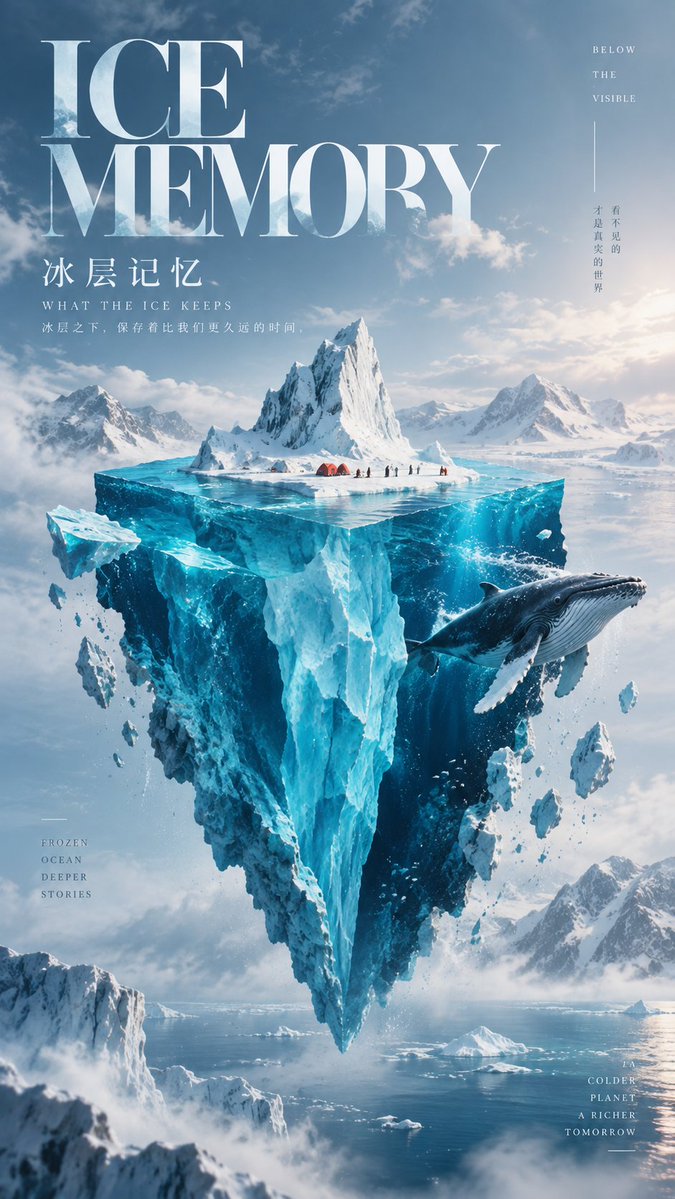
Affiche éditoriale de paysage en coupe avec géologie cachée
Un morceau de terre, d'océan ou de glace coupé en deux révèle sous la surface une structure cachée bien plus vaste. Le contraste entre un monde visible paisible et les couches souterraines spectaculaires rend l'affiche lisible en un instant.

- Modèle
- GPT Image 2
- Type
- 4 images
- Format d'image
- 9:16
- Partagé
- 28 sept. 2026
- J'aime sur X
- 6
ThèmeMonde de surfaceMonde cachéTexte du titre
Prompt d'image
2,269 caractèresTheme: [Desert / Ocean / Forest / Ice / Other] Surface world: [What appears above the surface] Hidden world: [What is revealed underneath] Key natural structure: [Aquifer / Blue hole / Root network / Ice mass / Other] Main palette: [Warm sand + cyan / Deep blue / Forest green + umber / Ice blue + white] Title: [Main English title] Subtitle: [Short concept line] Create a premium 9:16 editorial poster from the WORLD SLICE series. Show a realistic natural landscape as if a section of the world has been physically cut open, revealing a much larger hidden structure beneath the visible surface. Keep the surface relatively simple and easy to read, while the hidden section becomes the main visual surprise. Use strong scale contrast, clear geological or ecological layers, realistic materials, believable depth, atmospheric perspective and cinematic natural light. The cutaway should not look like a glass box or aquarium. Treat it as a real piece of land, ocean, forest or ice physically sliced from the planet. Let parts of nature break beyond the geometric cutaway boundary: roots, rock formations, ice, water or terrain may extend outside the original shape to create stronger visual impact. Keep the central object around 55–70% of the poster width and preserve generous negative space. Avoid making the 3D cutaway too large. Integrate typography into the composition instead of adding many tiny labels. Use one bold main title, one short supporting line and only a few minimal editorial details. Allow natural elements to overlap, pass behind or partially cover the typography. Use a refined mix of modern serif and condensed sans-serif typography. The poster should feel like premium nature editorial design, contemporary art direction and photorealistic environmental visualization. Prioritize: strong thumbnail readability, one clear visual surprise, large recognizable forms, realistic natural textures, clean hierarchy, high-end editorial composition, and a strong contrast between the visible world and the hidden world. No logo, no watermark, no numbering, no excessive micro text, no HUD interface, no four-point sparkle symbols, no cheap CGI, no glass-container look. Make the final image feel like a complete finished poster, not a template.
Comment l'utiliser
Choisissez d'abord le thème, le monde de surface et la structure cachée, puis conservez la palette et la formulation du contraste d'échelle, qui portent le style. Ce prompt a été partagé pour GPT Image 2, il vaut donc la peine de réécrire les lignes de titre et de sous-titre pour qu'elles correspondent à votre propre message. Utilisez l'affiche finie comme couverture de magazine, tirage de galerie ou pièce murale pour un espace à thème naturel.
Partagé publiquement sur X le 28 sept. 2026. Tout le mérite de ce prompt et de son résultat revient à son créateur. Ce prompt est le vôtre ? Demandez une mise à jour ou un retrait.