Prompt d'image Branding et UI Personnalisables
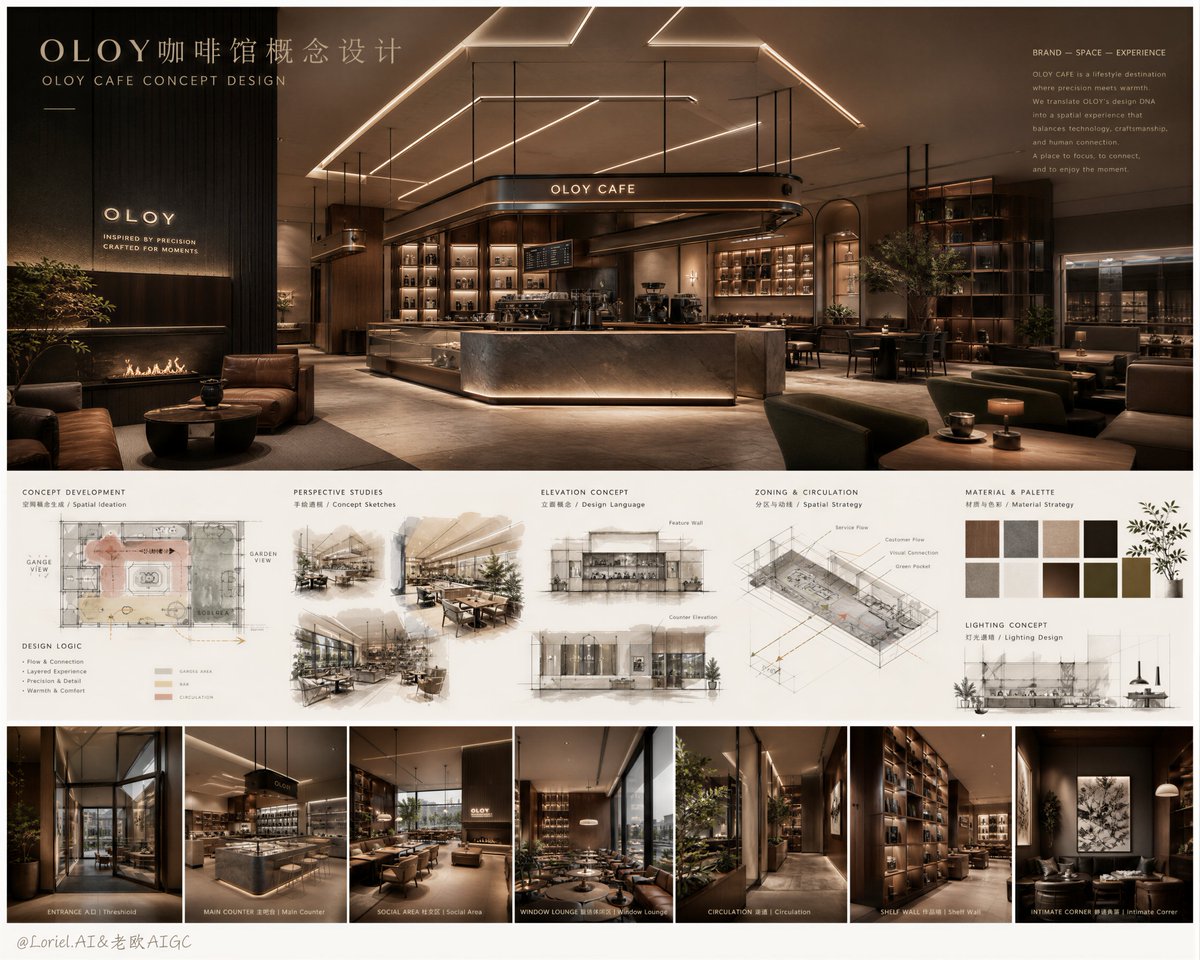
Planche de présentation conceptuelle pour intérieur de café
Une planche de design à trois niveaux pour un café boutique : en haut, un intérieur héros photoréaliste ; au milieu, de délicates études conceptuelles à l’aquarelle ; en bas, plusieurs angles de l’espace réel. Elle ressemble à la proposition d’un studio d’hôtellerie haut de gamme.

- Modèle
- GPT Image 2
- Type
- Image
- Format d'image
- 5:4
- Partagé
- 16 juil. 2026
- J'aime sur X
- 23
Nom du caféTitre en chinoisSous-titre en anglais
Prompt d'image
6,343 caractèresCreate a premium branded interior concept presentation board for “OLOY Cafe”, designed as a high-end architectural and spatial proposal sheet with a strong editorial layout. The board must have three clear layers of information: a large final hero image at the top showing the completed flagship cafe design, a middle band of informal concept sketches and pale watercolor studies, and a bottom strip of multiple smaller photorealistic interior detail views from different angles. The overall board should feel like a fusion of luxury hospitality branding, interior design proposal, and magazine-quality presentation. Top hero image: A stunning final design rendering of the OLOY Cafe flagship interior, shown as the dominant main visual at the top of the board. The cafe should feel contemporary, refined, and memorable, with a clean branded identity that subtly references OLOY’s precision-tech DNA while still feeling warm, social, and premium. Use elegant geometric ceiling lines, integrated linear lighting, carefully framed shelving, sculptural counters, warm wood, textured stone, smoked metal, soft upholstery, and curated greenery. The overall spatial atmosphere should feel highly designed, calm, lifestyle-driven, and photorealistic. The hero image should look like an award-winning boutique cafe interior, with cinematic lighting, realistic material finish, and strong emotional appeal. Brand-space identity: The cafe should merge premium coffee culture with OLOY’s identity through subtle visual language rather than obvious product advertising. Use refined architectural lines, modular rhythm, layered shelving, precision edge lighting, muted metallic accents, elegant display niches, and a curated color system inspired by high-end technology products. The brand feeling should be modern, intelligent, sleek, and distinctive, but still comfortable and inviting as a real cafe space. Middle concept study zone: Below the hero image, include a sequence of non-final concept development content. This area should look like elegant interior design ideation: pale watercolor floor plan sketches, zoning diagrams, loose perspective studies, hand-drawn elevation concepts, furniture layout exploration, circulation arrows, concept annotations, material palette blocks, lighting logic diagrams, and small vignette sketches. The hand-drawn style must feel clean, premium, and intentional, with delicate black-gray linework and restrained washes in beige, olive, warm gray, smoky green, and stone tones. These are design process studies, not fully finished renders. Bottom spatial-view zone: At the bottom of the board, arrange several smaller photorealistic images showing the completed cafe from different interior angles, not merely material close-ups. These views should capture the real spatial experience of the project from multiple perspectives, such as the entrance threshold, main counter view, seating area, window-side lounge, circulation corridor, shelving wall, and intimate corner compositions. Each image should feel like premium interior photography, revealing how the same space performs under different viewpoints, lighting conditions, and spatial layers. Together they must build a complete multi-angle understanding of the final cafe environment. Interior design language: The OLOY Cafe should feel like a sophisticated urban concept cafe. Combine warm walnut or oak timber, brushed champagne metal or dark titanium details, stone counters, soft leather or boucle seating, elegant greenery, tinted glass, slim black framing, integrated shelving, premium coffee equipment, and graphic architectural lighting. The space should feel contemporary and luxurious, with excellent balance between hospitality warmth and branded precision. Board composition: The full sheet should feel highly organized and premium. Use one large top hero panel, a structured but elegant middle area of concept studies and material notes, and a lower strip of multiple smaller real-space views. Add refined spacing, clear hierarchy, and enough breathing room so the board feels curated rather than crowded. The layout should resemble a top-tier interior studio presentation board or hospitality design magazine feature. Typography and text system: Because this is a Chinese project name, use a Chinese main title such as “OLOY咖啡馆概念设计” with an English subtitle such as “OLOY CAFE CONCEPT DESIGN”. Add refined English supporting annotations throughout the board for concept logic, zoning, material strategy, lighting design, and atmosphere notes. Typography must be artistic, thin, spacious, and premium, integrated like a real design proposal. No crude bold black fonts, no cheap infographic styling. The brand name “OLOY” should appear subtly and elegantly in the main title system and possibly in small identity moments within the board. Color palette: Use a premium restrained palette of warm ivory, espresso brown, smoked olive, stone beige, charcoal gray, muted metallic champagne, soft black, and warm amber lighting. The concept sketch area should stay pale and elegant, while the final renders are richer and more tactile. Keep the overall tone cohesive and upscale. Lighting and rendering: The hero image and the bottom detail views must feel like high-end interior photography: warm but controlled lighting, soft daylight diffusion if appropriate, refined shadow transitions, realistic reflections, premium material realism, and cinematic composition. The middle concept area should feel crisp, paper-like, and delicately hand-rendered. The whole board should read as a complete professional design presentation. Mood: premium, warm, branded, intelligent, editorial, lifestyle-driven, refined, architectural, inviting, contemporary. Rendering style: hyper-realistic interior visualization for the final and detail views, combined with refined pale watercolor and black-and-white concept sketches, premium presentation board layout, high-end hospitality design proposal aesthetic, magazine-quality composition, 8k, sharp but elegant. Negative prompt: cheap cafe poster, cluttered infographic layout, childish hand sketches, oversaturated greenery, generic coffee shop design, rustic farmhouse cafe, harsh lighting, ugly bold fonts, low-detail furniture, messy board composition, sci-fi futuristic cafe, random decor elements
Comment l'utiliser
Commencez par remplacer le nom du café et le titre bilingue afin que la planche porte votre propre marque. Conservez les consignes de mise en page et la liste des matériaux (noyer, métal champagne, pierre, bouclé), qui font ensemble l’allure premium et apaisée. Ce prompt a été partagé pour GPT Image 2 ; si vous voulez une planche façon présentation, gardez la structure en trois niveaux. Utilisez le résultat comme slide de pitch ou moodboard pour un client.
Dans les collectionsPrompts IA pour la décoration d'intérieur
Partagé publiquement sur X le 16 juil. 2026. Tout le mérite de ce prompt et de son résultat revient à son créateur. Ce prompt est le vôtre ? Demandez une mise à jour ou un retrait.