Prompt de imagen Ilustración y personajes Personalizables
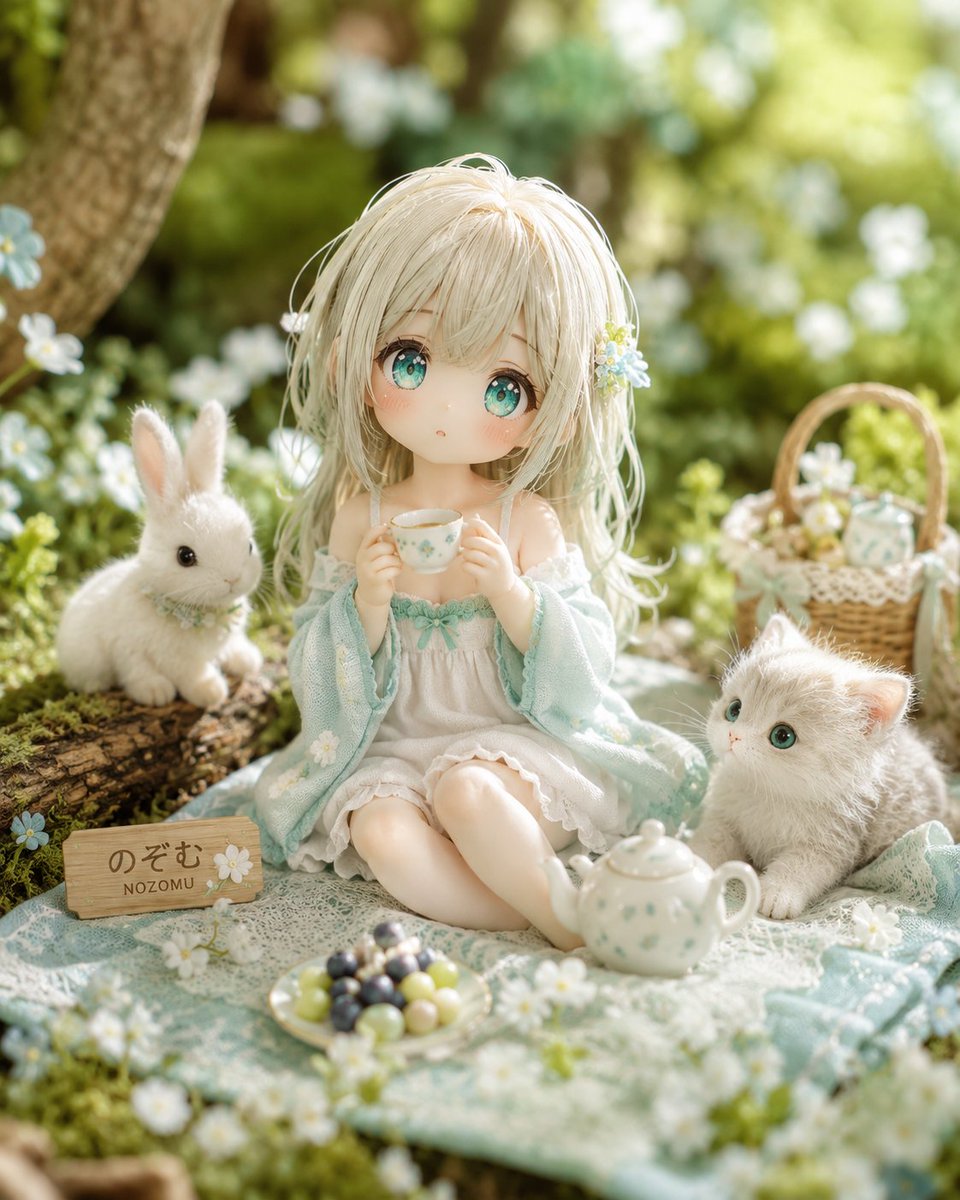
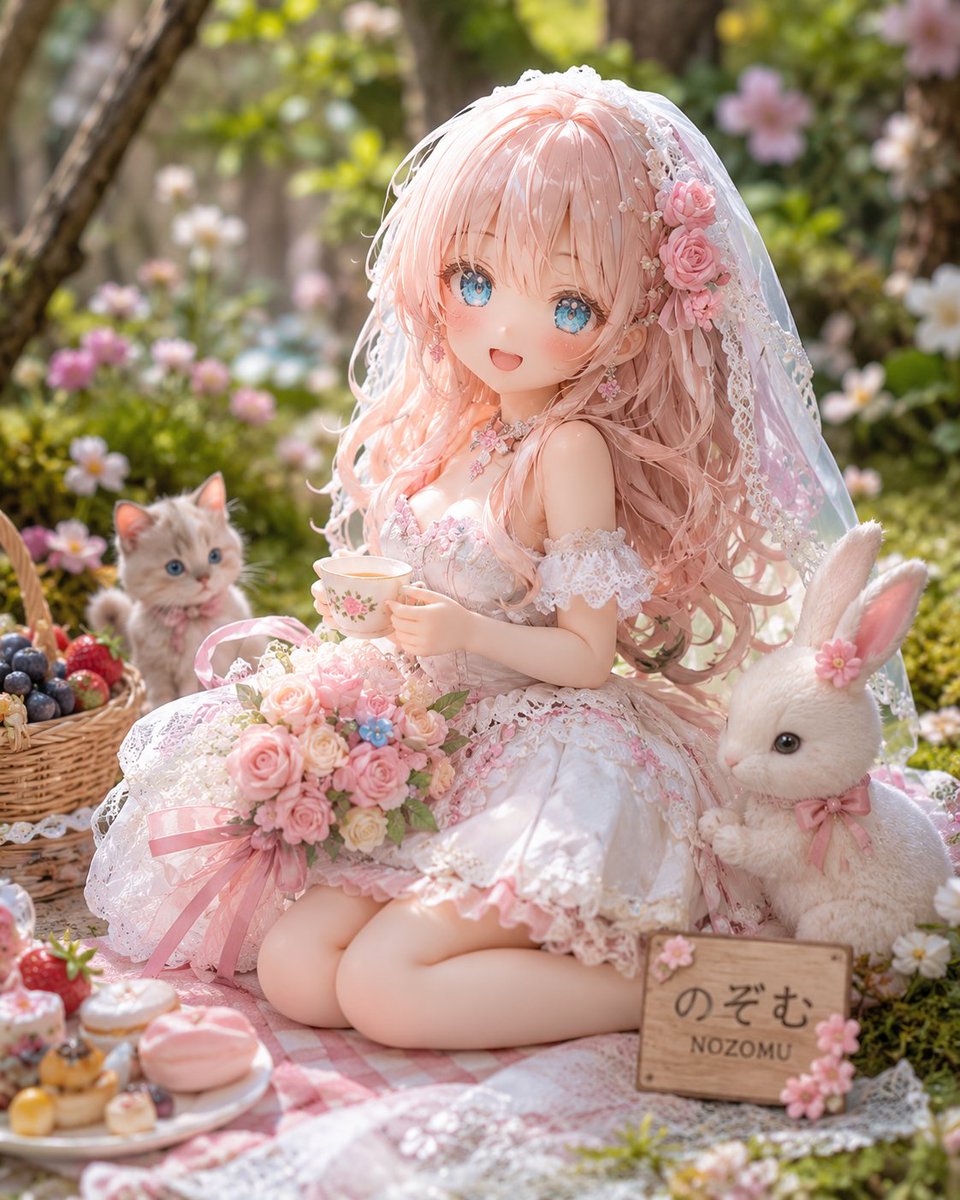
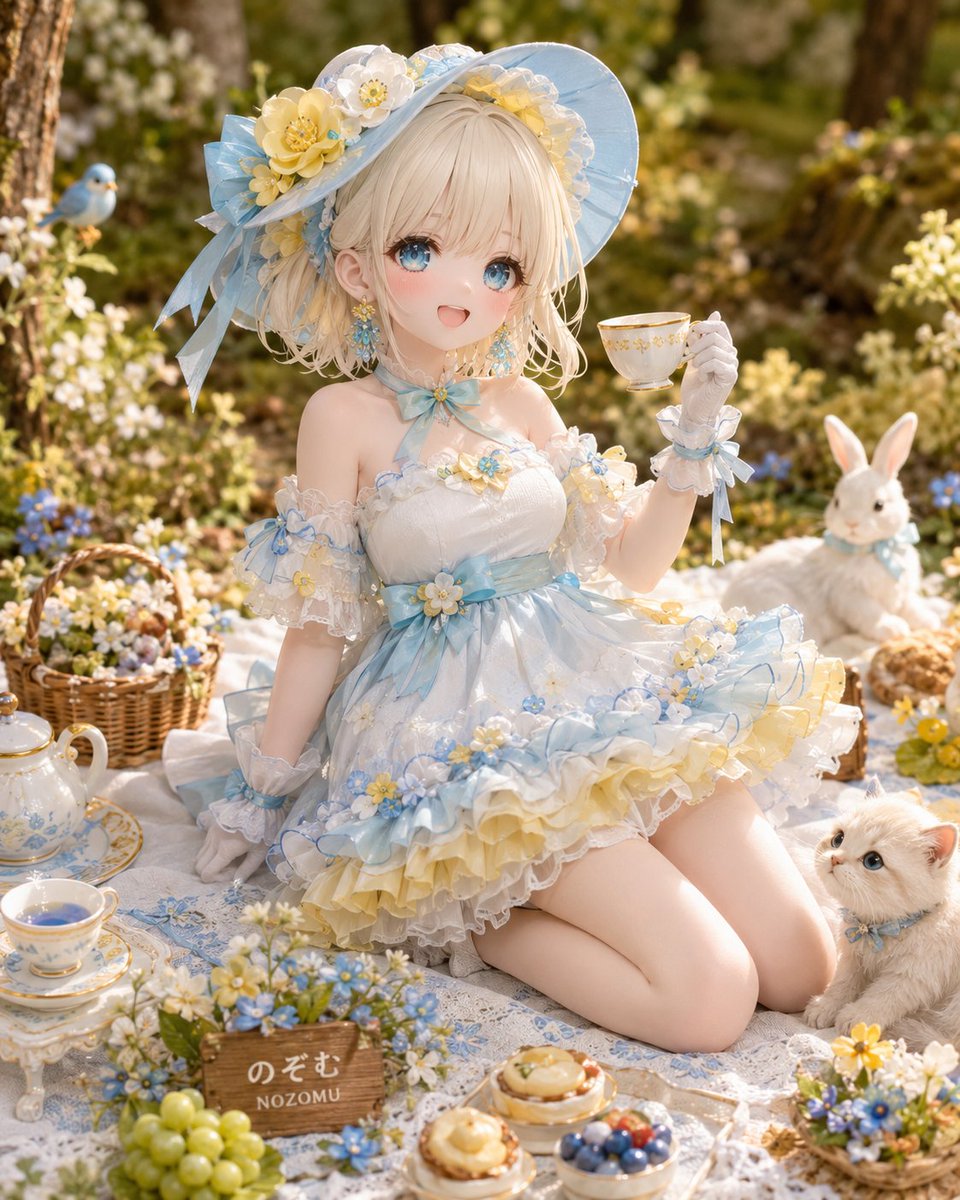
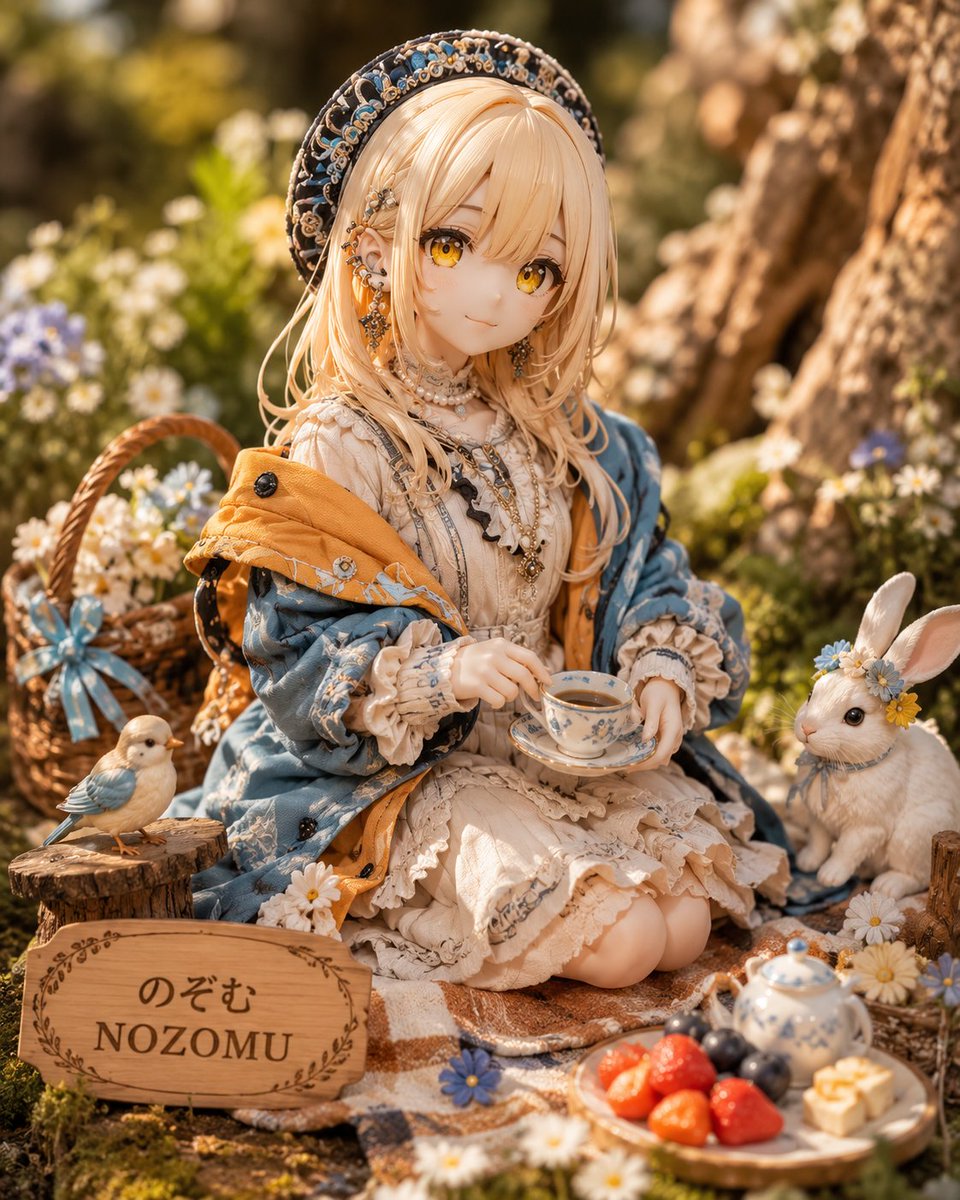
Foto de personaje en miniatura hecho a mano en un picnic en el bosque
Una figura hecha a mano del tamaño de una palma se sienta en un claro del bosque con manchas de luz, junto a pequeños amigos animales, fotografiada como si fuera un objeto real. Las fibras suaves, las texturas de fieltro y la luz natural del día hacen que la escena parezca vivida de verdad y no dibujada.

- Modelo
- GPT Image 2
- Tipo
- 4 imágenes
- Relación de aspecto
- 4:5
- Compartido
- 26 jun 2026
- Me gusta en X
- 54
Nombre del personaje
Prompt de imagen
11,650 caracteresUse the attached character illustration as the most important reference and, while keeping as faithful as possible the original character's facial features, eye impression, eye shape, iris color and shine, hairstyle, hair color, bangs, contour, expression, sense of age, costume impression, color scheme, transparency, atmosphere, personality, and the character's unique cuteness/beauty/charm, reconstruct it as "an original, real-looking miniature life visual, relaxing leisurely in a gentle forest picnic space surrounded by small forest friends." Image ratio: 4:5 vertical. Input fields: Character name: 【enter name】 Latin spelling: 【optional / if empty, generate naturally】 Scene title: 【optional / if empty, generate a cute name fitting the world】 Scene theme: 【optional / if empty, generate a theme suiting the original character】 e.g.: forest picnic / snack time in tree shade / tea time in a flower field / gathering small fruits / spring garden lunch Short copy: 【optional / if empty, generate naturally】 Motif props: 【optional / if empty, generate content suiting the character】 e.g.: picnic cloth / small basket / fruit / flowers / mini tableware / teacup / nuts / small flower basket Type of forest friends: 【optional / if empty, generate naturally】 e.g.: white rabbit / pale gray kitten / small squirrel / white little bird / beige puppy Number of forest friends: 【optional / if empty, compose naturally with about 1–2】 Most important concept: This is not a reproduction of an existing toy brand. It is not an imitation of real dollhouse products or animal figure series. It is not a project that reuses a brand's distinctive houses, furniture, animal modeling, clothing, or packaging. It is not a project that directly evokes a "village of small clothed animals." It does not aim to reproduce an existing series' atmosphere as is. Nor is it a work that places the character as an ordinary 2D illustration on a background. It is not a work where only the background is three-dimensional and only the character looks like a flat illustration. Most important is that, while properly retaining the original character's charm, it stands as a small handmade three-dimensional miniature work existing within an original forest picnic world, and that at a glance it conveys "gentle," "small," "softly cute," "truly there," "looks like it lives here." Most important miniaturization spec: The most important thing is that the character does not remain a 2D illustration alone. The character itself, like the background, props, and forest friends, must stand as a real handmade miniature work. Flat anime illustration expression, line-art-based facial expression, a paper-drawn look, and any expression where only the character looks like an illustration are forbidden. Render the face, eyes, hair, costume, floral ornaments, hands, and feet all as a palm-sized miniature figure carefully crafted from cloth, felt, flocking, fibers, resin, soft clay, and small three-dimensional parts. While retaining the original image's charm, do not "reproduce the original as is in illustration style," but rather express it in the direction of remaking the original character as a real small handmade three-dimensional work. Top priority is that the final look appears as a photograph of a genuine miniature figure work shot in the forest, not an illustration. World direction: Emphasize bright forest / dappled sunlight / grass / flower field / small fruits / picnic / soft natural light / cloth props / gentle colors / cozy sense of life / handmade feel / small world. The stage should be an original small picnic space in nature: a small grassy spot in the forest, a picnic place in the shade of flowering trees, a garden corner in gentle sunlight, a relaxing space beside a small flower bed, a small snack time amid dappled light. Do not make small houses, village buildings, or rows of houses the protagonist. Do not too strongly bring out an existing-toy feel with wooden fences or house exteriors. Even if building elements are included, keep them as a very restrained background element. Handling the character: Depict the character, while retaining the original image's charm, as a real three-dimensional miniature figure that naturally blends into the small forest picnic world. However, full animalization, turning into a different character, and excessive deformation are forbidden. So that it's recognizable as the original character, firmly retain the facial features, eye impression, eye shape, hairstyle, hair color, bangs, contour, expression, costume impression, palette, transparency, and the character's unique cuteness. But the expression should not be a flat illustration; instead a warm small three-dimensional work carefully modeled from cloth, felt, flocking, fibers, resin, or soft clay. While keeping the features and eye impression faithful to the original, build the face not with line-reliant anime coloring but through surface undulation, depth, how light falls, and material feel as a three-dimensional object. Compose the hair not as drawn lines but as fine fibers, soft hair tufts, and three-dimensional hair parts. Make the eyes not a printed flat surface but small resin eyes—the eyes of a three-dimensional doll with glass-like gloss—with natural depth and shine. Express the costume and floral ornaments too not as drawing but as realistic miniature materials made of cloth, felt, lace, small artificial flowers, embroidery, ribbons, and resin parts. Handling the forest friends【important】: Around the character, naturally place about 1–2 small forest friends matching the original character's atmosphere and palette. The types should mainly be gentle and friendly, such as a white rabbit, pale gray kitten, small squirrel, white little bird, light beige puppy. Important spec: do not over-clothe the forest friends, do not turn them into human-like villagers, do not give a "clothed animal family feel" easily reminiscent of existing toy series, limit decoration to a small ribbon / flower / a single accent at the neck, and consistently express them as "forest companions" nestling naturally. The animals should not be mere decoration but exist coexisting naturally with small roles—e.g., the rabbit beside a small fruit, the kitten sitting neatly near the teacup, the squirrel gathering nuts, the little bird perched near a flower. However, the protagonist is always the character itself; do not let the forest friends stand out too much or steal the lead. Scene depiction: Depict the character as a single moment in the middle of spending gentle time in the forest. Suitable scenes include, e.g.: picnicking on the grass, drinking tea from a small cup, laying out fruit and baked sweets, picking flowers and putting them in a small basket, sitting leisurely in tree shade, relaxing together with forest friends, gathering small flowers and nuts, resting beside the flower basket. Make a lifelike, natural moment as if truly spending time there right now. However, the pose should not be a lifeless stiff stance: as a small three-dimensional doll, give a cute, natural posture—sitting, crouching, holding a cup, gazing at a flower—reasonable for a handmade miniature work. Elements in the frame: Within the frame, naturally place grass, small flowers, picnic cloth, teacup, small plates, fruit, baked sweets, small basket, flower basket, nuts, soft dappled light, forest in the background, and restrained natural props. If needed, a small wooden plaque or sign may be included restrainedly. However, ensure: do not make houses or village buildings the protagonist, do not fill with wooden fences, do not compose like an overly familiar miniature toy set, do not center the composition on furniture, do not make a luxurious indoor dollhouse, do not compose so that only the background is three-dimensional and only the person looks like an illustration. Important presentation spec: The composition should have a low eye level, a viewpoint as if having entered the small world. Not a top-down exhibition photo, but an intimate viewpoint close to the eye level of the character and forest friends. Slightly blur the background so the foreground character, props, and forest friends stand out cutely. Place the character at the center or slightly forward, in a composition where it's clear at a glance that the protagonist is the character. Throughout the frame, emphasize depth, natural shadows, material texture, and soft light, like a macro shot of a genuine small three-dimensional work. Finish texture: Emphasize the impressions: gentle, warm, small, fluffy, cozy, cute, heartwarming, handmade-feeling, touchable, healing to look at, as if truly existing. The light should be soft natural light of a sunny daytime. For color, while leveraging the original character's palette, harmonize with grass green / pale flower colors / natural wood brown / gentle cloth-prop colors / airy pale tones. Excessive sparkle, strong glow, jewel-like luxury, and excessive fantasy effects are unnecessary. Prohibitions: Forbidden to use real brand/product names/logos; forbidden to directly reproduce existing toy series; forbidden to imitate houses, furniture, animal modeling, and clothing evoking specific products; forbidden a composition where a "village of clothed animals" becomes the protagonist; forbidden to over-characterize animals as villagers; forbidden a composition that too strongly reinforces déjà-vu through the combination of small house + wooden fence + animal family; forbidden to reproduce packaging or official-ad style; forbidden to turn the character into someone else; forbidden full animalization; forbidden to break the impression of the face or eyes; forbidden to leave only the character in 2D illustration style; forbidden flat anime coloring; forbidden a face that looks drawn on paper; forbidden line-art-based face/hair expression; forbidden the sense of separation where only the background is three-dimensional and only the person becomes an illustration; forbidden a finish that looks like an "illustration" rather than a "doll photo"; forbidden to lean too much toward a luxury dollhouse exhibit; forbidden to lean toward an art piece, luxurious diorama, or display case; forbidden excessive sparkle, glitter, and magic effects; forbidden an eerie doll feel or horror feel; forbidden a composition where excessive props bury the protagonist; forbidden a lifeless stiff stance. Ideal finished image: The ideal final form is an original miniature life visual in which a small three-dimensional miniature figure made from the original character relaxes leisurely, gently surrounded by natural forest friends, in a gentle forest picnic space. Make the viewer feel: "it suits this kid so well," "so small yet clearly this kid," "looks truly handmade, not an illustration," "gentle and cute," "healing that it's with friends," "not too much like an existing toy—properly original and cute." If text is included: Use text minimally. Allowed text is limited to the character name, Latin spelling, scene title, and short copy. Place it on small wooden plaques, restrained signs, or natural labels, large and legible, without asserting too much. Do not cram in lots of small text. Finishing line: Overall, finish it beautifully for high completeness, high visibility, and high spreadability, as a warm and cute miniature life visual—like a photograph of a truly existing handmade three-dimensional miniature figure spending gentle time with forest friends in an original forest picnic world that doesn't too much evoke existing toy series—while retaining the original character's charm.
Cómo usarlo
Se compartió como prompt de GPT Image 2 y funciona mejor con una ilustración del personaje subida como referencia. Mantén los rasgos faciales, el cabello, los colores y la descripción del vestuario tal como están escritos para que la figura siga pareciendo el mismo personaje, y cambia el tema de la escena o los elementos decorativos para modificar el ambiente. Usa el resultado como una imagen cálida y fácil de compartir para un perfil, una tarjeta o una presentación de personaje.
Compartido públicamente en X el 26 jun 2026. Todo el mérito de este prompt y de su resultado es de su creador. ¿Es tuyo? Pide que se actualice o se elimine.