Prompt de imagen Pósters y tipografía Personalizables
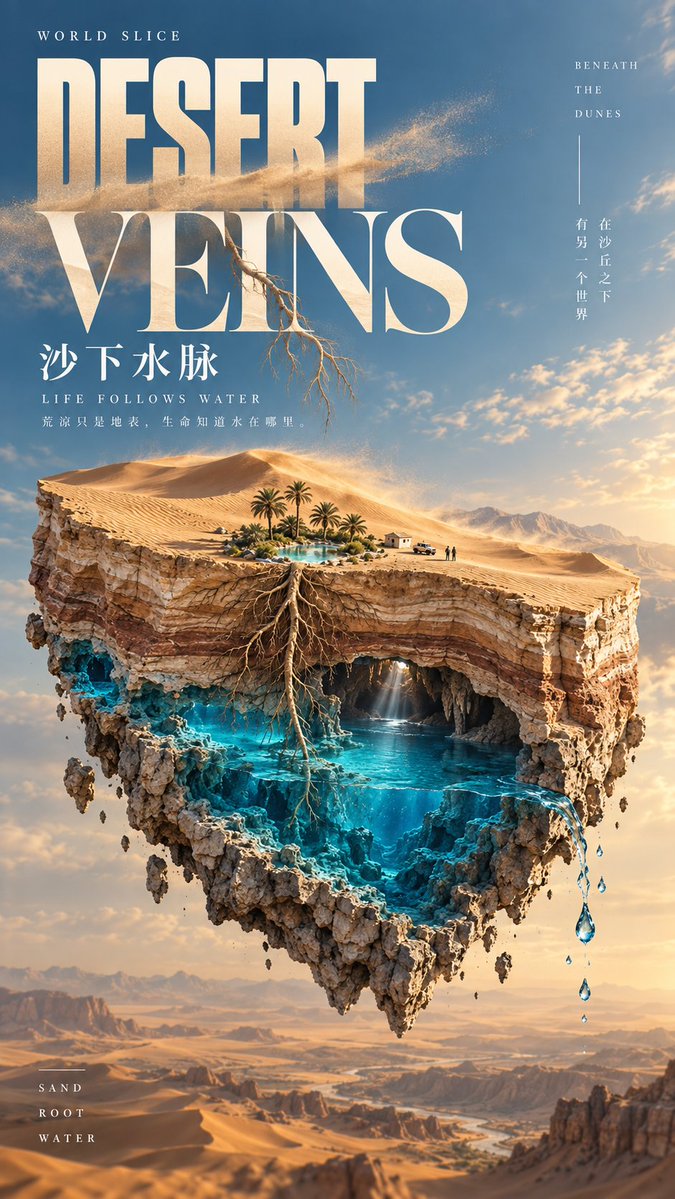
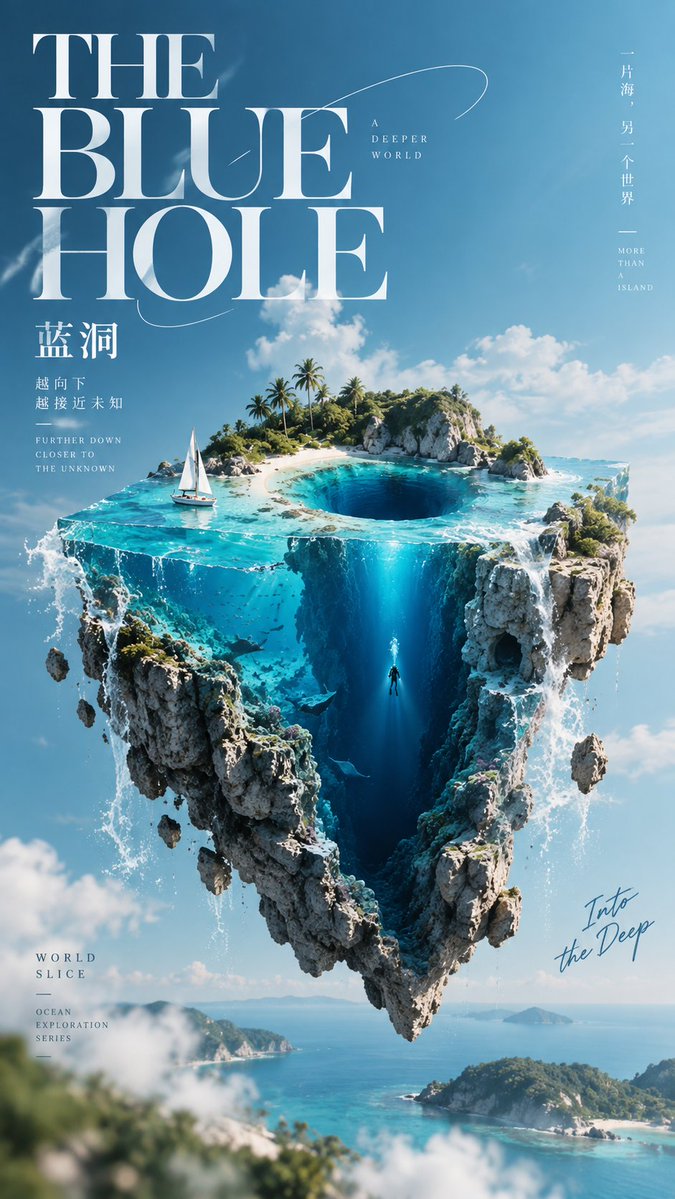
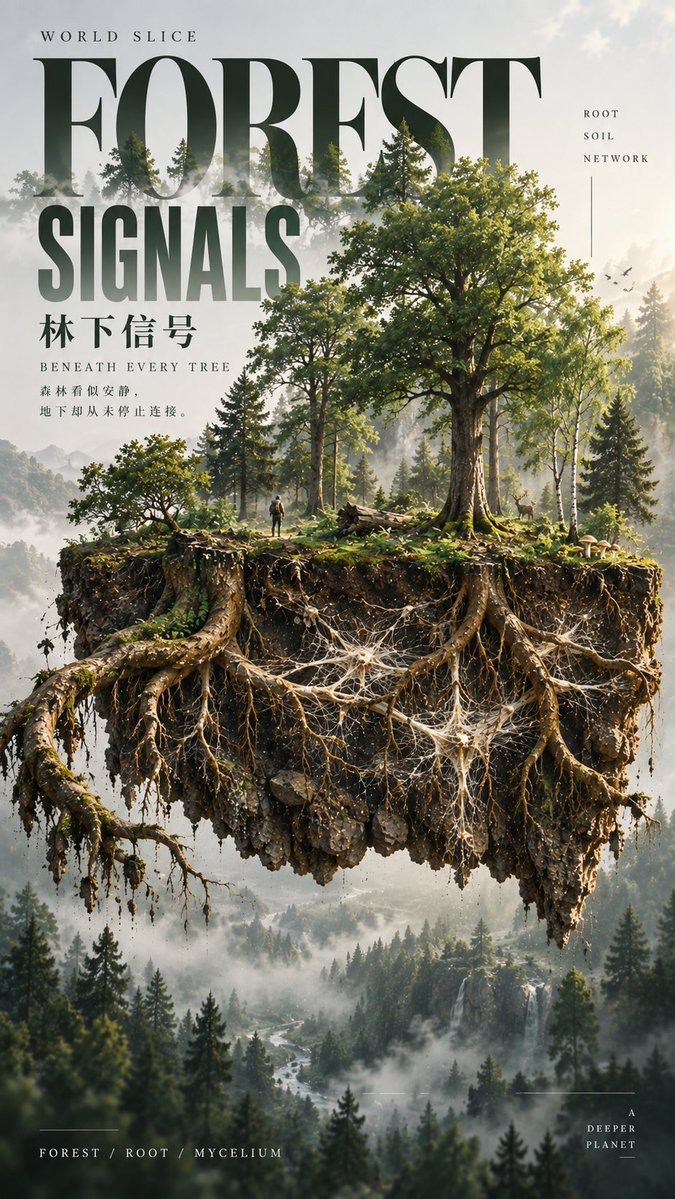
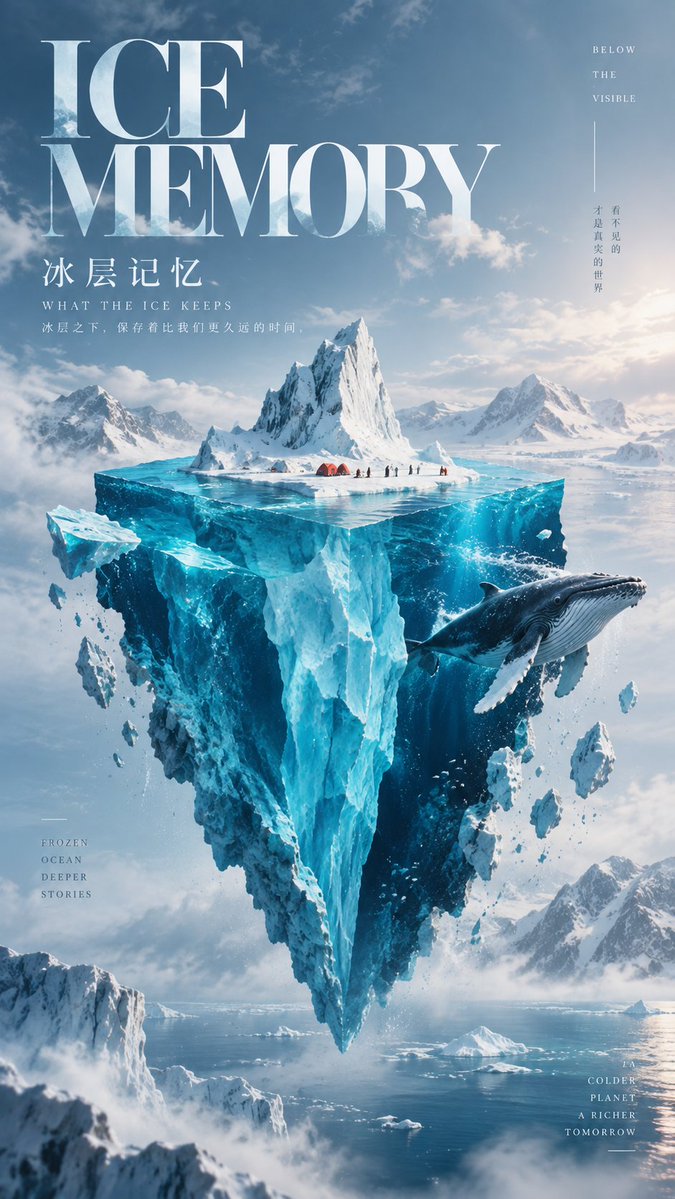
Póster editorial de paisaje en corte transversal con geología oculta
Un trozo de tierra, océano o hielo cortado por la mitad revela bajo la superficie una estructura oculta mucho más grande. El contraste entre un mundo visible tranquilo y las dramáticas capas subterráneas hace que el póster se entienda al instante.

- Modelo
- GPT Image 2
- Tipo
- 4 imágenes
- Relación de aspecto
- 9:16
- Compartido
- 28 sept 2026
- Me gusta en X
- 6
TemaMundo en superficieMundo ocultoTexto del título
Prompt de imagen
2,269 caracteresTheme: [Desert / Ocean / Forest / Ice / Other] Surface world: [What appears above the surface] Hidden world: [What is revealed underneath] Key natural structure: [Aquifer / Blue hole / Root network / Ice mass / Other] Main palette: [Warm sand + cyan / Deep blue / Forest green + umber / Ice blue + white] Title: [Main English title] Subtitle: [Short concept line] Create a premium 9:16 editorial poster from the WORLD SLICE series. Show a realistic natural landscape as if a section of the world has been physically cut open, revealing a much larger hidden structure beneath the visible surface. Keep the surface relatively simple and easy to read, while the hidden section becomes the main visual surprise. Use strong scale contrast, clear geological or ecological layers, realistic materials, believable depth, atmospheric perspective and cinematic natural light. The cutaway should not look like a glass box or aquarium. Treat it as a real piece of land, ocean, forest or ice physically sliced from the planet. Let parts of nature break beyond the geometric cutaway boundary: roots, rock formations, ice, water or terrain may extend outside the original shape to create stronger visual impact. Keep the central object around 55–70% of the poster width and preserve generous negative space. Avoid making the 3D cutaway too large. Integrate typography into the composition instead of adding many tiny labels. Use one bold main title, one short supporting line and only a few minimal editorial details. Allow natural elements to overlap, pass behind or partially cover the typography. Use a refined mix of modern serif and condensed sans-serif typography. The poster should feel like premium nature editorial design, contemporary art direction and photorealistic environmental visualization. Prioritize: strong thumbnail readability, one clear visual surprise, large recognizable forms, realistic natural textures, clean hierarchy, high-end editorial composition, and a strong contrast between the visible world and the hidden world. No logo, no watermark, no numbering, no excessive micro text, no HUD interface, no four-point sparkle symbols, no cheap CGI, no glass-container look. Make the final image feel like a complete finished poster, not a template.
Cómo usarlo
Elige primero el tema, el mundo de la superficie y la estructura oculta, y luego conserva la paleta y la redacción del contraste de escala, ya que son los que dan el aspecto. Se compartió como prompt para GPT Image 2, así que merece la pena reescribir las líneas del título y el subtítulo para que se ajusten a tu propio mensaje. Usa el póster terminado como portada de revista, impresión para galería o pieza de pared para un espacio de temática natural.
Compartido públicamente en X el 28 sept 2026. Todo el mérito de este prompt y de su resultado es de su creador. ¿Es tuyo? Pide que se actualice o se elimine.